


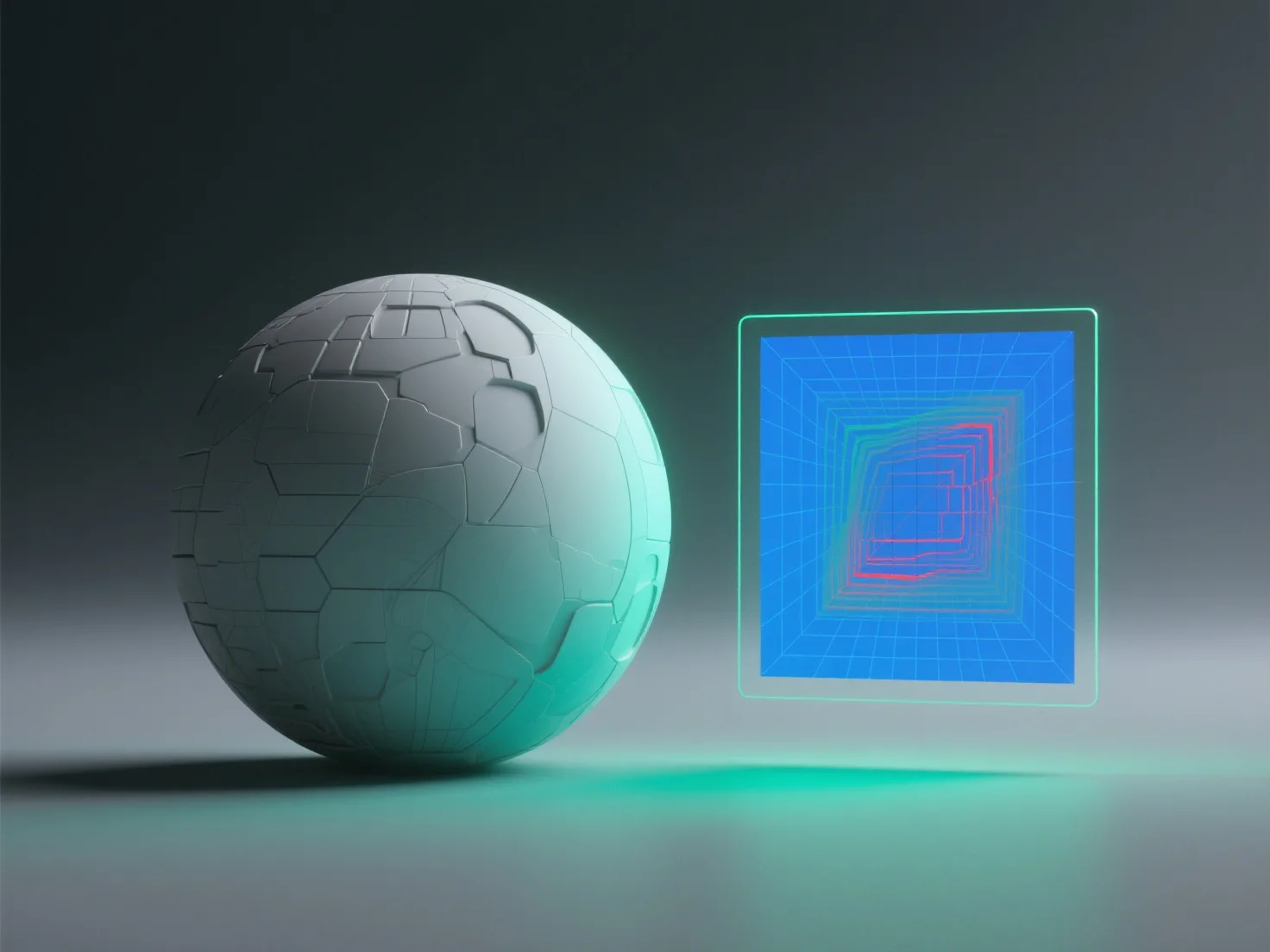
Um mapa normal na texturização 3D é uma textura que simula detalhes da superfície, codificando vetores de direção e alterando a forma como a luz reflete num modelo 3D, criando a ilusão de profundidade sem aumentar a contagem de polígonos.
- **Mecanismo Principal**: Utiliza valores de cor RGB para representar normais de superfície (vermelho para o eixo X, verde para o eixo Y, azul para os vetores de direção do eixo Z), determinando a forma como a luz interage com a superfície do modelo. - **Principal Vantagem**: Adiciona detalhes finos, como saliências, sulcos ou texturas intrincadas, a modelos de baixa poligonalidade, evitando a necessidade de geometria de alta poligonalidade. Isto mantém o processo de renderização rápido e os tamanhos dos ficheiros pequenos.
Em suma, os mapas normais melhoram o realismo visual de forma eficiente, equilibrando detalhe e desempenho na texturização 3D.