


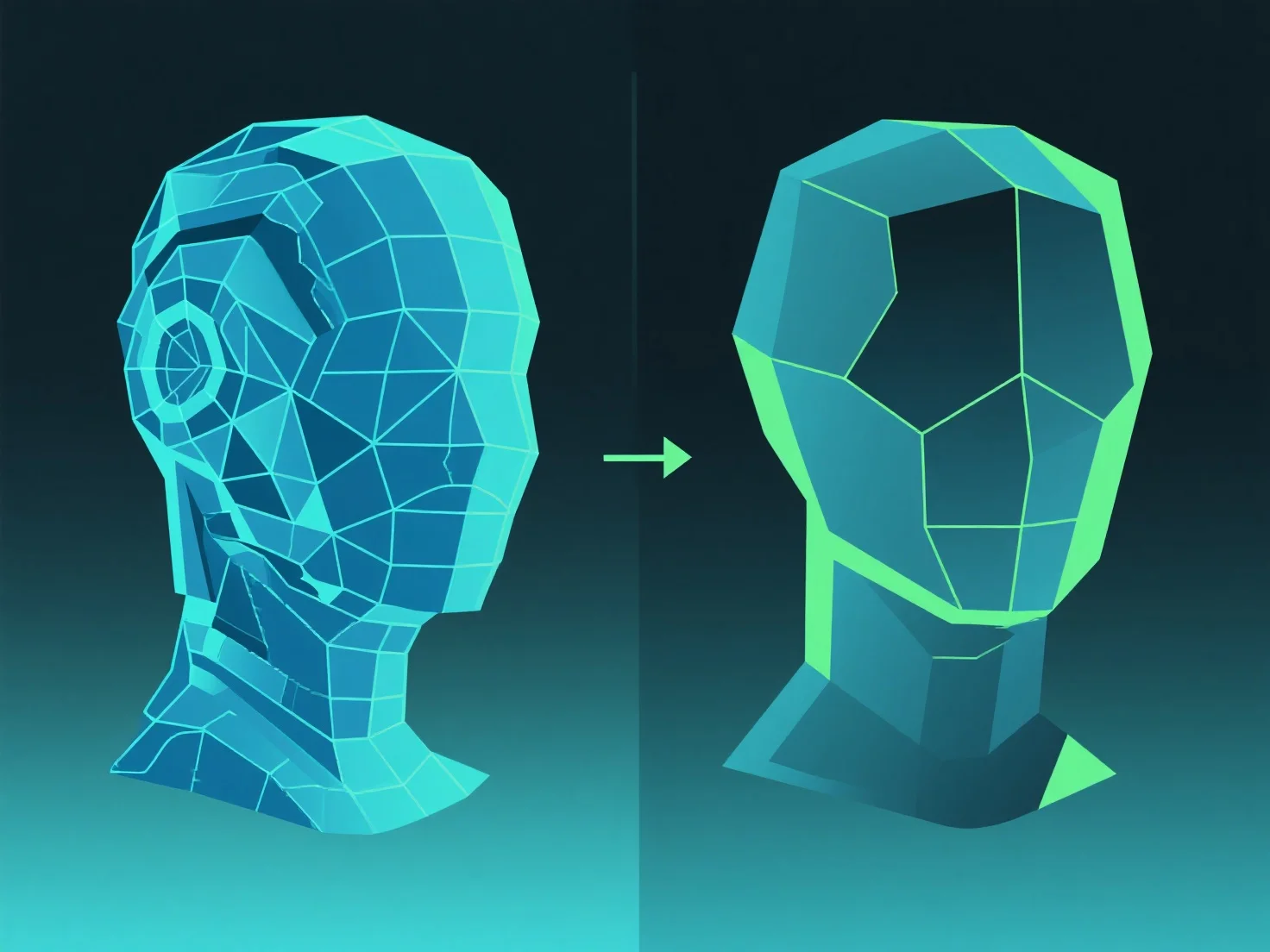
A otimização de um modelo 3D para renderização em tempo real centra-se na redução da contagem de polígonos, na otimização de texturas e na simplificação da iluminação. Passos-chave para equilibrar a qualidade visual e a velocidade de renderização, fundamentais para ambientes em tempo real, como jogos ou AR/VR, onde é essencial uma taxa de frames elevada e consistente.
As práticas-chave incluem: - **Redução de Polígonos**: Implementar sistemas LOD (Nível de Detalhe) para diminuir a contagem de polígonos de objetos distantes, reduzindo a carga de trabalho da GPU. Simplificar a topologia da malha, removendo vértices não visíveis ou fundindo detalhes pequenos e impercetíveis. - **Otimização de Texturas**: Minimizar a resolução das texturas e utilizar formatos de compressão (por exemplo, BCn) para reduzir o uso de memória. Evitar texturas grandes ou não comprimidas que atrasam a renderização. - **Simplificação da Iluminação**: Preparar a iluminação (pré-calcular os dados de luz) em vez de depender da iluminação em tempo real, reduzindo as exigências da GPU. Isto é especialmente importante para AR/VR, onde o desempenho é crítico.
Estes passos garantem que o modelo seja renderizado de forma eficiente, mantendo um desempenho suave sem sacrificar a integridade visual fundamental em aplicações em tempo real.