


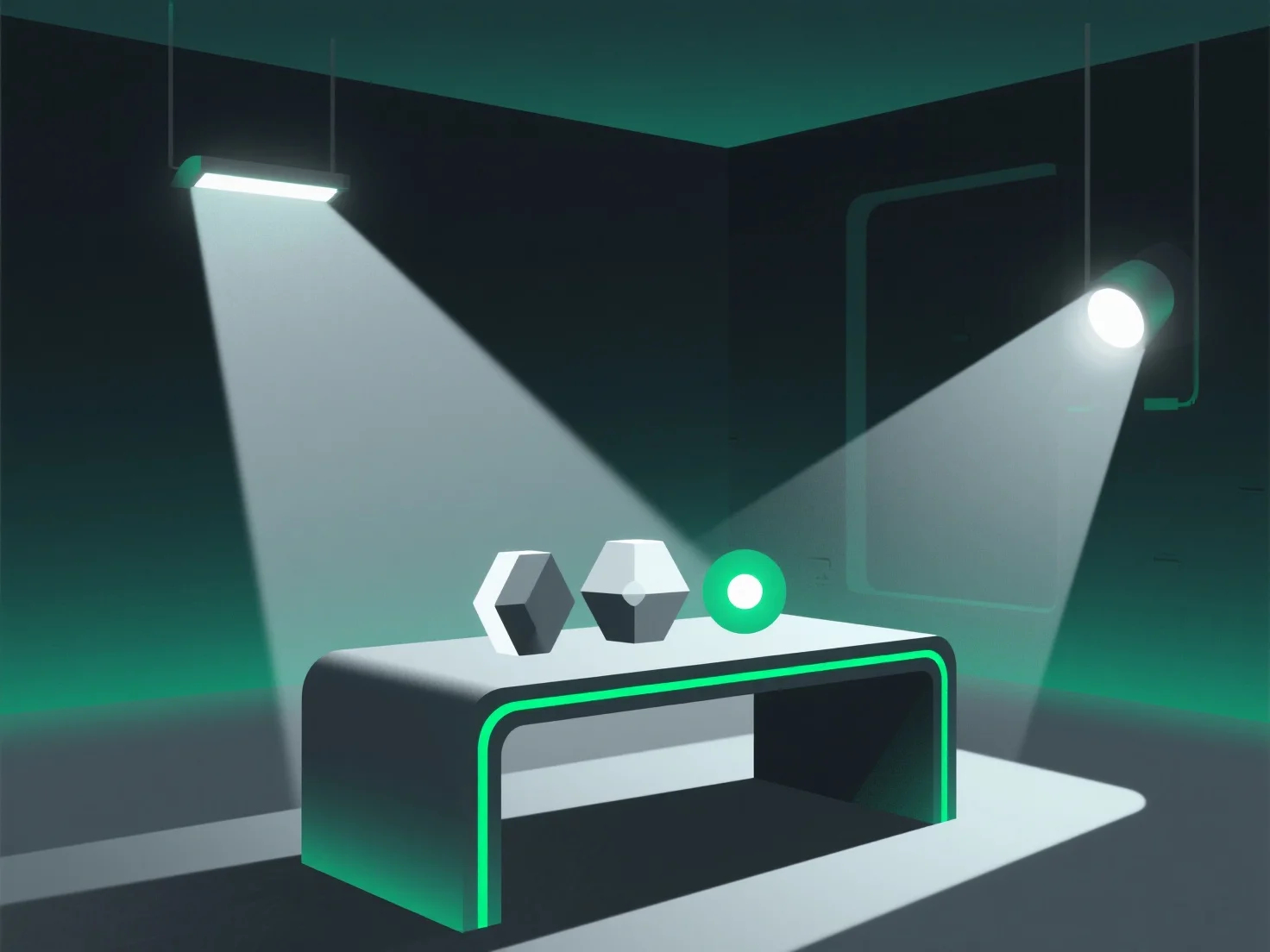
As melhores práticas para iluminar uma cena 3D interior concentram-se em imitar a lógica natural, equilibrar as fontes de luz e alinhar-se com o objetivo da cena para melhorar a profundidade e o realismo.
Comece com uma luz chave (fonte primária) para definir a direção e o ambiente. Por exemplo, luz quente e difusa para uma sala de estar acolhedora ou luz mais fria e direcionada para um escritório moderno.
Adicione luz de preenchimento para suavizar as sombras duras, usando uma intensidade inferior à da luz principal para manter o contraste sem achatar demasiado a cena.
Incorpore luz de borda para realçar os contornos.
Mantenha-o simples: construa gradualmente, ajuste a intensidade e a temperatura de cor para combinar com o contexto da cena, e evite complicar demasiado para obter resultados naturais e imersivos.