


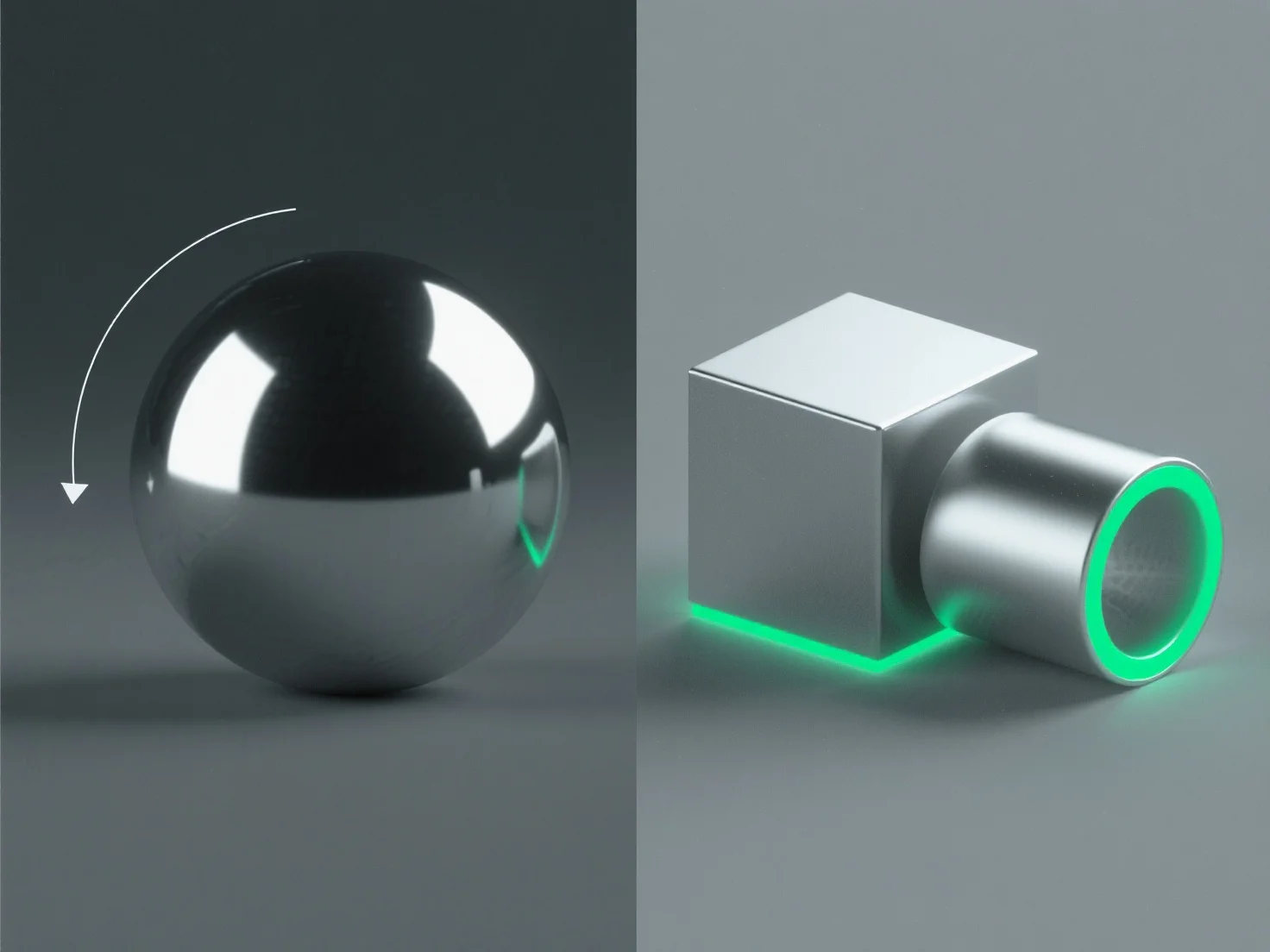
3Dデザインで現実的な金属表面を作成するには、材料の特性を調整し、照明を最適化して金属の光の相互作用の特性を再現するに焦点を当てます。
主なステップは次のとおりです。 - **高反射率**: 周囲の環境をキャプチャするために、材料の反射率を80~100%に設定し、金属の鏡のような質感を再現します。 - **制御された粗さ**: 微細なマイクロラフネス(PBRで0.05~0.3)を追加して均一な光沢を避けます。 光沢の高い金属の場合は低い値、磨かれた/風化した仕上げの場合は高い値に設定します。 - **鏡面ハイライト**: 直接光の反射をシミュレートするために、鋭く強いハイライトを使用し、表面の滑らかさに基づいてサイズを調整します。 - **環境照明**: 文脈に敏感な反射のためにHDRIマップを統合することが重要です。これは金属の本物の外観を再現するために不可欠です。
これらの手法、特に物理ベースのレンダリング(PBR)ワークフローでは、実際の金属と光の相互作用を再現し、現実的な表面を実現します。