


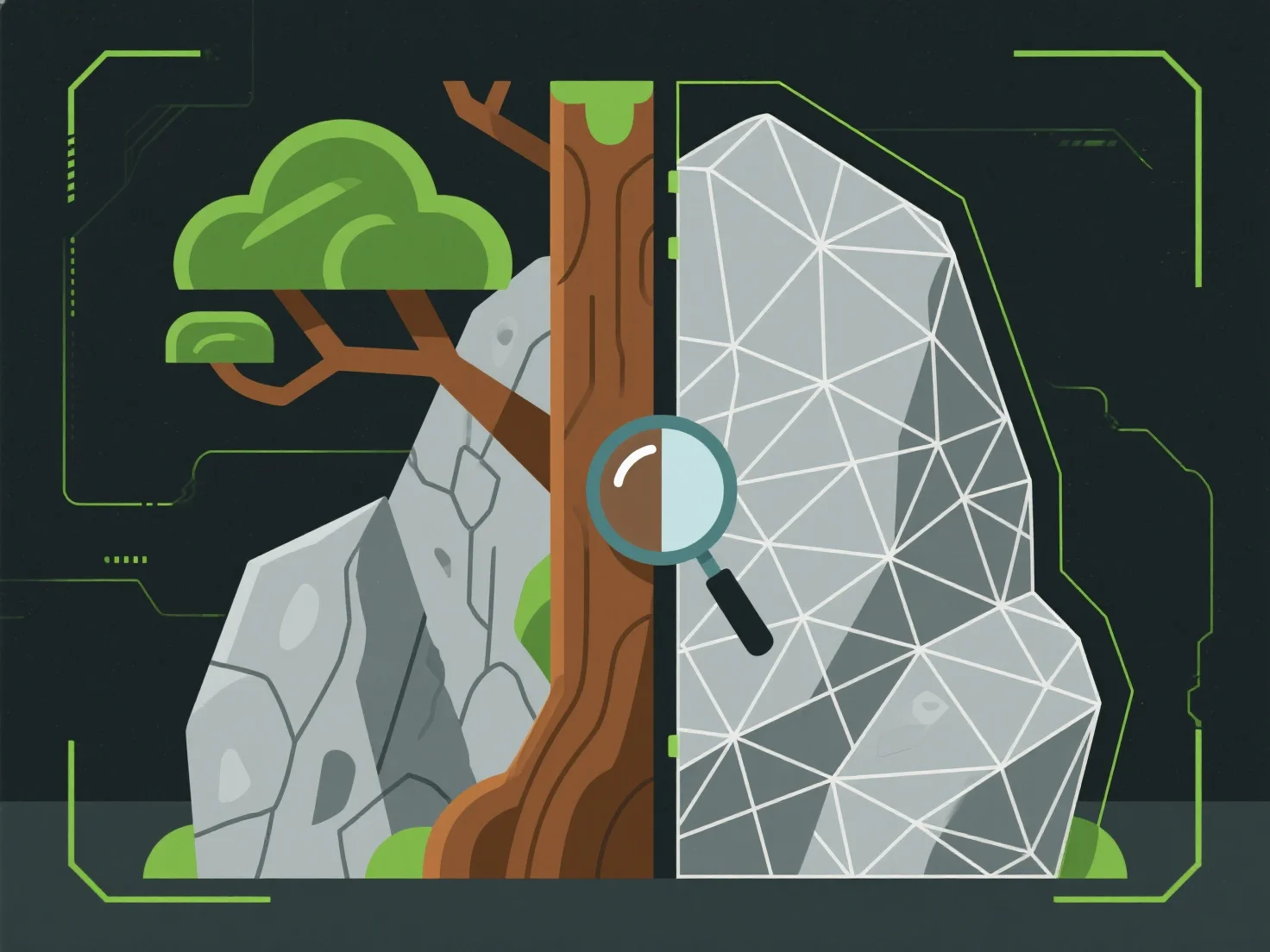
Dalam pemodelan 3D, aset lingkungan seperti pohon dan batu disusun dengan menggabungkan fondasi geometris dasar dengan tekstur, detail, dan teknik khusus untuk mencapai realisme.
Mereka mulai dengan mesh dasar yang disederhanakan (seringkali low-poly) untuk menentukan bentuk intinya. Misalnya, silinder untuk batang pohon atau poligon kasar untuk sebuah batu.
Selanjutnya, tekstur resolusi tinggi diterapkan: pola kulit kayu untuk pohon, butiran batu untuk bebatuan, menggunakan alat-alat seperti PBR (Physically Based Rendering) untuk meniru bahan-bahan di dunia nyata.
Untuk pohon, kelompok daun atau cabang dapat ditambahkan melalui sistem partikel atau geometri instansi; batu sering menggunakan peta displacement untuk mensimulasikan retakan atau tonjolan.
Pendekatan berlapis ini menyeimbangkan efisiensi dan realisme, membuatnya mudah diakses bagi pemula untuk memulai dengan bentuk-bentuk dasar dan perpustakaan tekstur gratis.