


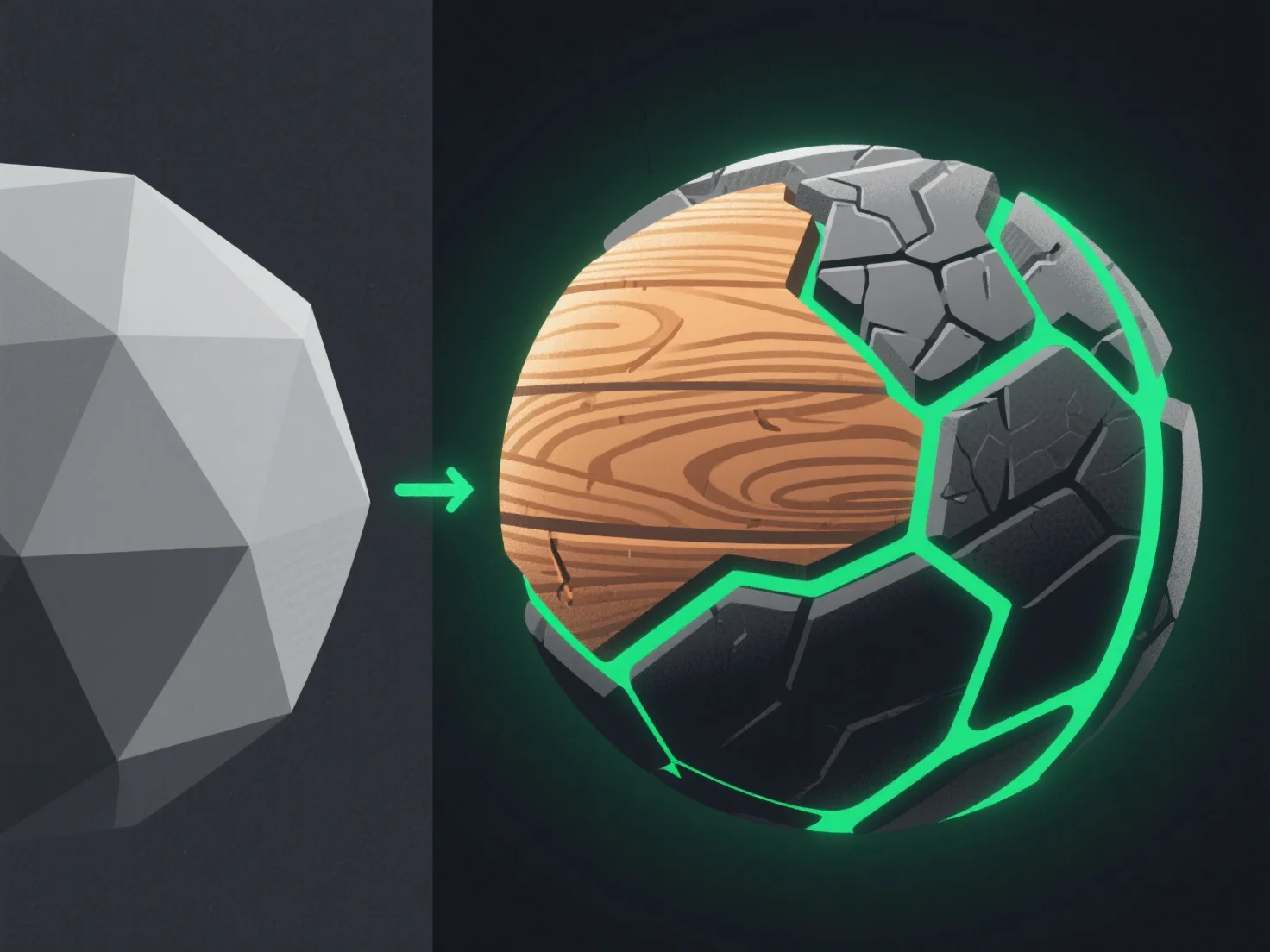
La cartographie des textures dans les moteurs de jeu améliore le réalisme des matériaux en appliquant des textures 2D aux surfaces des modèles 3D, simulant les détails de la surface tels que la couleur, la texture et l'interaction avec la lumière sans augmenter le nombre de polygones.
Les principaux types de textures incluent : - **Cartes d'albédo** : Définissent la couleur de base et les motifs de surface, imitant des matériaux naturels comme le bois ou la pierre. - **Cartes normales** : Simulent de petites bosses ou indentations de surface en modifiant la réflexion de la lumière, ajoutant de la profondeur sans géométrie supplémentaire. - **Cartes de rugosité/métalliques** : Contrôlent la diffusion de la lumière (rugosité) ou la réflexion (métallique), rendant les surfaces mates, brillantes ou métalliques.
En combinant ces textures, les moteurs reproduisent les propriétés des matériaux du monde réel, en équilibrant le niveau de détail et les performances pour que les surfaces aient un aspect plus réaliste.