


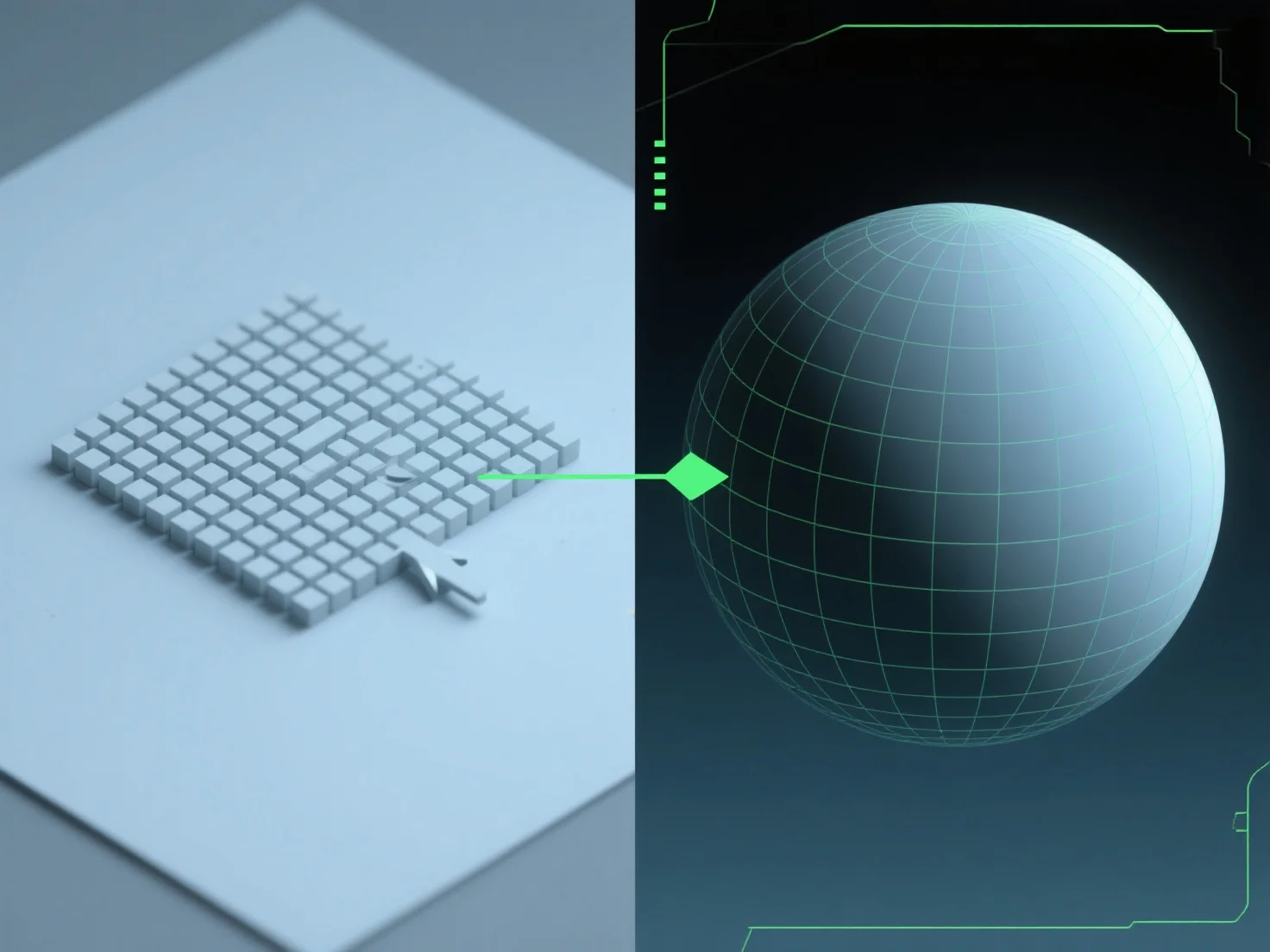
La cartographie de texture 3D diffère de la cartographie de texture 2D traditionnelle principalement par l'utilisation de données de volume 3D au lieu d'images 2D, permettant aux textures d'exister à l'intérieur d'un modèle 3D plutôt que juste sur sa surface.
- **Cartographie de texture 2D** : Enveloppe des images 2D (par exemple, photos, motifs) sur la surface d'un modèle pour simuler des détails de surface tels que la couleur ou la texture, limités aux surfaces externes. - **Cartographie de texture 3D** : Intègre les données de texture dans l'espace 3D, permettant aux textures de pénétrer dans le volume du modèle. Idéal pour des effets volumétriques tels que des nuages réalistes ou la diffusion sous-cutanée.
Cela rend la cartographie 3D plus appropriée pour les applications nécessitant de la profondeur et du réalisme des textures internes, contrairement à la 2D qui se concentre uniquement sur la surface.