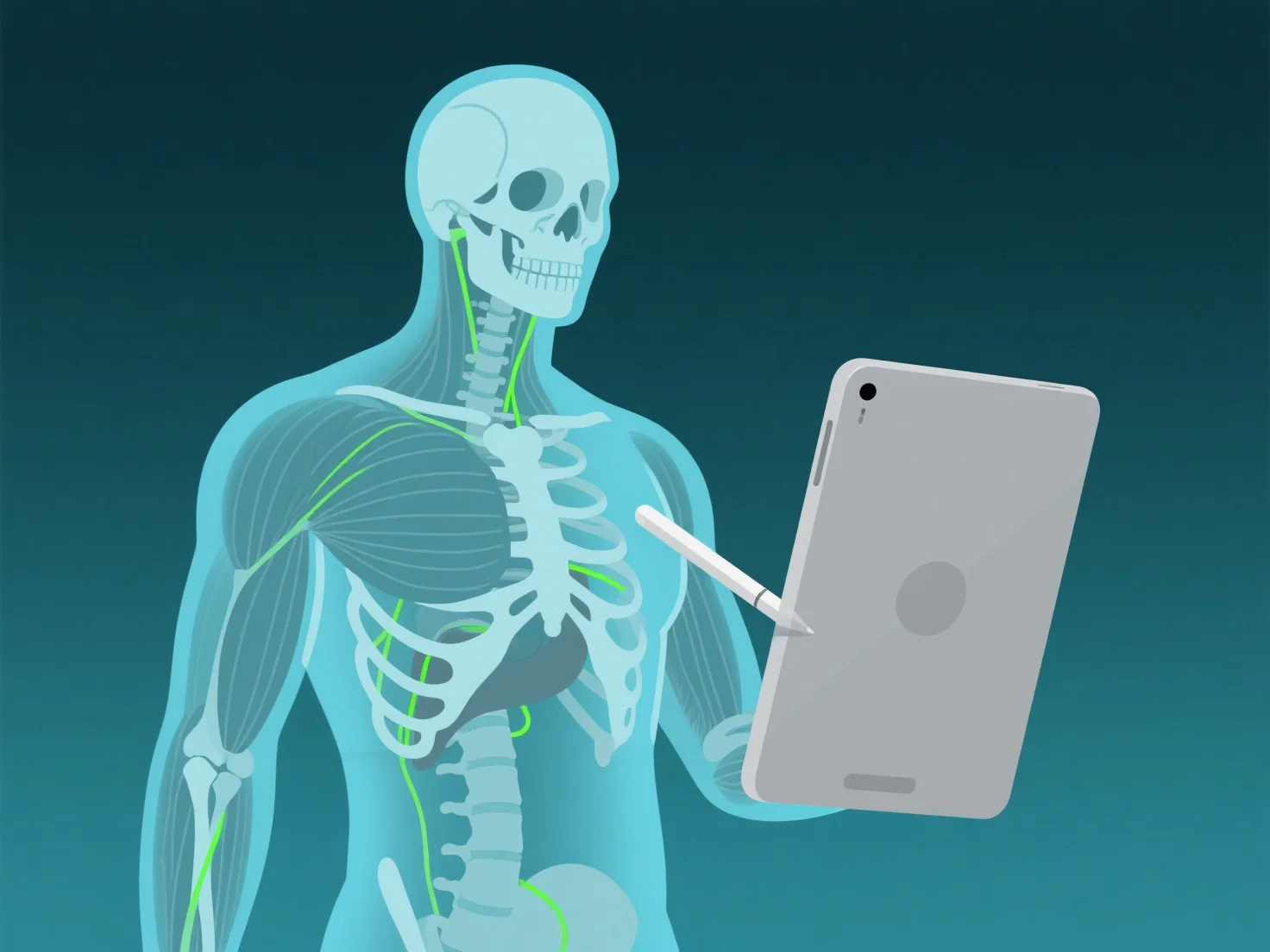
La modélisation 3D contribue à créer des représentations précises de l'anatomie humaine en intégrant des données d'imagerie médicale pour construire des structures numériques tridimensionnelles détaillées. Elle transforme les données de scan 2D (telles que la TDM ou l'IRM) en modèles 3D qui capturent les relations spatiales précises, les textures et les détails internes des organes, des os et des tissus. Ces modèles permettent également une manipulation interactive. Les utilisateurs peuvent les faire pivoter, les zoomer ou les disséquer virtuellement, ce qui facilite la visualisation des caractéristiques anatomiques complexes à des fins d'apprentissage ou de planification chirurgicale. Cette combinaison de précision des données et de fonctionnalité interactive garantit que la modélisation 3D fournit des représentations anatomiques très précises et accessibles.


Comment la modélisation 3D contribue-t-elle à créer des représentations précises de l'anatomie humaine ?
La modélisation 3D crée des représentations précises de l'anatomie humaine en intégrant l'imagerie médicale dans des structures numériques 3D interactives.