


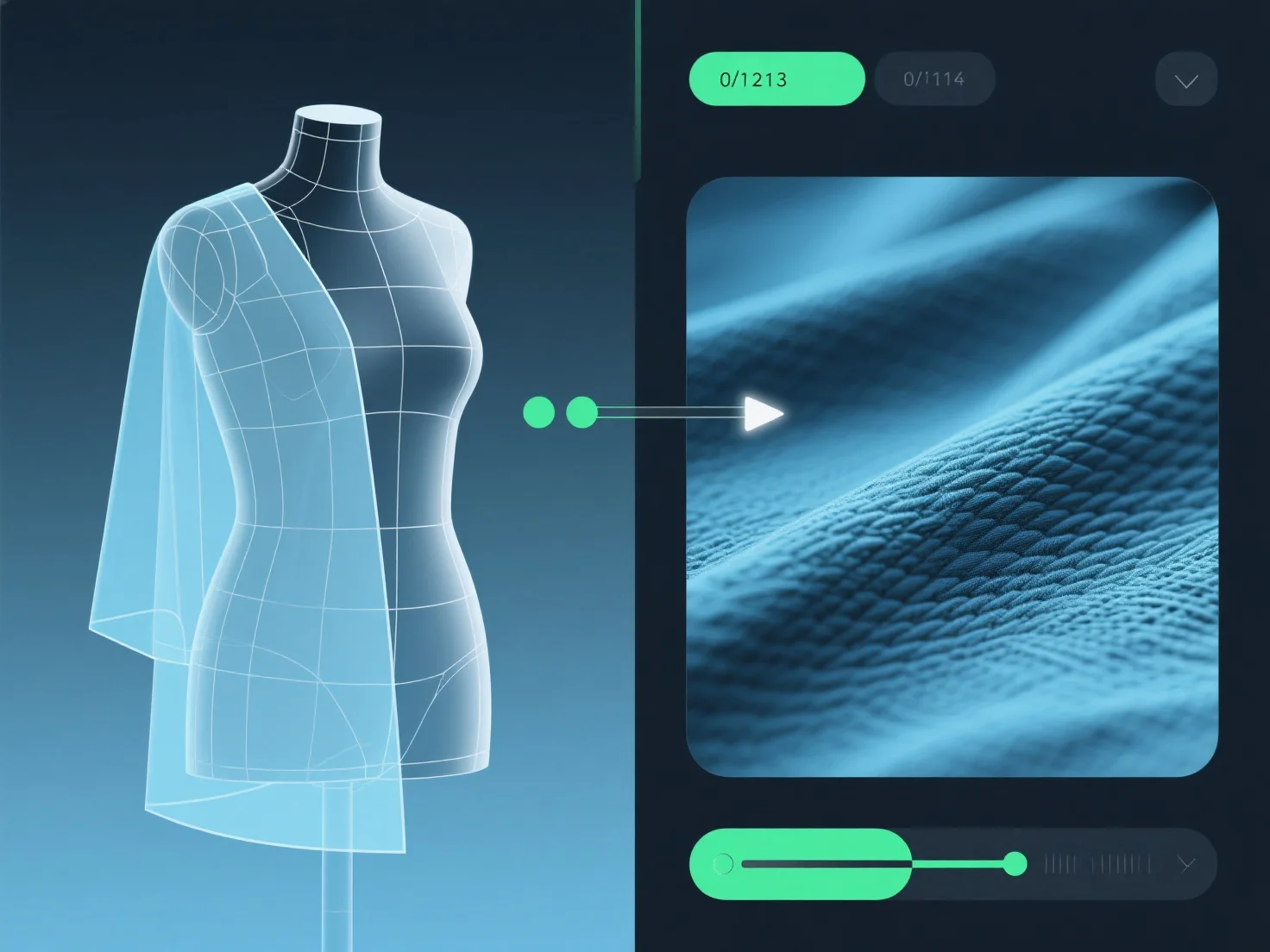
La modélisation 3D crée des vêtements et des textures de tissus réalistes en simulant les propriétés physiques et les détails de surface, en fusionnant le comportement des matériaux et la cartographie visuelle pour obtenir des résultats réalistes.
- **Simuler les propriétés physiques** : Il définit des attributs clés tels que l'élasticité, l'épaisseur et la friction. Ceux-ci déterminent la façon dont les tissus s'étirent, se plient ou s'enroulent sur des formes 3D, imitant les mouvements du monde réel.
- **Ajouter des détails de surface via des cartes de texture** : des cartes haute résolution reproduisent des motifs de tissage, des coutures, des rides ou des défauts de tissu. Cela ajoute du réalisme visuel, faisant apparaître les textures comme étant tactiles, même dans les rendus numériques.
Ensemble, ces étapes garantissent que les textures des vêtements en 3D ont un aspect et un comportement authentiques, en faisant le lien entre les caractéristiques des tissus virtuels et physiques.