


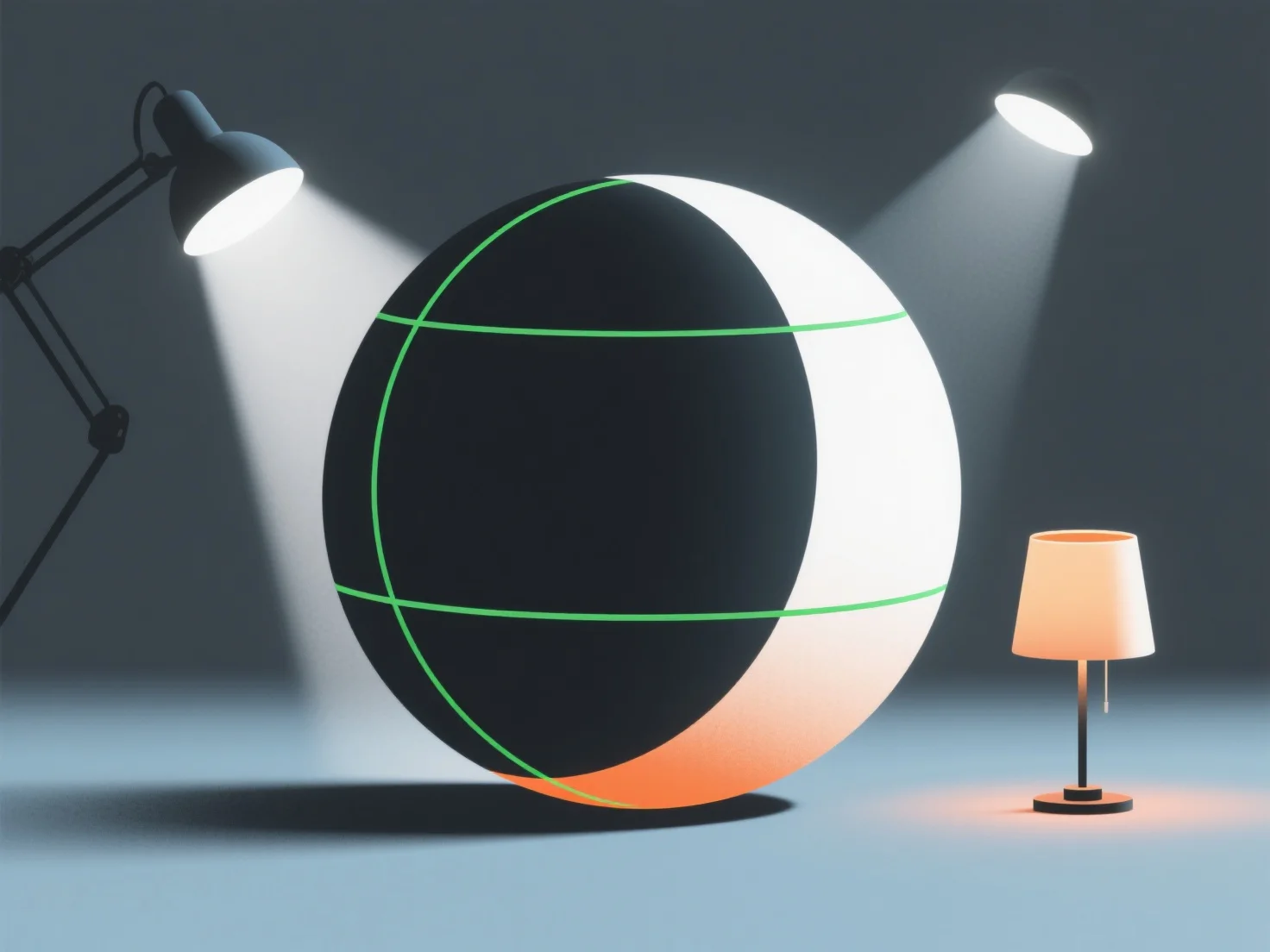
Différentes sources de lumière affectent le réalisme d'une scène 3D en influençant la répartition de l'éclairage, les caractéristiques des ombres et l'apparence des matériaux.
Les facteurs clés résident dans la façon dont les propriétés de la lumière interagissent avec les éléments de la scène : - La température des couleurs : les sources aux tons chauds (par exemple, les ampoules à incandescence) créent des atmosphères intérieures confortables, tandis que les sources aux tons froids (par exemple, la lumière du jour) conviennent mieux aux scènes extérieures. - L'intensité et la direction : les lumières d'ambiance douces et diffuses produisent des transitions d'ombres progressives, imitant la lumière ambiante réelle ; les lumières ponctuelles fortes peuvent provoquer des ombres nettes et non naturelles si elles ne sont pas équilibrées.
Les applications pratiques incluent : - La visualisation architecturale : Utiliser la lumière du soleil directionnelle et une lumière ambiante douce pour reproduire l'éclairage réel d'un bâtiment. - L'animation de personnages : Ajuster la couleur et l'intensité de la lumière pour correspondre aux tons émotionnels.
Pour renforcer le réalisme, référez-vous aux configurations du monde réel. Combinez la lumière clé (éclairage principal), la lumière de remplissage (pour réduire la dureté des ombres) et la lumière de bord (pour définir les contours des objets).