


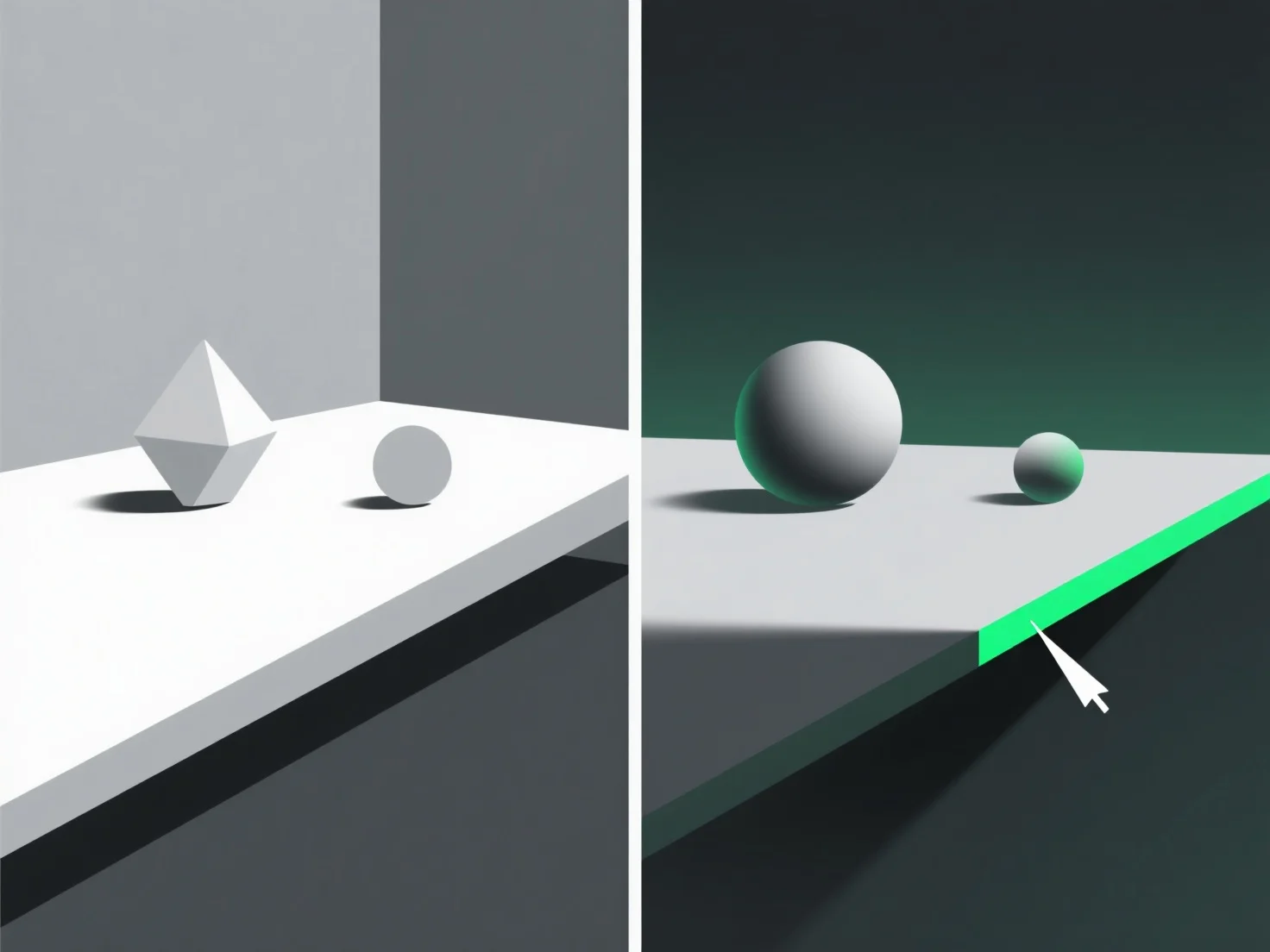
L'occlusion ambiante est une technique de rendu 3D qui simule l'occlusion de la lumière ambiante par les surfaces voisines, influençant le rendu 3D en améliorant la perception de la profondeur et le réalisme grâce à des ombres douces et naturelles dans les crevasses et les espaces étroits.
Cela fonctionne en calculant la lumière indirecte atteignant chaque point d'un modèle 3D ; les zones entourées d'autres objets reçoivent moins de lumière, apparaissant plus sombres, ce qui imite le comportement de la lumière dans le monde réel.
Il est souvent associé à l'éclairage global pour ajouter des détails subtils à la surface, empêchant les modèles 3D d'avoir l'air plats et leur donnant une apparence plus réaliste.
Dans les scènes complexes, l'ajustement des paramètres d'occlusion ambiante peut renforcer les relations spatiales entre les objets, améliorant encore la crédibilité de la scène.