


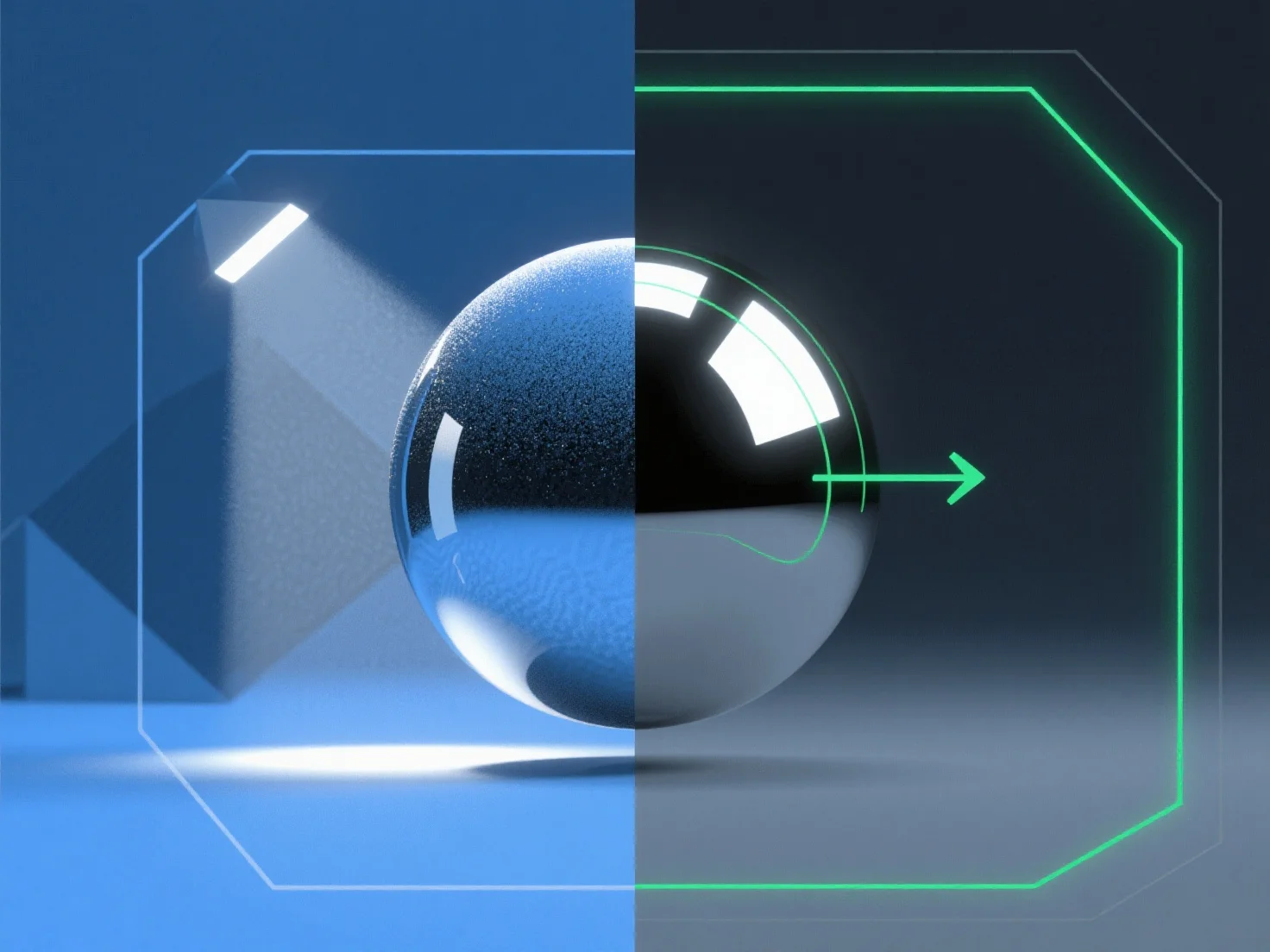
Dans le rendu en temps réel, les réflexions sont simplifiées avec des approximations pour répondre aux besoins de performance, tandis que le rendu hors ligne permet des calculs de réflexion précis et détaillés sans contraintes de temps strictes.
Les méthodes en temps réel utilisent souvent des réflexions dans l'espace d'écran (SSR) ou des cartes cubiques pour simuler rapidement les réflexions, en priorisant le taux de rafraîchissement plutôt que la précision absolue. Cependant, le rendu hors ligne utilise généralement le lancer de rayons ou l'éclairage global, en traçant les chemins de lumière pour calculer des réflexions réalistes et physiquement précises.
Pour les jeux vidéo ou les applications interactives, les reflets en temps réel assurent une interaction fluide avec l'utilisateur ; pour les visualisations haut de gamme ou les films, le rendu hors ligne avec des reflets détaillés améliore la fidélité visuelle.