


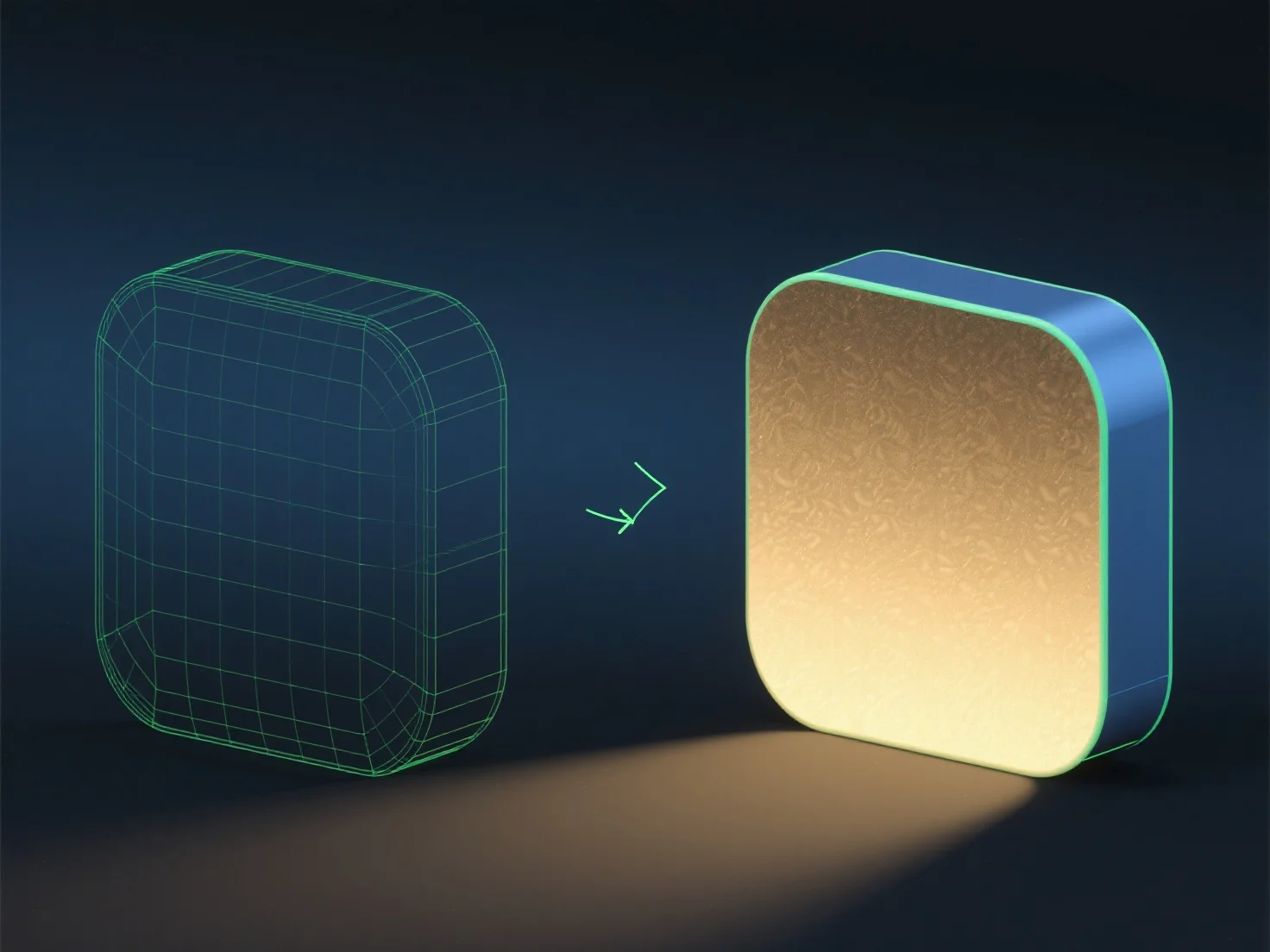
Los pasos para renderizar un modelo 3D típicamente incluyen la configuración de la escena, la asignación de materiales/texturas, la configuración de la iluminación, el posicionamiento de la cámara y el cálculo final del renderizado.
La configuración de la escena implica colocar el modelo 3D en un entorno virtual, definiendo su posición y escala. La asignación de materiales/texturas establece las propiedades de la superficie.
Para principiantes, usar software con materiales/iluminación preestablecidos puede simplificar la práctica de estos pasos.