


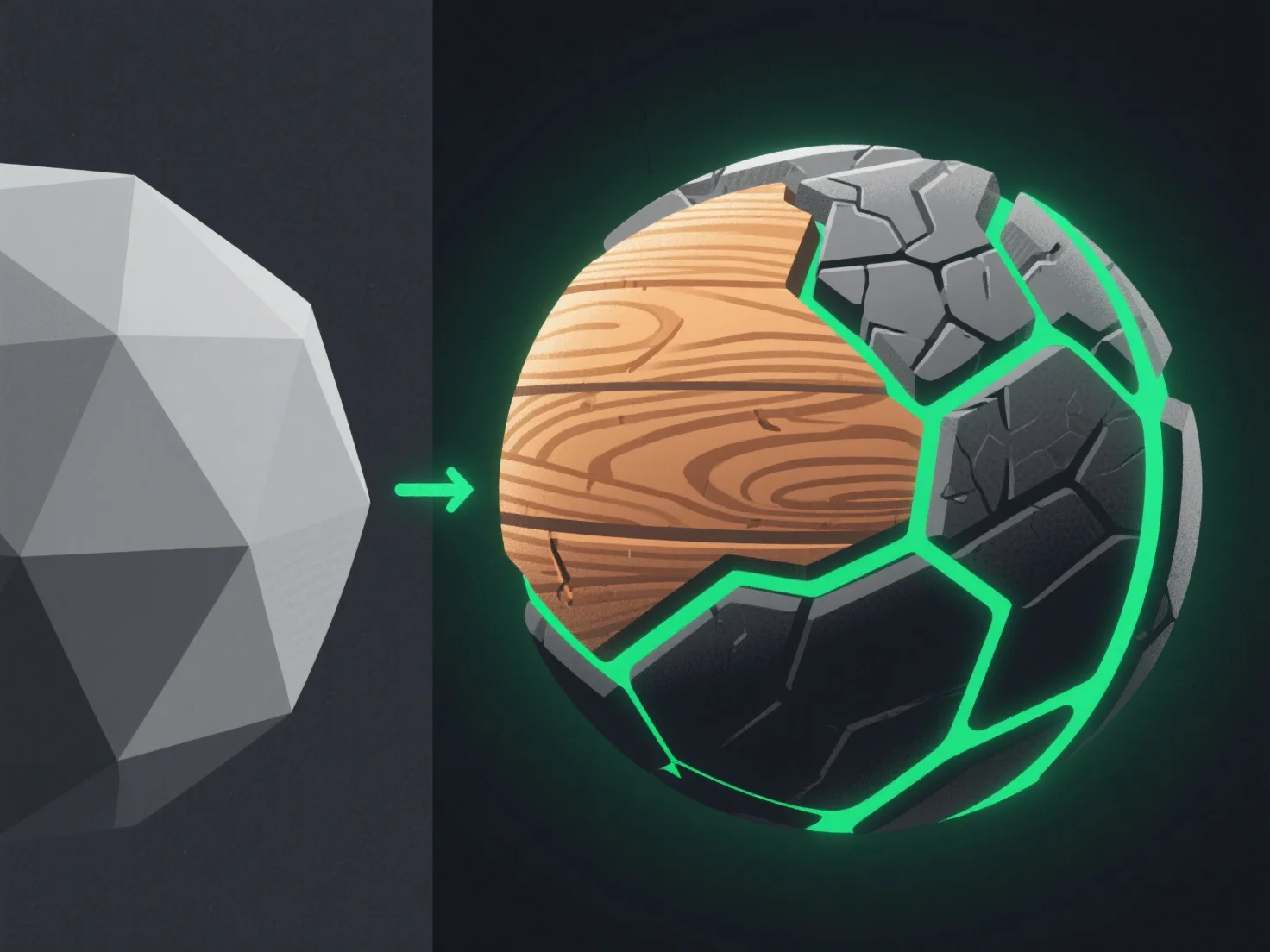
El mapeo de texturas en los motores de juego mejora el realismo de los materiales al aplicar texturas 2D a las superficies de los modelos 3D, simulando detalles de la superficie como el color, la textura y la interacción con la luz sin aumentar el número de polígonos.
Los tipos de texturas clave incluyen: - **Mapas de albedo**: Definen el color base y los patrones de la superficie, imitando materiales naturales como madera o piedra. - **Mapas normales**: Simulan pequeñas protuberancias/hendiduras en la superficie al alterar la reflexión de la luz, añadiendo profundidad sin geometría adicional. - **Mapas de rugosidad/metálico**: Controlan la dispersión de la luz (rugosidad) o la reflexión (metálico), haciendo que las superficies sean mate, brillantes o metálicas.
Al combinar estas texturas, los motores replican las propiedades de los materiales del mundo real, equilibrando el detalle y el rendimiento para hacer que las superficies se vean más realistas.