


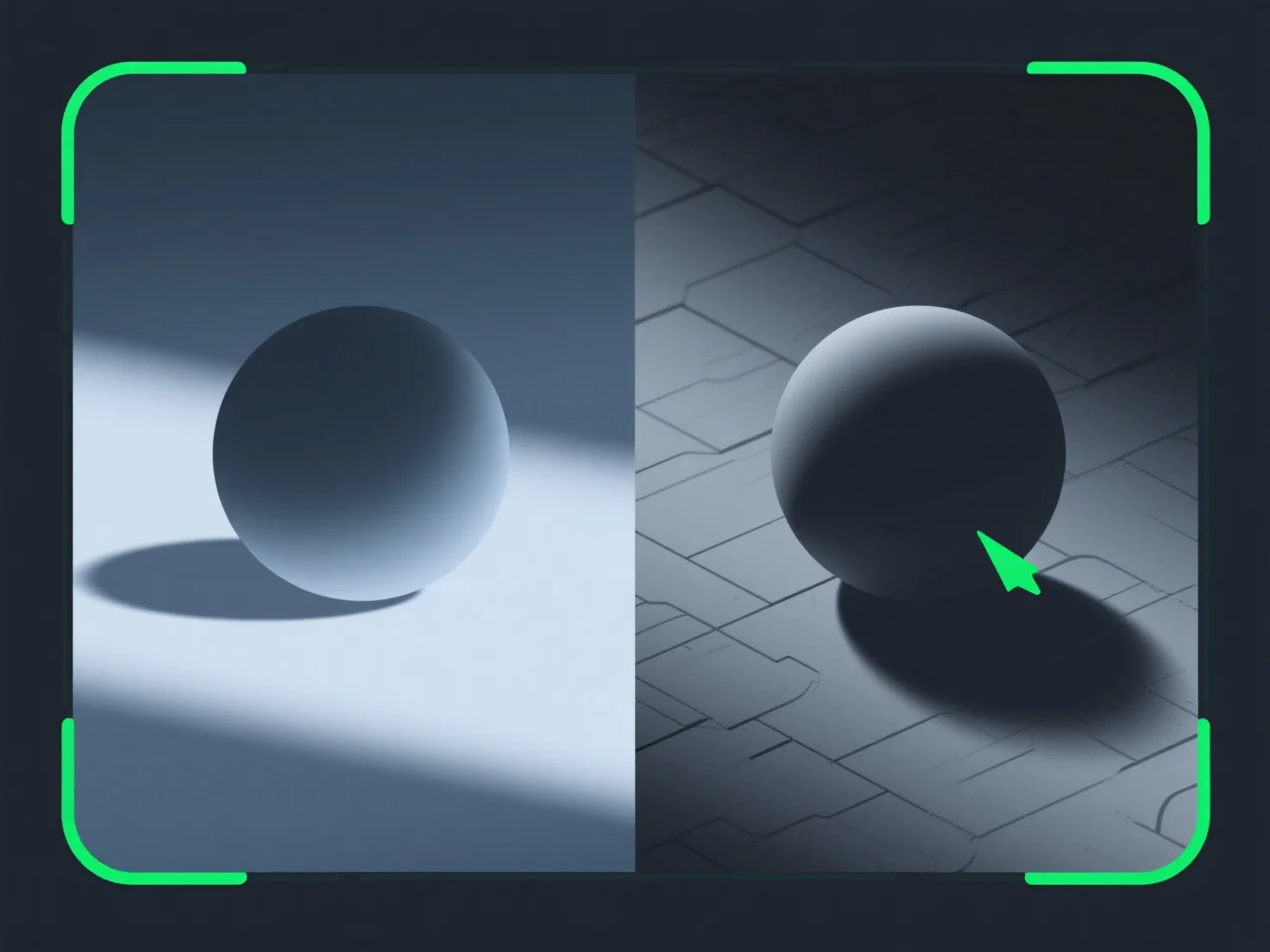
La renderización en tiempo real maneja las sombras con métodos simplificados y centrados en la velocidad, mientras que la renderización fuera de línea utiliza técnicas complejas para una calidad de sombras superior.
El tiempo real a menudo depende de los mapas de sombras: estas sombras aproximadas se obtienen proyectando información de profundidad sobre una textura 2D, priorizando el cálculo rápido sobre los detalles finos. Sin embargo, el renderizado fuera de línea emplea el trazado de rayos para calcular con precisión las trayectorias de la luz, lo que resulta en bordes más suaves, efectos de penumbra e interacciones realistas con escenas complejas.
En la práctica, los métodos de sombras en tiempo real son adecuados para contextos interactivos como los juegos, mientras que las técnicas fuera de línea son ideales para renderizados estáticos de alta calidad, como las películas.