


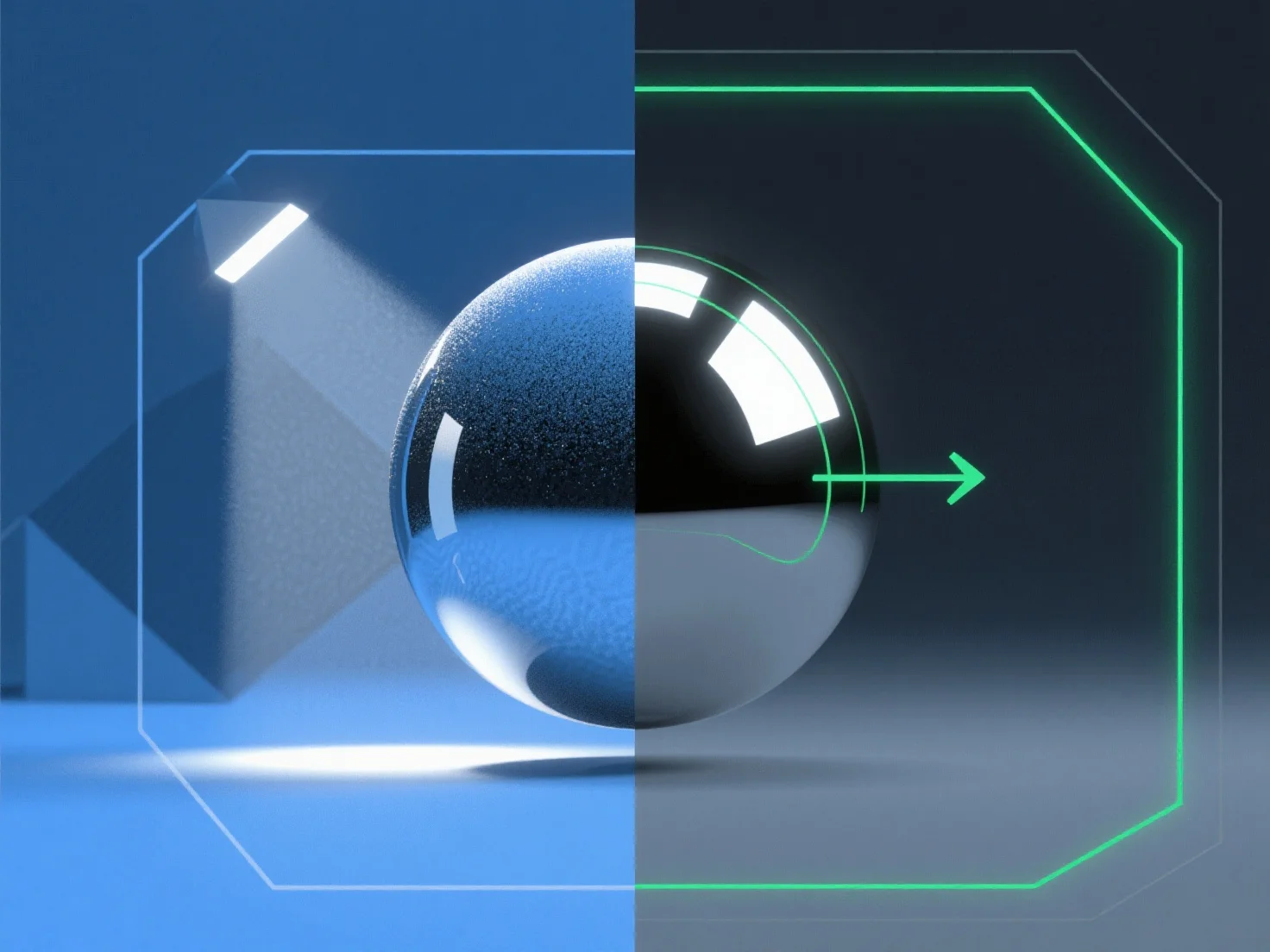
En el renderizado en tiempo real, los reflejos se simplifican con aproximaciones para satisfacer las necesidades de rendimiento, mientras que el renderizado fuera de línea permite cálculos de reflejos precisos y detallados sin restricciones estrictas de tiempo.
Los métodos en tiempo real a menudo utilizan reflejos en el espacio de la pantalla (SSR) o mapas cúbicos para simular reflejos rápidamente, priorizando la velocidad de fotogramas sobre la precisión perfecta. Sin embargo, el renderizado fuera de línea generalmente emplea trazado de rayos o iluminación global, rastreando las trayectorias de la luz para calcular reflejos realistas y físicamente precisos.
Para los videojuegos o aplicaciones interactivas, los reflejos en tiempo real aseguran una interacción fluida con el usuario; para las visualizaciones de alta gama o películas, el renderizado fuera de línea con reflejos detallados mejora la fidelidad visual.