


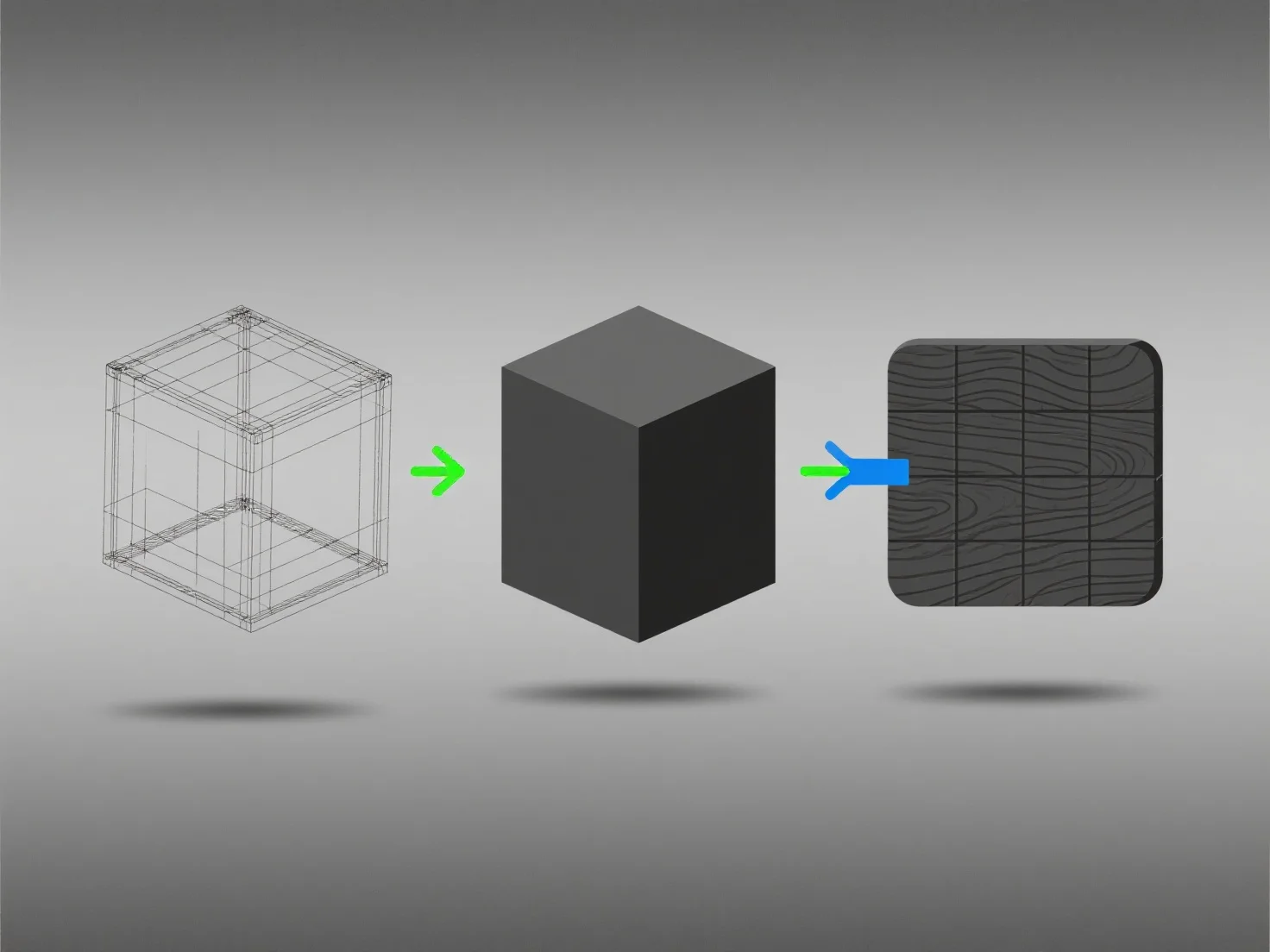
Las texturas mejoran la composición de los modelos 3D al agregar detalles visuales y características de la superficie, aumentando el realismo y definiendo la identidad visual del modelo.
- **Simular materiales reales**: Utilizan color, patrones y mapas (por ejemplo, difuso para el color base, normal para las protuberancias de la superficie) para imitar materiales como madera, metal o tela, haciendo que el modelo sea fácilmente reconocible. - **Diferenciar superficies**: Las texturas ayudan a distinguir entre las partes del modelo (por ejemplo, un asiento de cuero frente a un marco de plástico), aclarando la estructura y el propósito. - **Guiar la percepción de la forma**: Al agregar resaltados, sombras o aspereza, las texturas enfatizan la profundidad y la forma, haciendo que la geometría plana parezca tridimensional.
En resumen, las texturas unen la geometría básica y los detalles realistas, elevando la composición de un modelo 3D de simple a visualmente convincente.