


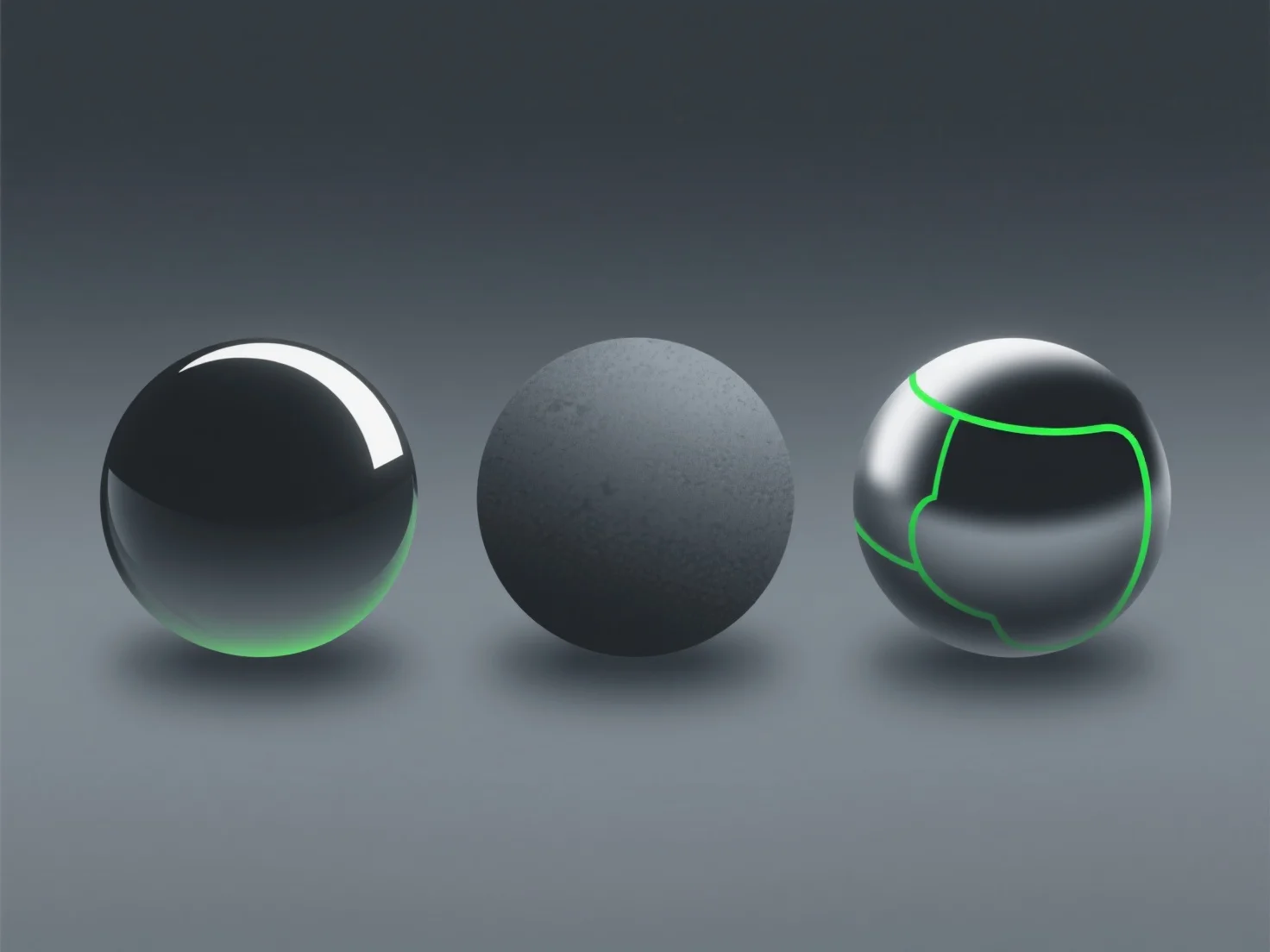
Los materiales dan forma directamente a la salida visual de los modelos 3D al definir la apariencia de la superficie y el realismo a través de la interacción con la luz, como la reflexión, la absorción o la transparencia.
Detallan propiedades básicas como el color, la textura, el brillo y la aspereza, determinando si un modelo se ve metálico, mate, transparente o texturizado en renders o pantallas en tiempo real.
Las aplicaciones clave en diversas industrias incluyen: - Juegos: Crear superficies realistas (por ejemplo, armaduras metálicas, ropa de tela) para mejorar la inmersión en la escena. - Arquitectura: Simular materiales como madera, vidrio o hormigón para obtener vistas previas realistas de los edificios. - Diseño de productos: Previsualizar cómo los materiales (plástico, metal, cuero) aparecen en los prototipos bajo diferentes condiciones de iluminación.
Ajustando las propiedades del material.