


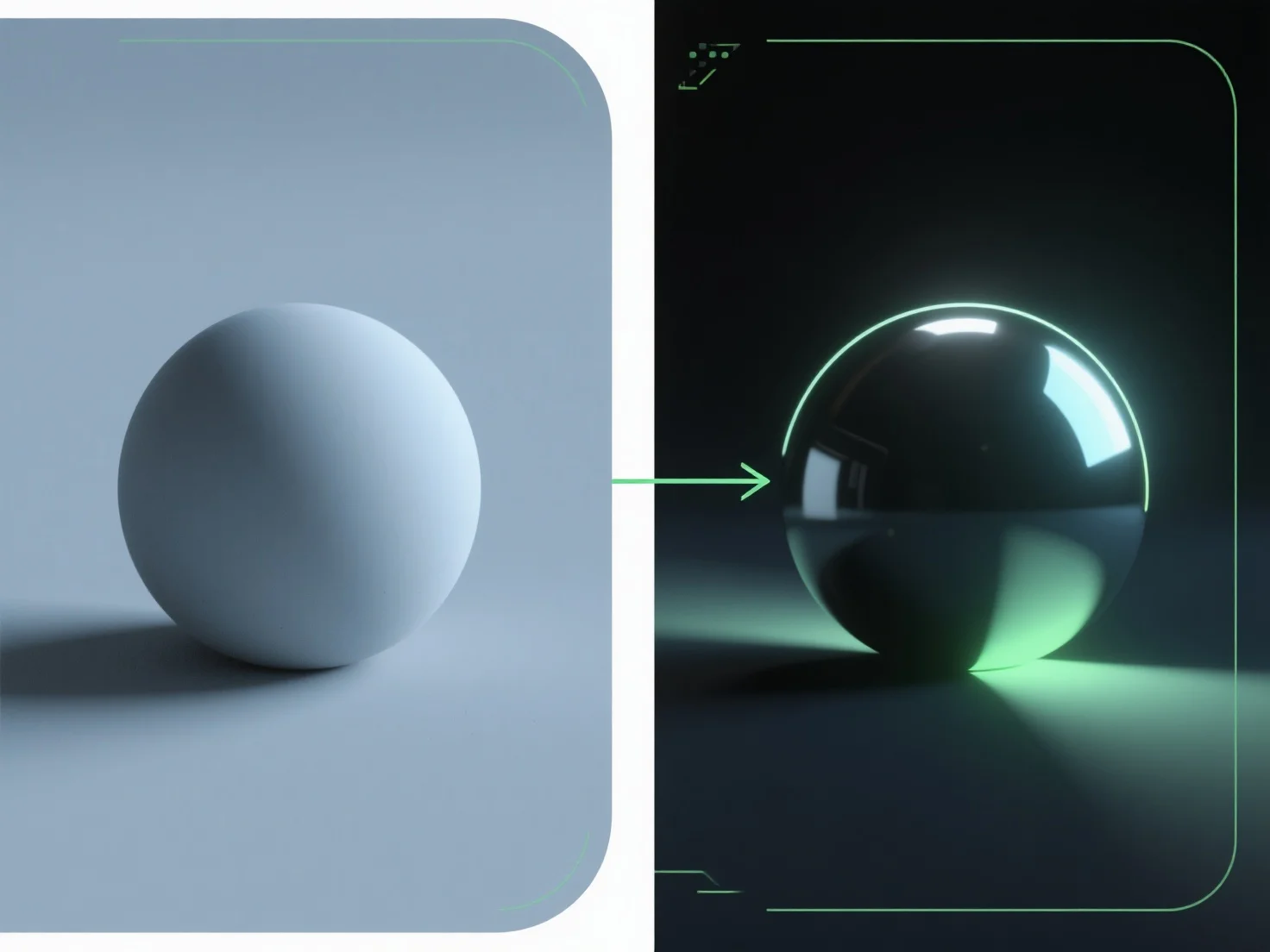
Renderung ist der allgemeine Prozess der Erstellung von 2D-Bildern aus 3D-Modellen, während Raytracing eine spezialisierte Rendering-Technik ist, die Lichtwege simuliert, um lebensechte Visuals zu erzeugen.
Das Rendering umfasst alle Methoden zur Umwandlung von 3D-Daten in sichtbare Bilder, einschließlich gängiger Ansätze wie der Rasterisierung. Raytracing, als Teilbereich des Rendering, funktioniert, indem Lichtstrahlen von der Kamera zu Lichtquellen verfolgt werden, und imitiert dabei präzise reale Lichteffekte wie Schatten, Reflexionen und Brechungen.
In der Anwendung variieren die Rendering-Techniken je nach Bedarf: Die Rasterisierung priorisiert die Geschwindigkeit für Echtzeit-Anwendungen wie Spiele, während Raytracing für hochwertige, realistische Bilder in Filmen oder statischen Bildern gewählt wird.