


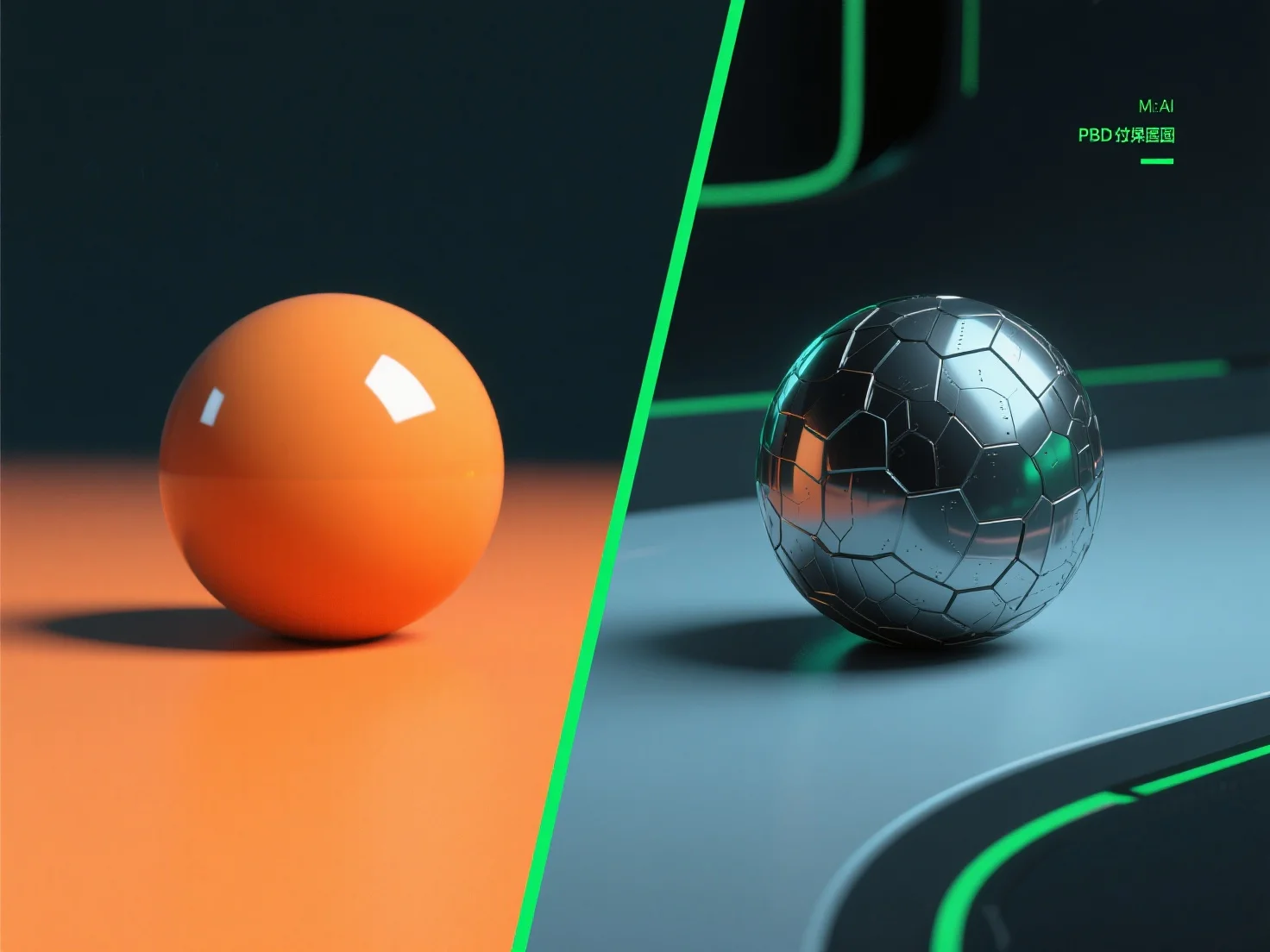
PBR (Physically Based Rendering)-Workflows unterscheiden sich von traditionellem Rendering vor allem in ihrem Ansatz zur Licht- und Materialsimulation. PBR stützt sich zur Genauigkeit auf physikalische Prinzipien der realen Welt, während traditionelle Techniken künstlerische Annäherungen verwenden.
Traditionelles Rendering beinhaltet häufig manuelle Anpassungen von Parametern wie Diffuse und Specular durch Künstler, um die gewünschten visuellen Effekte zu erzielen. Diese subjektive Feinabstimmung kann zu Inkonsistenzen führen, da die Ergebnisse bei unterschiedlichen Lichtszenarien möglicherweise nicht standhalten.
PBR hingegen verwendet gemessene Materialeigenschaften.
Kurz gesagt, priorisiert PBR physikalische Genauigkeit für einen zuverlässigen, skalierbaren Realismus, während traditionelle Methoden stärker von künstlerischer Interpretation abhängen.