


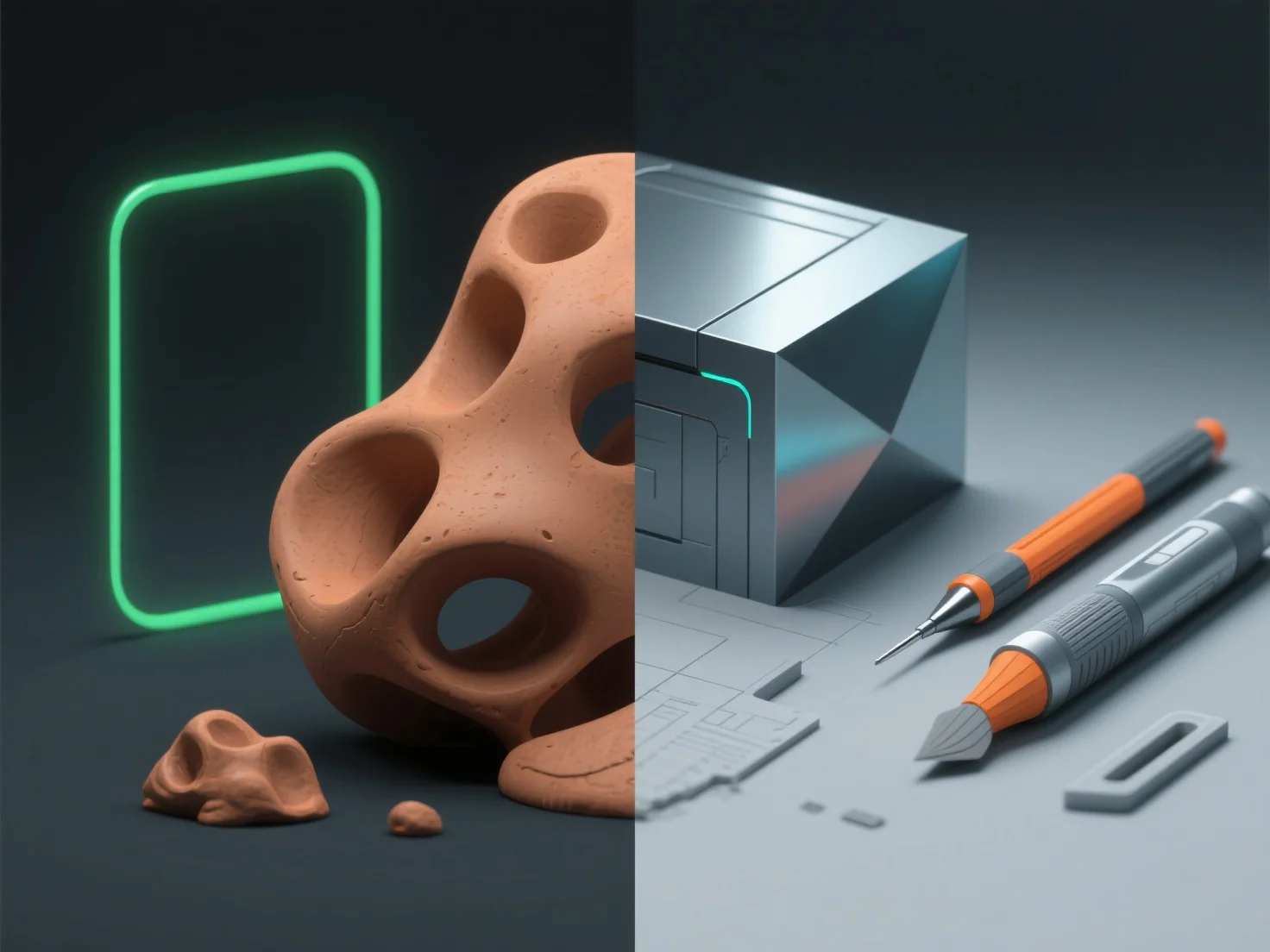
Bei der Kombination von Skulptur- und Hard-Surface-Modellierungswerkzeugen sind Schlüsselüberlegungen die Integration des Workflows, die Geometriekompatibilität und die Topologiekonsistenz, um ein reibungsloses Zusammenführen organischer Details zu gewährleisten.
- **Workflow-Integration**: Planen Sie Werkzeugwechsel frühzeitig. Verwenden Sie Modellierwerkzeuge (z. B. ZBrush) für organische Details und Hartflächenwerkzeuge (z. B. Blenders Boolesche Operationen) für scharfe Kanten, um uneinheitliche Prozesse zu vermeiden. - **Geometrie-Kompatibilität**: Balancieren Sie die Netzauflösung: hohe Polyanzahl für modellierte Details, um feine Texturen einzufangen, optimierte niedrige Polyanzahl für Hartflächen, um Leistungsverzögerungen zu verhindern. - **Topologie-Konsistenz**: Gleichen Sie den Kantenfluss zwischen modellierten und Hartflächenbereichen aus; eine inkonsistente Topologie kann zu Deformationsproblemen bei Animationen oder beim 3D-Druck führen.
Das Retopologisieren von geformten Netzen zuerst verbessert oft die Ausrichtung mit Hartflächenkomponenten und erhöht die Gesamtintegrität des Modells.