


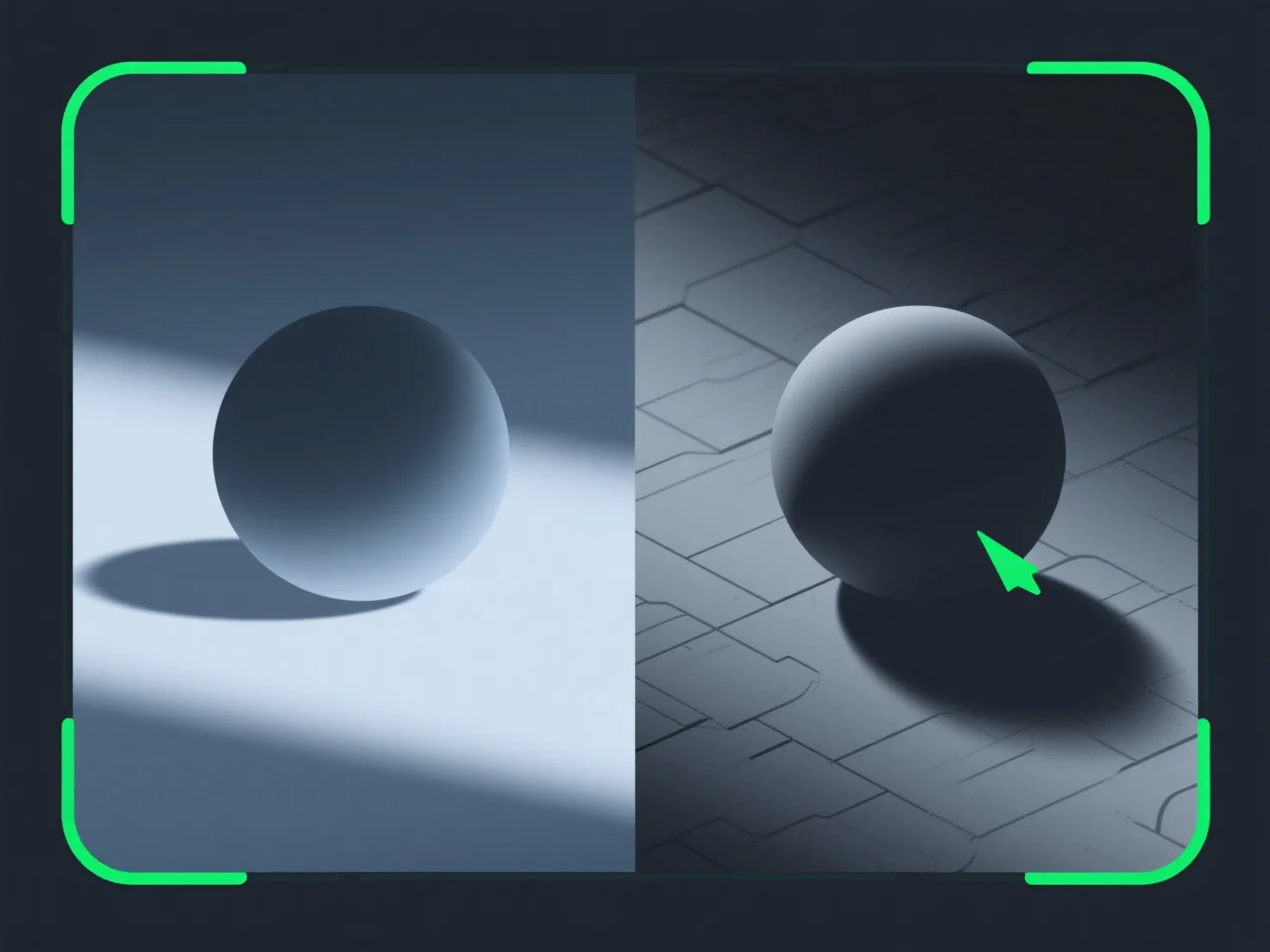
Das Echtzeit-Rendering verarbeitet Schatten mit vereinfachten, geschwindigkeitsorientierten Methoden, während das Offline-Rendering komplexe Techniken für eine überlegene Schattenqualität einsetzt.
Echtzeit basiert häufig auf Schattenkarten: Diese approximieren Schatten, indem sie Tiefeninformationen auf eine 2D-Textur projizieren und schnelle Berechnungen über detaillierte Darstellungen priorisieren. Offline-Rendering hingegen verwendet Raytracing, um Lichtwege genau zu berechnen, was zu weicheren Kanten, Halbschatten-Effekten und realistischen Interaktionen mit komplexen Szenen führt.
In der Praxis eignen sich Echtzeit-Schattenmethoden für interaktive Kontexte wie Spiele, während Offline-Techniken ideal für hochwertige statische Renderings wie Filme sind.