


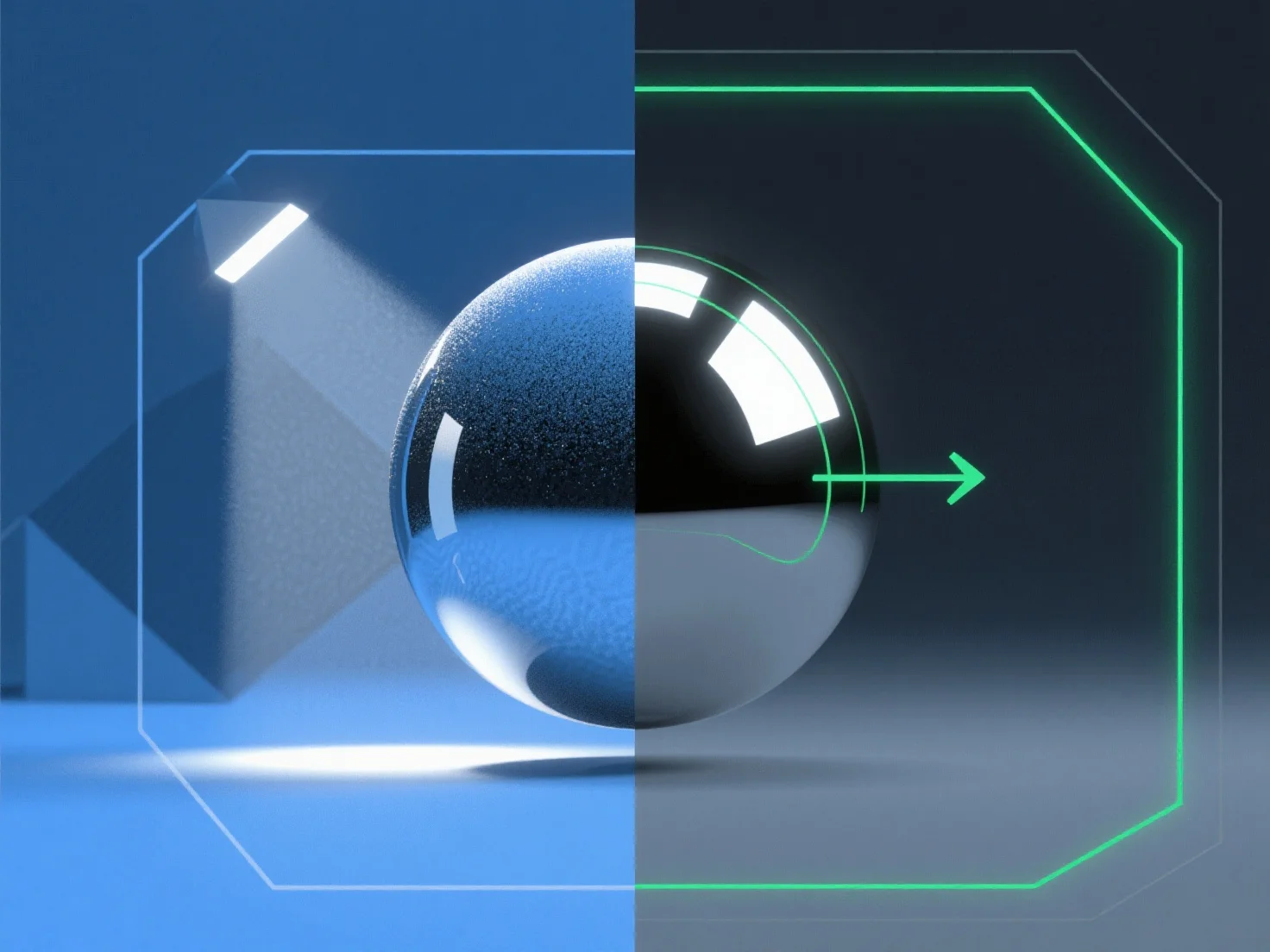
Bei der Echtzeit-Rendering werden Reflexionen mit Annäherungen vereinfacht, um die Leistungsanforderungen zu erfüllen, während das Offline-Rendering genaue, detaillierte Reflexionsberechnungen ohne strenge Zeitbeschränkungen ermöglicht.
Echtzeit-Methoden verwenden häufig Bildschirmraum-Reflexionen (SSR) oder Kubemaps, um Reflexionen schnell zu simulieren, und priorisieren dabei die Bildrate gegenüber perfekter Genauigkeit. Offline-Rendering hingegen setzt normalerweise Raytracing oder globale Beleuchtung ein, um Lichtwege zu verfolgen und physikalisch korrekte, realistische Reflexionen zu berechnen.
Für Videospiele oder interaktive Apps sorgen Echtzeit-Reflexionen für eine reibungslose Benutzerinteraktion; für hochwertige Visualisierungen oder Filme verbessert das Offline-Rendering mit detaillierten Reflexionen die visuelle Qualität.