


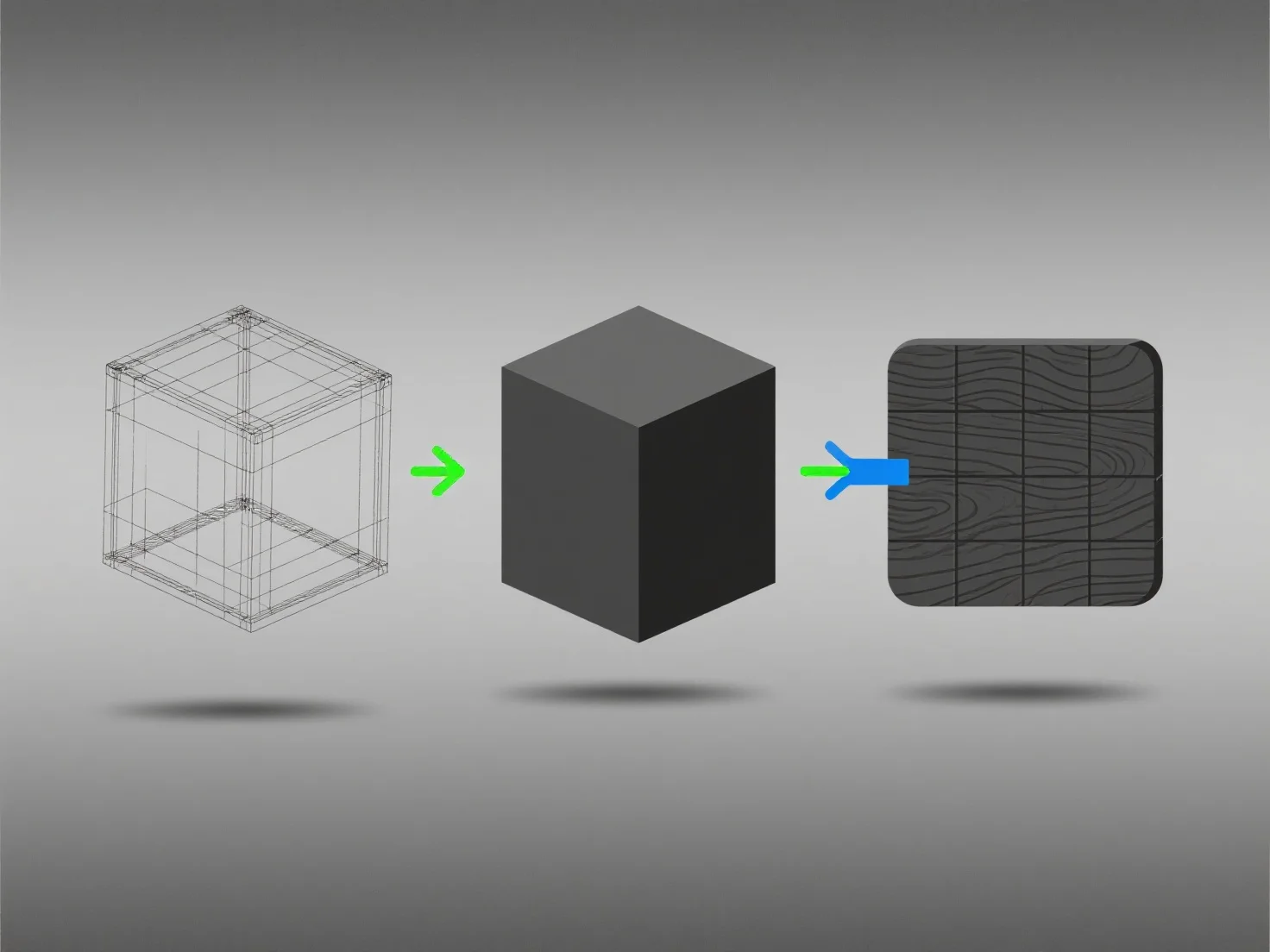
Texturen verbessern die Komposition von 3D-Modellen, indem sie visuelle Details und Oberflächenmerkmale hinzufügen, den Realismus steigern und die visuelle Identität des Modells definieren.
- **Simulieren Sie echte Materialien**: Sie verwenden Farbe, Muster und Karten (z. B. Diffuse für die Grundfarbe, Normal für Oberflächenunebenheiten), um Materialien wie Holz, Metall oder Stoff nachzuahmen, und machen das Modell dadurch verständlicher. - **Unterscheiden Sie Oberflächen**: Texturen helfen, zwischen Modellteilen zu unterscheiden (z. B. ein Ledersitz gegenüber einem Kunststoffrahmen), wodurch die Struktur und der Zweck klarer werden. - **Lenken Sie die Wahrnehmung der Form**: Durch das Hinzufügen von Highlights, Schatten oder Rauheit betonen Texturen Tiefe und Form und lassen flache Geometrie dreidimensional erscheinen.
Kurz gesagt, verbinden Texturen grundlegende Geometrie und lebensechte Details und heben die Komposition eines 3D-Modells von einfach zu visuell überzeugend.