


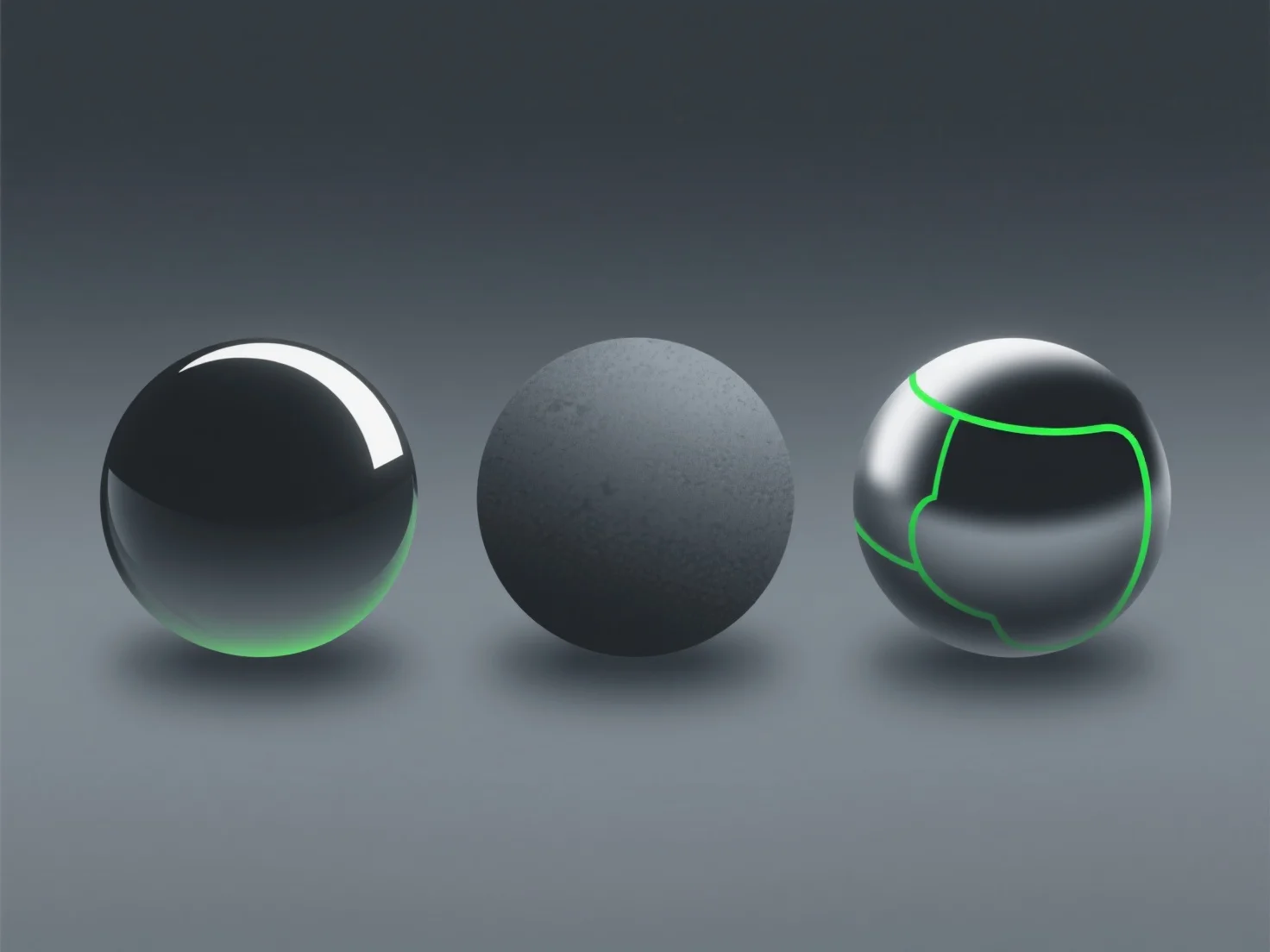
Materialien gestalten direkt die visuelle Ausgabe von 3D-Modellen, indem sie das Erscheinungsbild der Oberfläche und den Realismus durch Lichtinteraktion, wie Reflexion, Absorption oder Transparenz, definieren.
Sie beschreiben detailliert Kernmerkmale wie Farbe, Textur, Glanz und Rauheit und bestimmen, ob ein Modell in Rendern oder Echtzeit-Anzeigen metallisch, matt, transparent oder strukturiert aussieht.
Zu den wichtigsten Anwendungen in verschiedenen Branchen gehören: - Gaming: Erstellung von lebensechten Oberflächen (z. B. metallische Rüstungen, Stoffkleidung), um das Eintauchen in die Szene zu verbessern. - Architektur: Simulation von Materialien wie Holz, Glas oder Beton für realistische Gebäudevorschauen. - Produktdesign: Vorschau, wie Materialien (Kunststoff, Metall, Leder) unter verschiedenen Lichtbedingungen auf Prototypen erscheinen.
Anpassung der Materialeigenschaften