


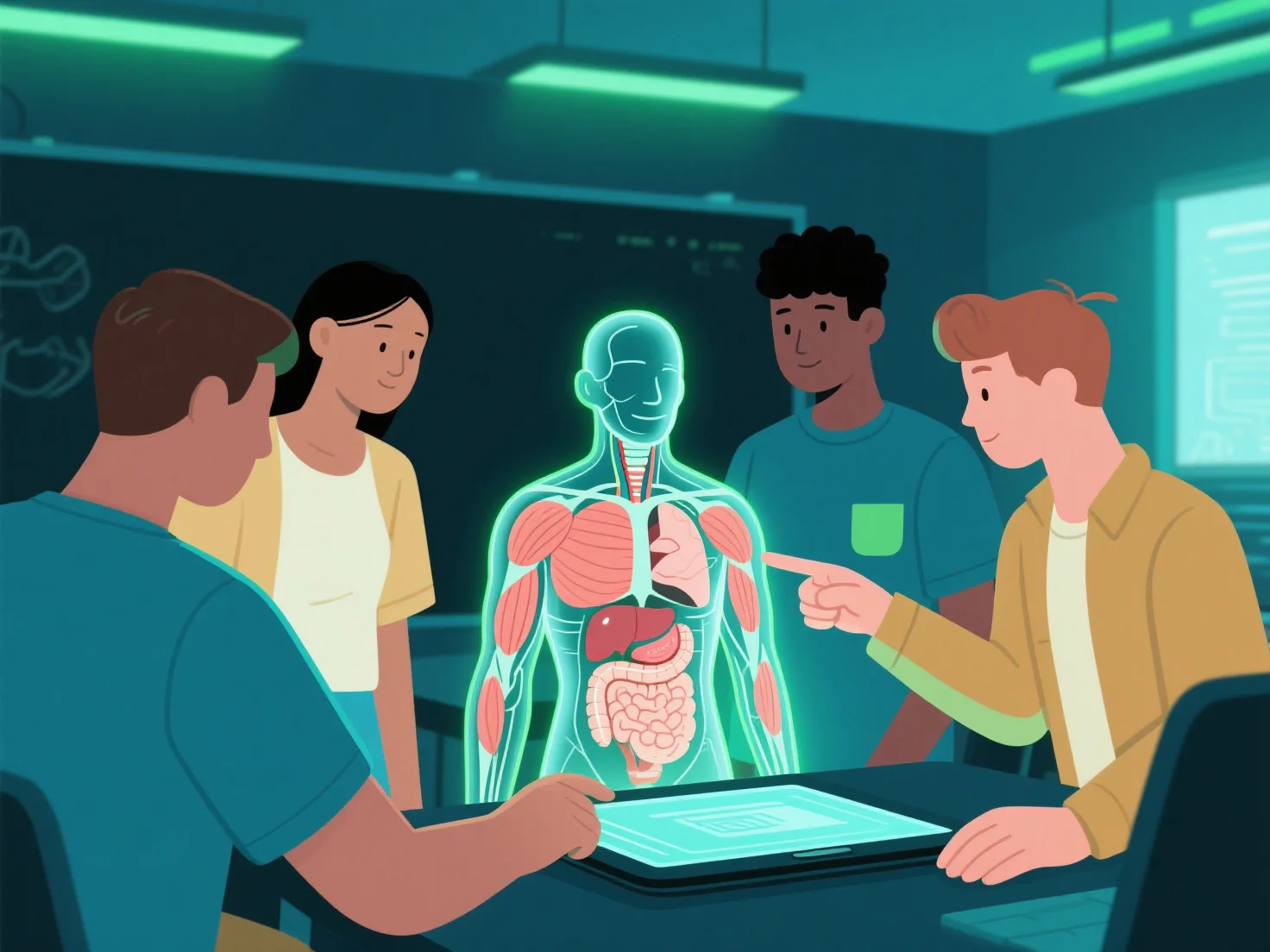
3D models enhance students' understanding of the human body in biology by providing interactive, detailed visualization of complex anatomical structures, making abstract concepts tangible and improving learning engagement and retention.
- **Interactive exploration**: Students can rotate, zoom, or virtually dissect 3D models to examine spatial relationships (e.g., how organs fit within body cavities) or layered structures (like muscle groups over bones), which static textbook diagrams often fail to convey clearly. - **Simplifying complexity**: They break down microscopic components (e.g., cell organelles) or systemic connections (such as the link between the nervous and endocrine systems) into visual, manageable parts, reducing confusion around intricate biological details. - **Boosting retention**: Hands-on interaction with 3D models encourages active learning, helping students better remember functions (e.g., heart valve mechanics) and structures compared to passive reading.
By merging interactivity, clarity, and engagement, 3D models bridge the gap between theory and reality, fostering deeper, more lasting comprehension of human biology.