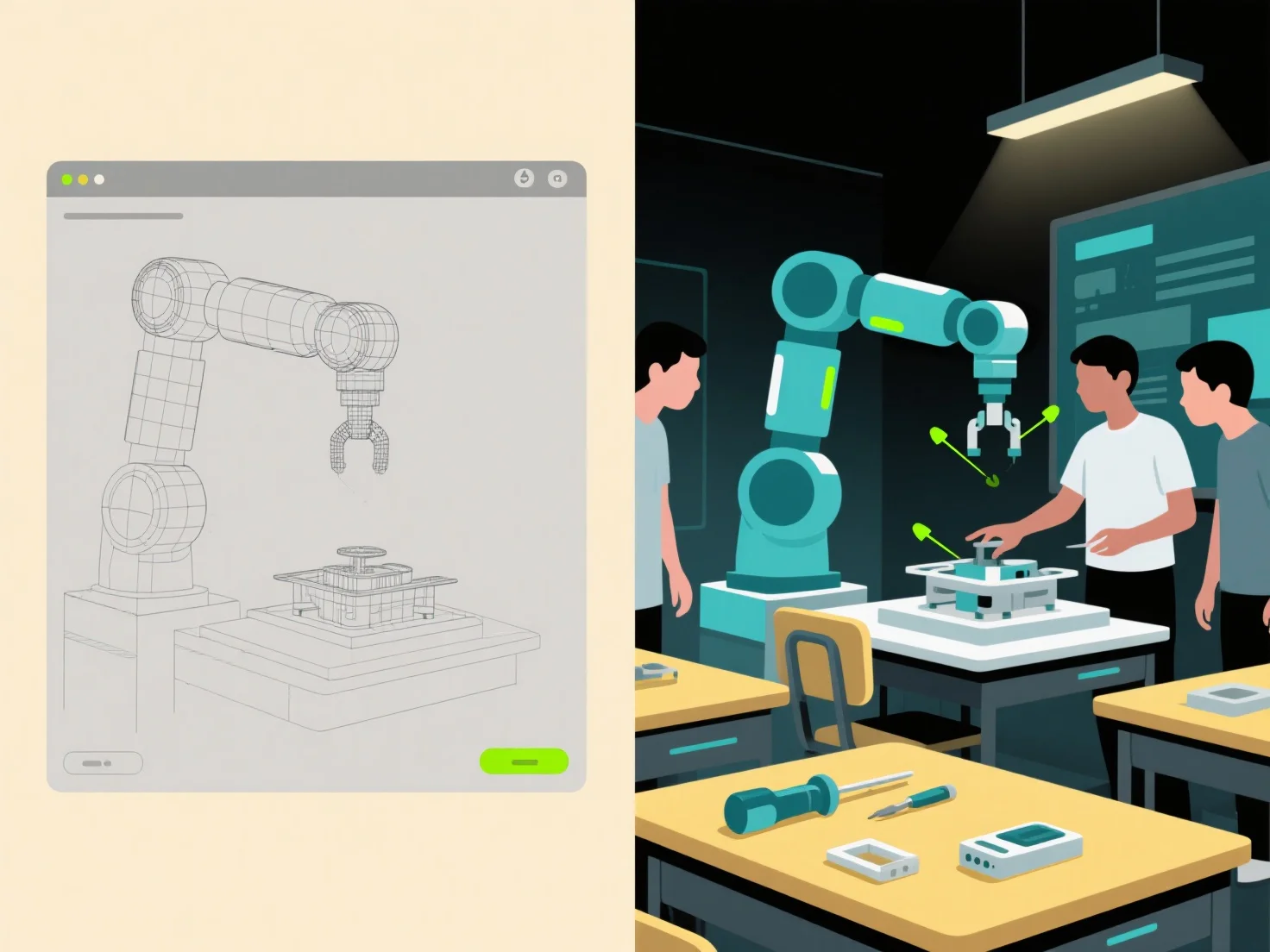
3D modeling tools enhance robotics and automation teaching by enabling visualization, design, and simulation of robot structures, components, and operational processes, helping students grasp spatial relationships, mechanical principles, and motion dynamics through digital models.
Key applications in teaching include: - Engineering Education: Students design virtual robot prototypes, test structural integrity, and simulate movements (e.g., arm articulation, wheel traction) pre-physical assembly, cutting trial-and-error costs. - Vocational Training: Simulate real-world automation workflows (e.g., factory lines, warehouse robots) to practice programming, sensor integration, and troubleshooting in a risk-free digital space. - K-12 STEM: Make abstract concepts (e.g., gear ratios, motor placement) tangible via interactive 3D models, boosting engagement with robotics basics.
Educators can start with tools offering pre-made robot component libraries to lower entry barriers, focusing on core learning.
