Home/Hitem3D FAQ/How do subdivision surfaces differ from polygonal meshes in 3D modeling?

How do subdivision surfaces differ from polygonal meshes in 3D modeling?

Subdivision surfaces use iterative rules for smooth, high-res surfaces, unlike polygonal meshes with fixed flat polygons.

How do subdivision surfaces differ from polygonal meshes in 3D modeling?

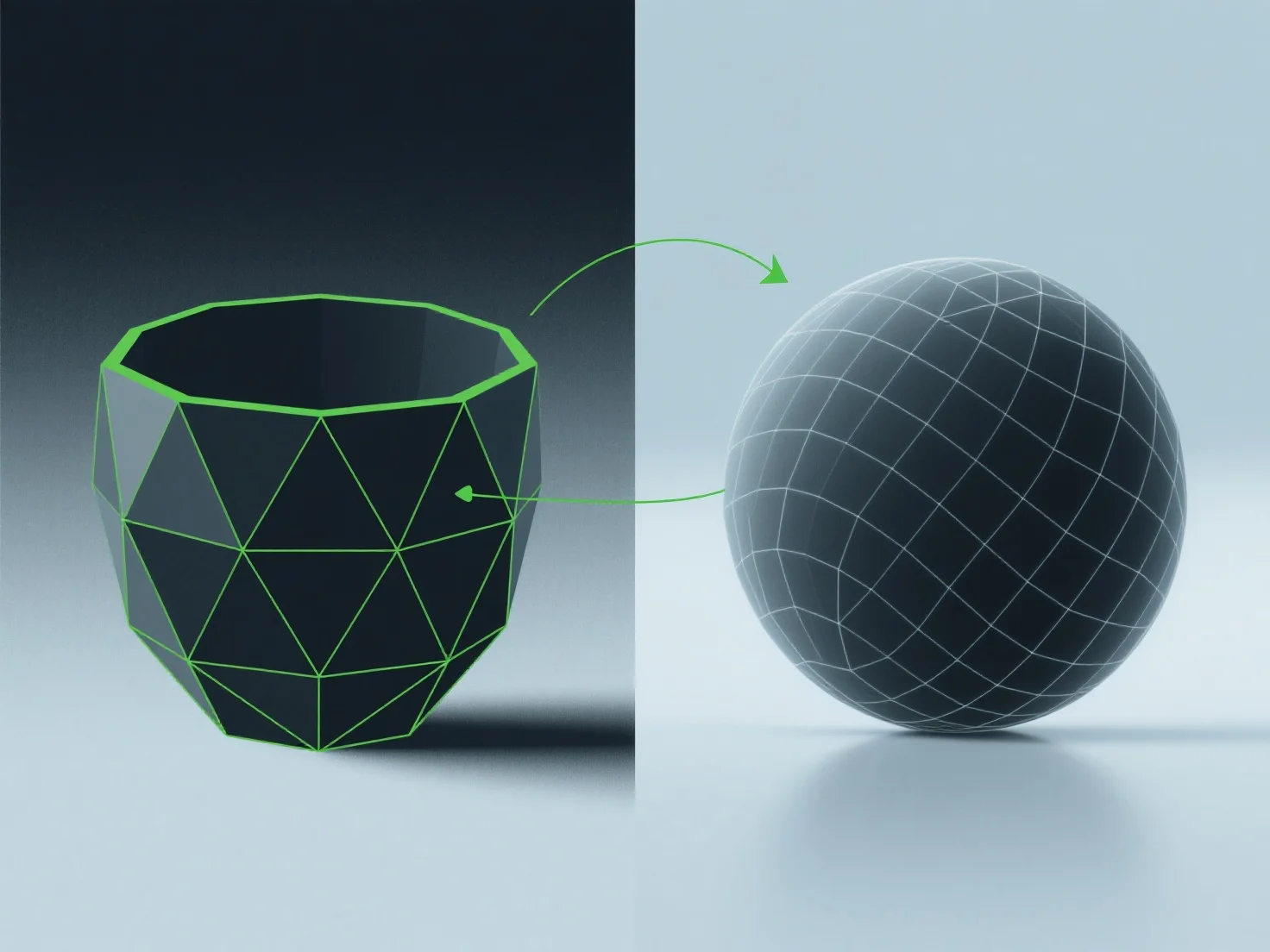
Subdivision surfaces differ from polygonal meshes in 3D modeling by their core structure and detail generation: polygonal meshes use fixed flat polygons (triangles, quads) to directly define shape with static vertices/edges, while subdivision surfaces start with a simple base mesh and apply iterative subdivision rules to generate smooth, high-resolution surfaces.

Polygonal meshes have a fixed polygon count, making their structure easy to edit but prone to faceting with low polygon numbers, as each polygon remains flat. Subdivision surfaces, by contrast, iteratively split edges/vertices to add detail, letting artists control shape via the base mesh while achieving natural smoothness.

For organic models (e.g., characters, curved objects), subdivision surfaces excel at smooth, lifelike results; for hard-surface models with sharp edges (e.g., machinery), polygonal meshes often offer more direct, precise editing control.

PreviousNext
产品
Web 工作室
API 平台
功能
图片转 3D
多视图转 3D
浮雕
分割
模型
通用模型
人像模型
资源
博客
常见问题
API 文档
关于我们
定价