


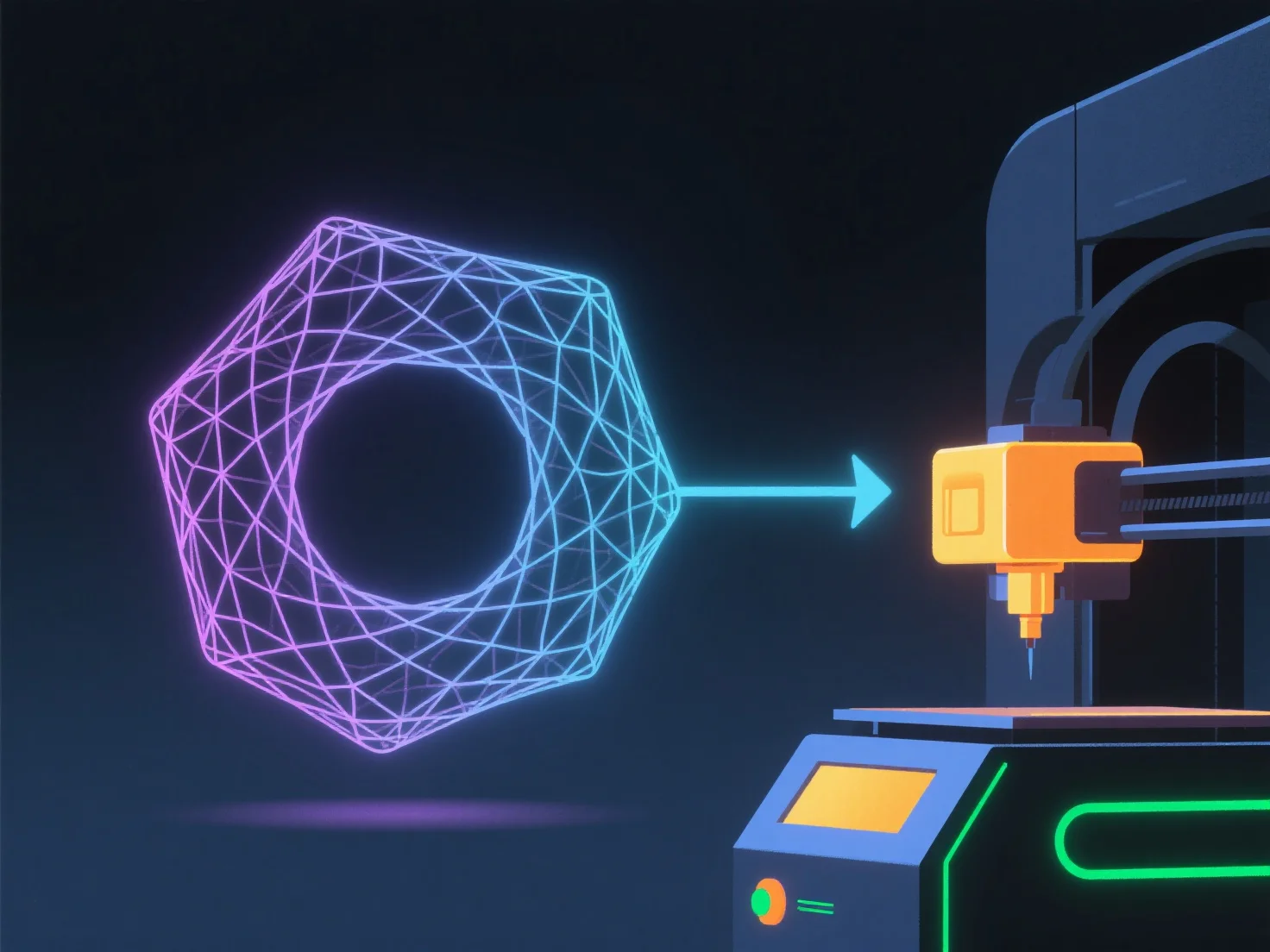
Топологія у 3D-друку означає розташування вершин, країв і граней моделі, що безпосередньо впливає на її придатність для друку та структурну цілісність.
Добре розроблена топологія гарантує, що модель не має неманіфельних країв, перетинаючих граней або зазорів, що дозволяє 3D-принтерам точно інтерпретувати та виготовляти дизайн.
Погана топологія, наприклад, перекриття полігонів або роз'єднані сітки, часто призводить до помилок друку, таких як неправильне вирівнювання шарів, витрата матеріалу або повний провал друку.
Оптимізована топологія також підтримує ефективне нарізання (перетворення моделей у друковані шари) і зменшує потребу в пост-обробці, заощаджуючи час і ресурси.
Коротко кажучи, перевірка та ремонт топології.