


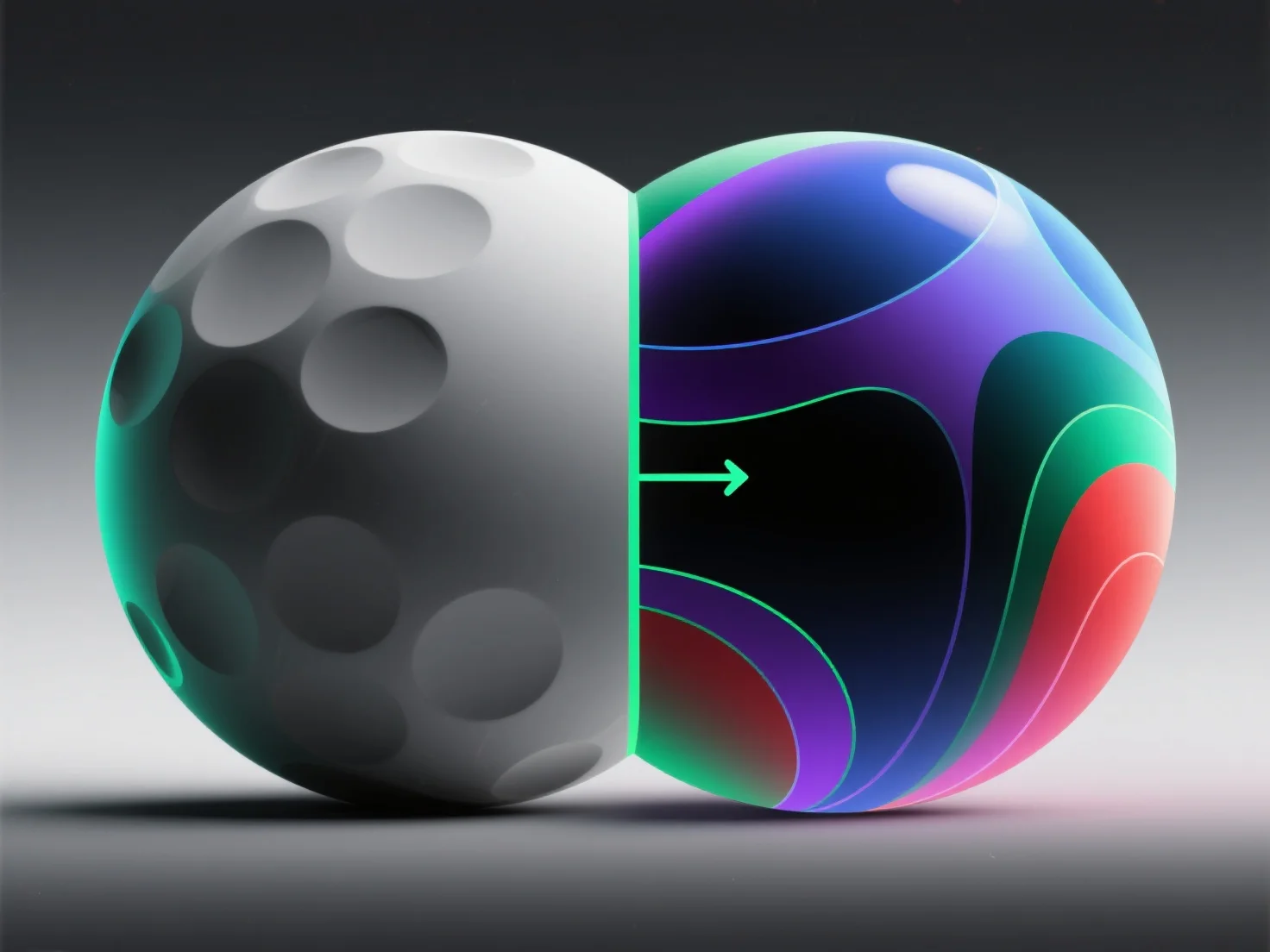
У 3D-текстуруванні основна різниця між картами рельєфу та нормальними картами полягає в тому, як вони імітують деталі поверхні: карти рельєфу використовують значення в сірих тонах для представлення змін висоти, тоді як нормальні карти використовують кольорові канали RGB для кодування нормальних напрямків поверхні.
Карти рельєфу створюють ілюзію глибини, регулюючи світлі/темні ділянки залежно від інтенсивності сірого кольору. Світліші значення виглядають піднятими, темніші — увігнутими, що робить їх ідеальними для простих деталей, заснованих на висоті, таких як шорсткість поверхні або невеликі виїмки.
Однак нормальні карти зберігають точні дані про орієнтацію поверхні у каналах RGB (кожен канал відповідає осям X, Y, Z). Це дозволяє їм більш точно розраховувати, як світло взаємодіє з поверхнею, забезпечуючи реалістичне відображення світла і кращу підтримку складних, нахилених деталей, таких як згини, невеликі виступи або вигнуті поверхні.