


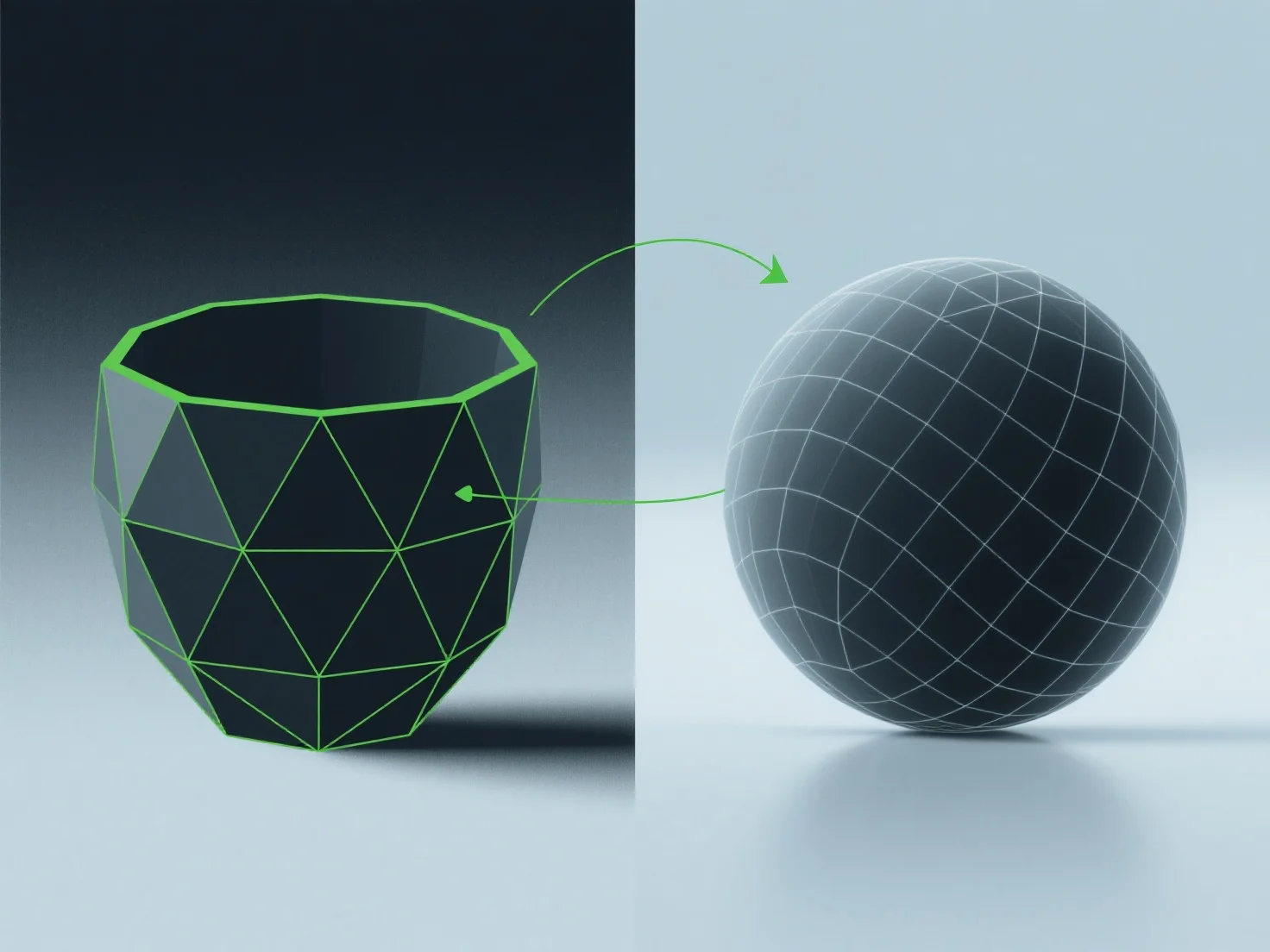
Поверхні з підрозділом відрізняються від полігональних сіток у 3D-моделюванні своєю основною структурою та генерацією деталей: полігональні сітки використовують фіксовані плоскі полігони (трикутники, квадри) для безпосереднього визначення форми зі статичними вершинами/крайками, тоді як поверхні з підрозділом починаються з простої базової сітки і застосовують ітеративні правила підрозділу для створення гладких поверхонь високої роздільної здатності.
Полігональні сітки мають фіксовану кількість полігонів, що робить їх структуру легкою для редагування, але схильною до утворення фасетів при низькій кількості полігонів, оскільки кожен полігон залишається плоским. Натомість, поверхні з підрозділом ітеративно розділяють краї/вершини для додавання деталей, дозволяючи художникам контролювати форму за допомогою базової сітки та досягаючи природної плавності.
Для органічних моделей.