


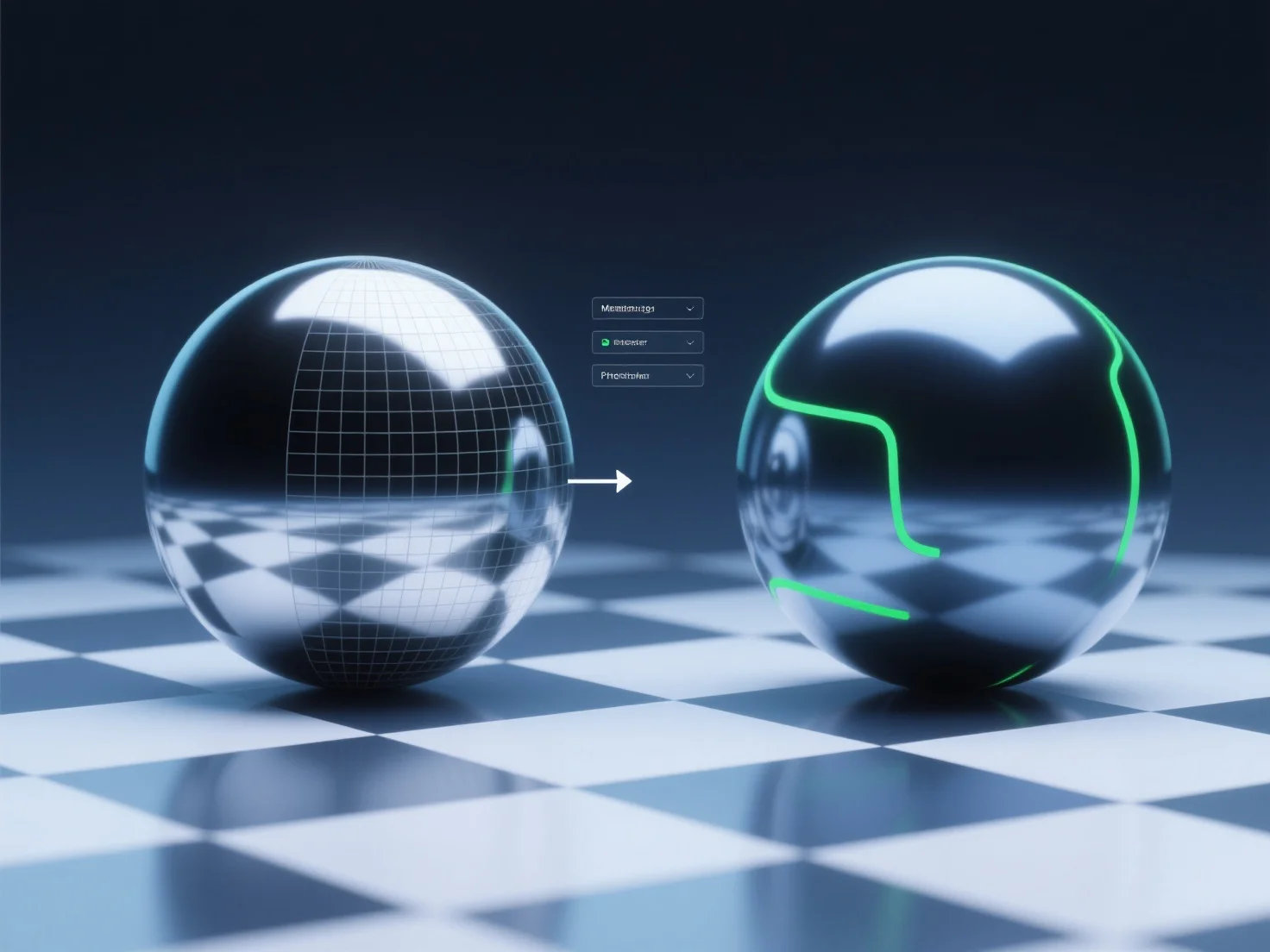
Карти відбиття — це 2D-зображення, які імітують відбиття світла на поверхнях 3D-матеріалів, підвищуючи реалізм, імітуючи те, як матеріали відбивають своє оточення.
- **Основна функція**: Вони відтворюють реальні відображення (наприклад, кімната з металевими елементами або предмети поруч із склом) без складних схем освітлення, заощаджуючи час на рендерингу. - **Метод застосування**: 2D-зображення відображається на властивості відображення матеріалу (наприклад, глянцевість, металевість), визначаючи поведінку відбиття світла на поверхні. - **Ключові випадки використання**: Ідеально підходить для таких матеріалів, як автомобільна фарба, полірований камінь або скло, додаючи реалістичні деталі, щоб 3D-поверхні виглядали більш автентично.