


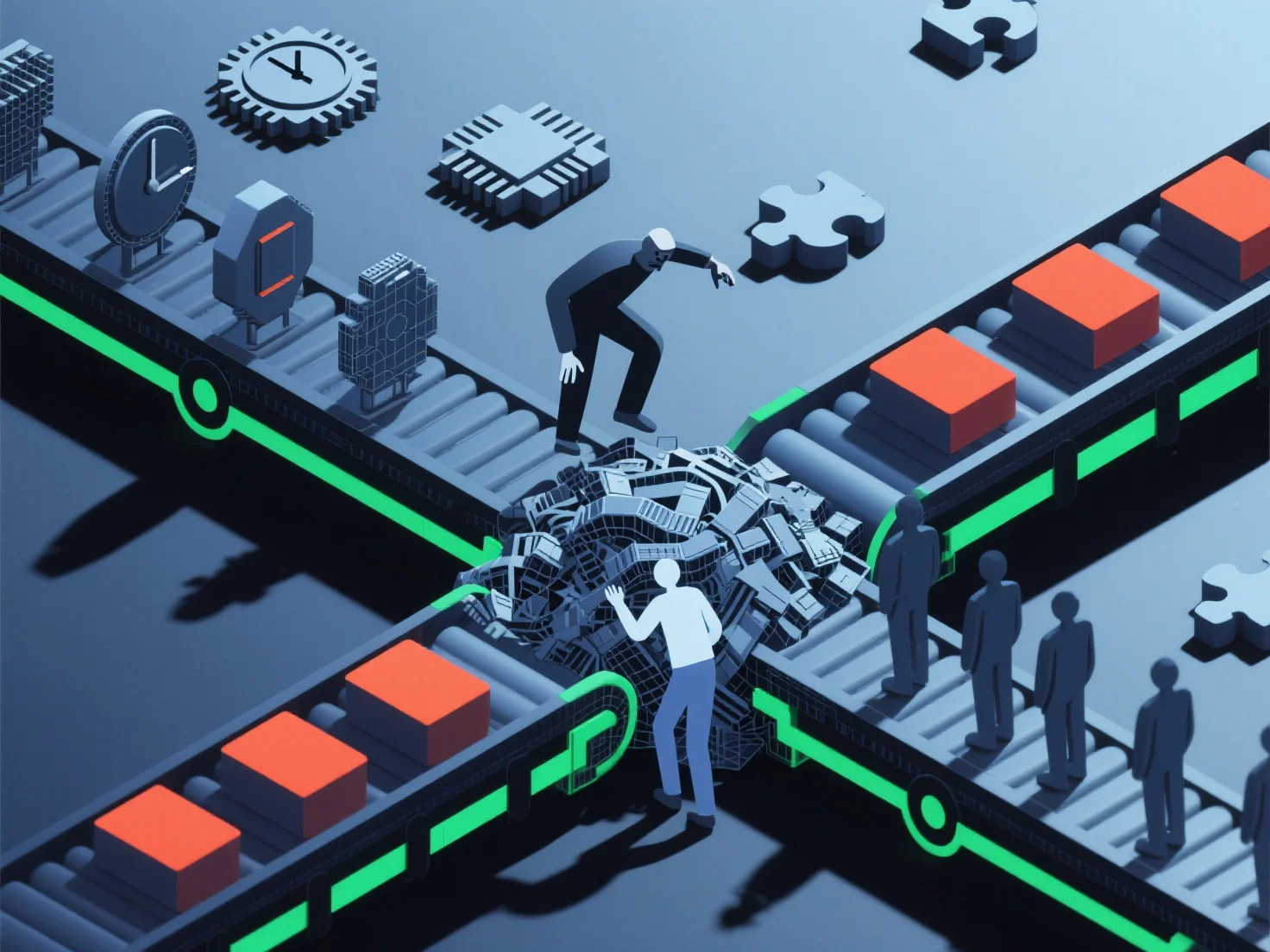
Незбалансованість навичок уповільнює 3D-робочі процеси, створюючи перешкоди через нерівномірну майстерність на критичних етапах, таких як моделювання, текстурування або риггінг, порушуючи виконання завдань і збільшуючи затримки.
- **Затримки в завданнях**: Менш кваліфіковані члени команди часто витрачають більше часу на виконання завдань або вимагають частого перегляду, що затягує терміни виконання проекту. - **Неправильне розподілення ресурсів**: Кваліфіковані члени можуть бути перевантажені виправленням помилок або заповненням прогалин, в той час як недостатньо використані навички призводять до неефективності. - **Розриви між етапами**: Прогалини в навичках між етапами.
Цей дисбаланс порушує плавний перехід від дизайну до кінцевого результату, значно знижуючи ефективність робочого процесу.