


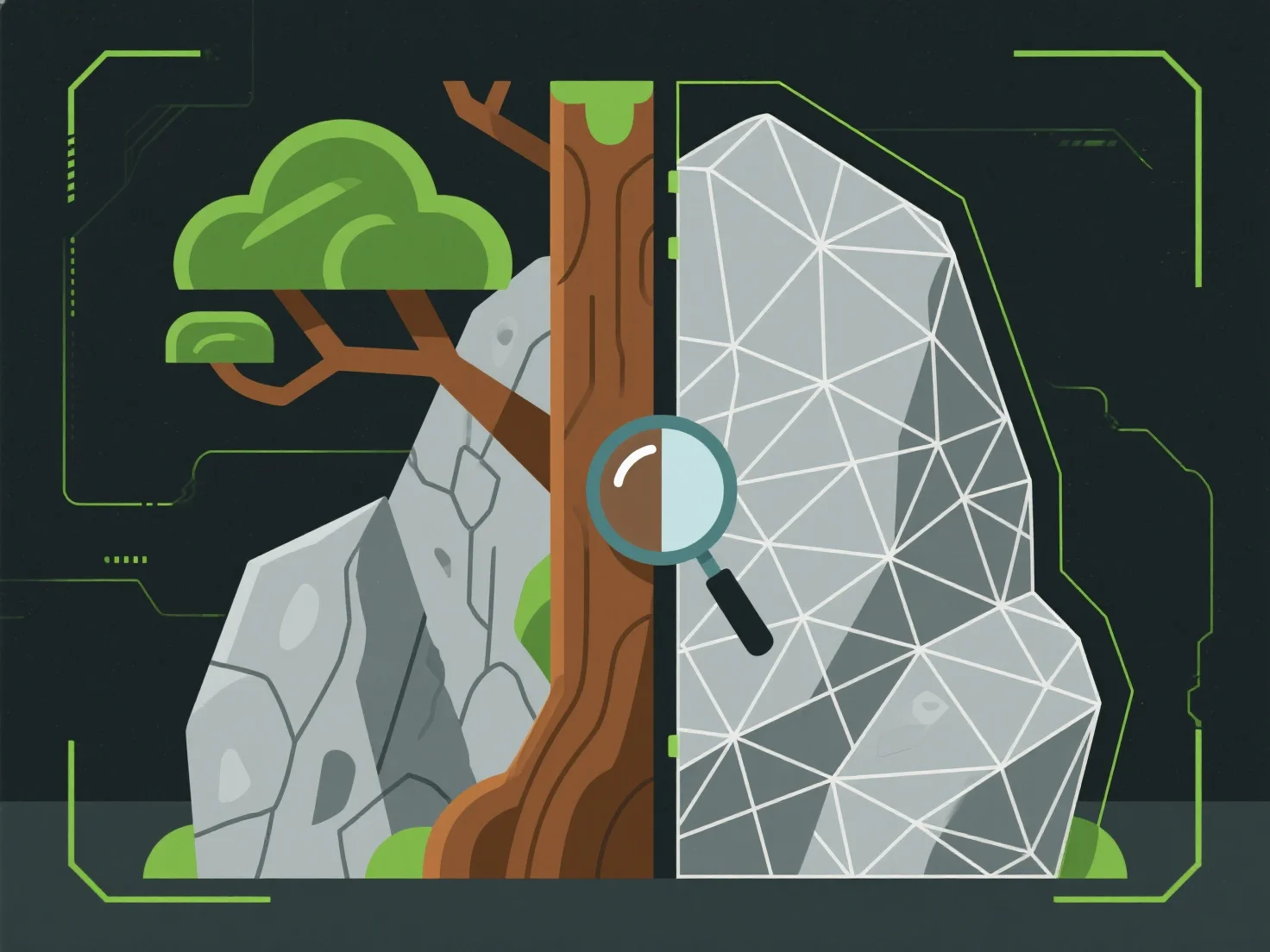
У 3D-моделюванні елементи навколишнього середовища, такі як дерева та скелі, створюються шляхом поєднання основних геометричних елементів із текстурою, деталізацією та спеціалізованими методами для досягнення реалізму.
Вони починають з спрощеної базової сітки (часто з низькою полігональністю), щоб визначити основну форму. Наприклад, циліндр для стовбура дерева або грубий полігон для каменю.
Далі застосовуються текстури високої роздільної здатності: візерунки кори для дерев, структура каменю для скель, з використанням таких інструментів, як PBR (фізично обґрунтоване рендеринґ), щоб імітувати матеріали реального світу.
Для дерев листяні кластери або гілки можуть додаватися за допомогою систем частинок або інстансованої геометрії; для скель часто використовують карти деформації для симуляції тріщин або нерівностей.
Цей багатошаровий підхід забезпечує баланс між ефективністю та реалізмом, що робить його доступним для новачків, які можуть починати з основних форм і безкоштовних бібліотек текстур.