


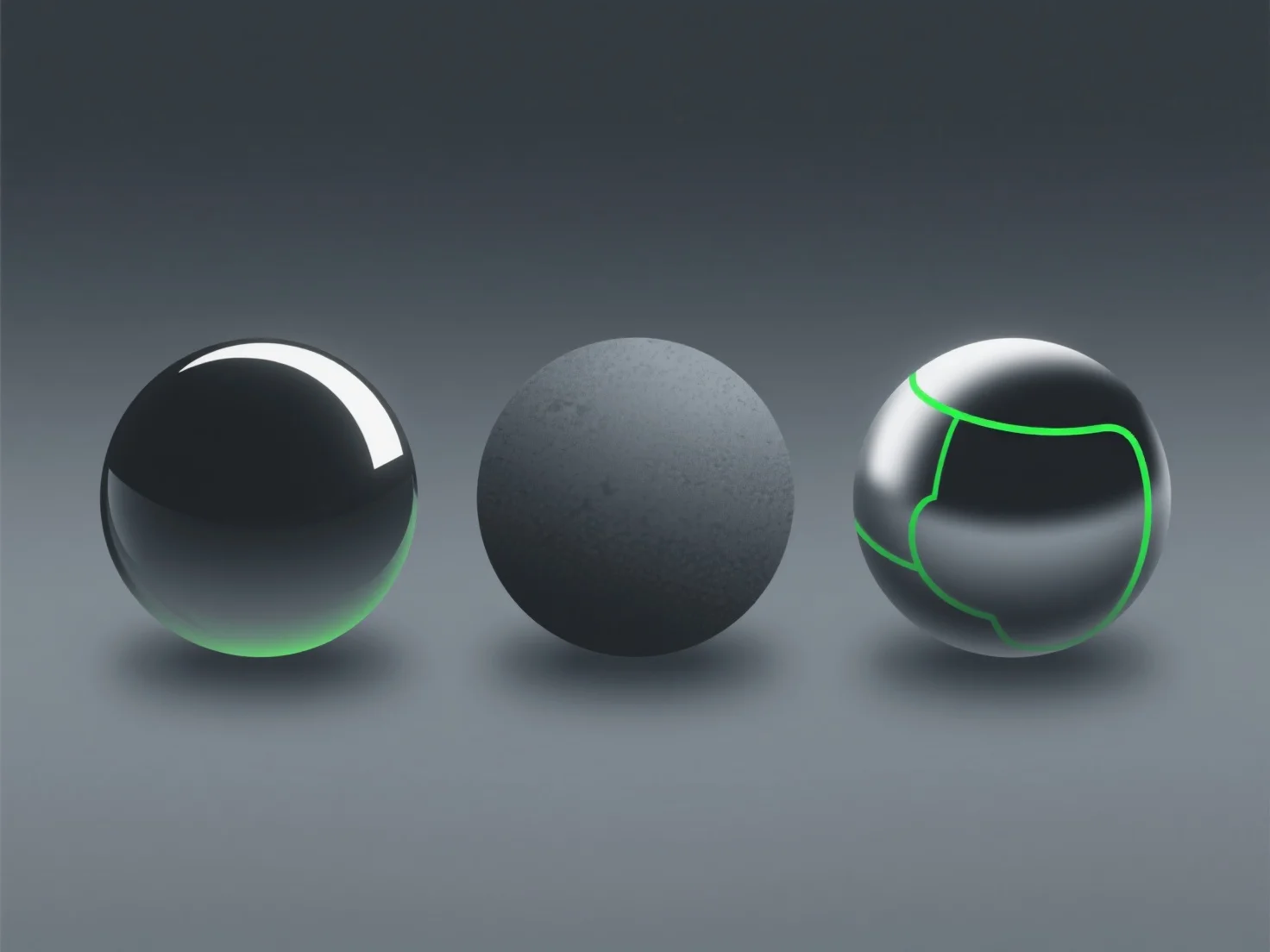
Os materiais moldam diretamente a saída visual dos modelos 3D, definindo a aparência da superfície e o realismo através da interação com a luz, como reflexão, absorção ou transparência.
Eles detalham propriedades fundamentais como cor, textura, brilho e rugosidade, determinando se um modelo parece metálico, mate, transparente ou texturizado em renderizações ou exibições em tempo real.
As principais aplicações em várias indústrias incluem: - Jogos: Criar superfícies realistas (por exemplo, armadura metálica, roupas de tecido) para aumentar a imersão na cena. - Arquitetura: Simular materiais como madeira, vidro ou betão para visualizações realistas de edifícios. - Design de produto: Visualizar como os materiais (plástico, metal, couro) aparecem nos protótipos sob diferentes iluminações.
Ajustando as propriedades do material.