


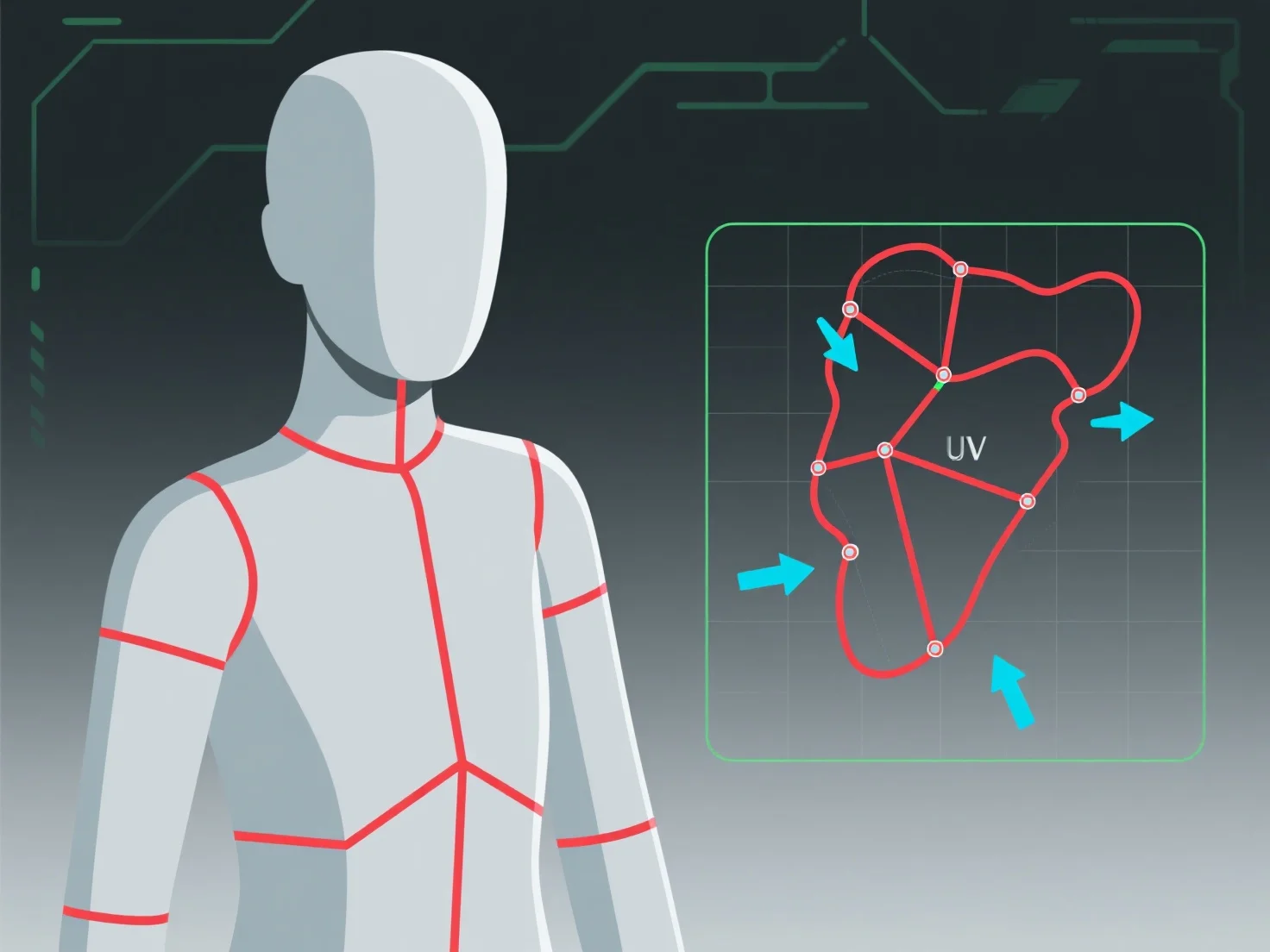
As costuras UV na topologia do modelo 3D são limites que definem como a superfície de um modelo 3D é desdobrada num mapa UV 2D, permitindo uma aplicação precisa da textura.
- **Guia de desdobramento**: Eles dividem a superfície 3D em secções gerenciáveis, permitindo que seja colocada de forma plana em 2D sem sobreposição, um passo fundamental para o mapeamento de texturas. - **Prevenir distorção**: Ao dividir o modelo, as costuras reduzem o estiramento ou deformação da textura, garantindo que os padrões, decalques ou detalhes se alinhem naturalmente na superfície 3D. - **Ponte de fluxo de trabalho**: Eles conectam os fluxos de trabalho de modelagem 3D e texturização, permitindo que os artistas apliquem texturas 2D que se enrolam corretamente em torno da geometria 3D.
Colocação estratégica ao longo de bordas naturais.