


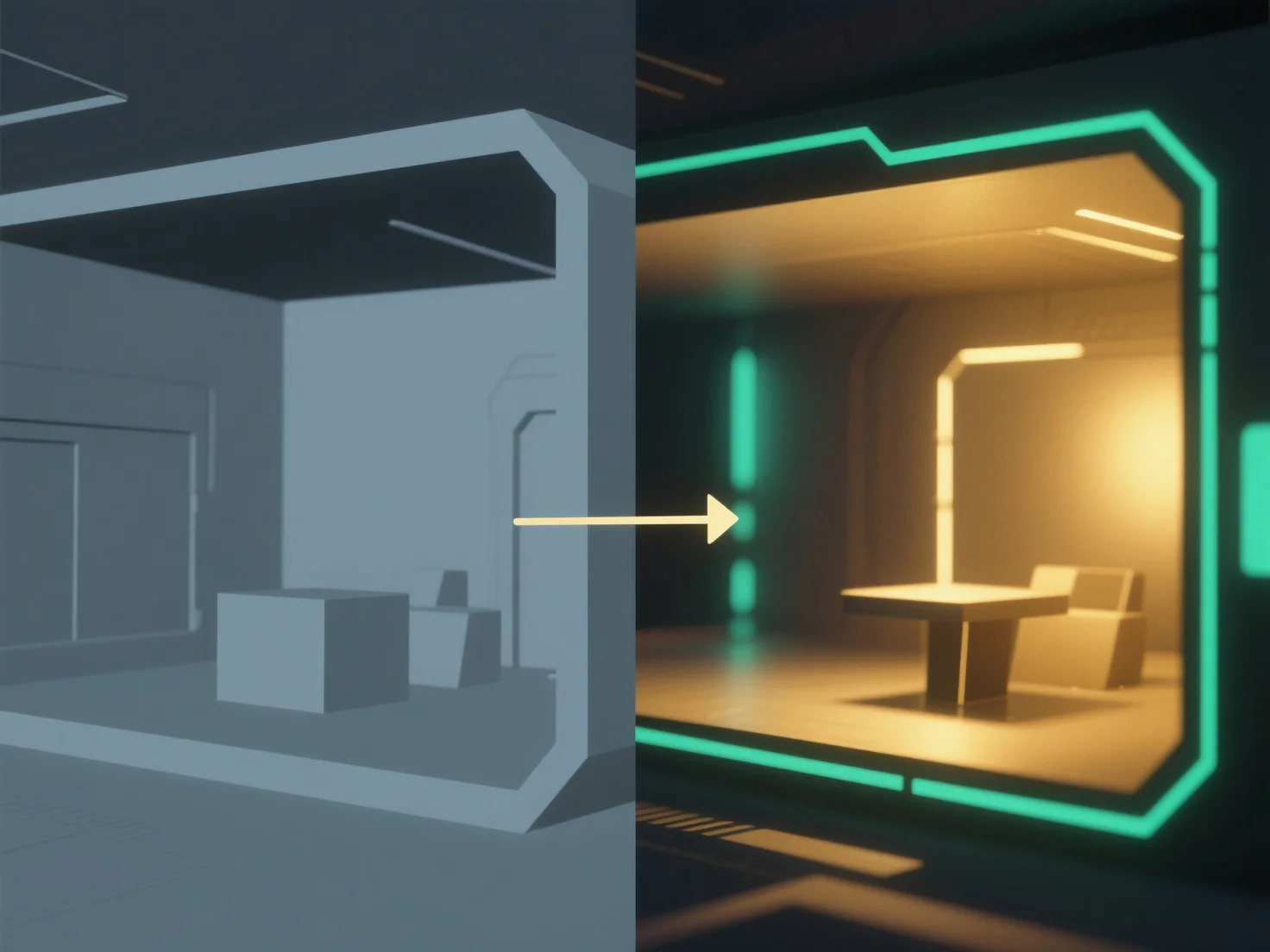
O pós-processamento em gráficos 3D melhora a qualidade visual, aplicando efeitos após a renderização inicial, transformando saídas brutas em imagens polidas, realistas ou estilizadas, através do refinamento de cores, iluminação e detalhes.
As principais funções incluem: ajustar as cores para definir o humor ou corrigir o tom; adicionar efeitos de iluminação.
Aplicações industriais: - Desenvolvimento de jogos: Utiliza gradação de cores dinâmica ou desfoque de movimento para aumentar a imersão no jogo. - Produção de filmes: Alinha renderizações 3D com filmagens em live-action através de uma correspondência precisa de cores. - Visualização arquitetónica: Melhora as apresentações aos clientes com iluminação realista e ajustes de textura.
Para iniciantes, experimentar filtros básicos em ferramentas como o Compositor do Blender ajuda a observar como pequenos ajustes aumentam o impacto visual.