


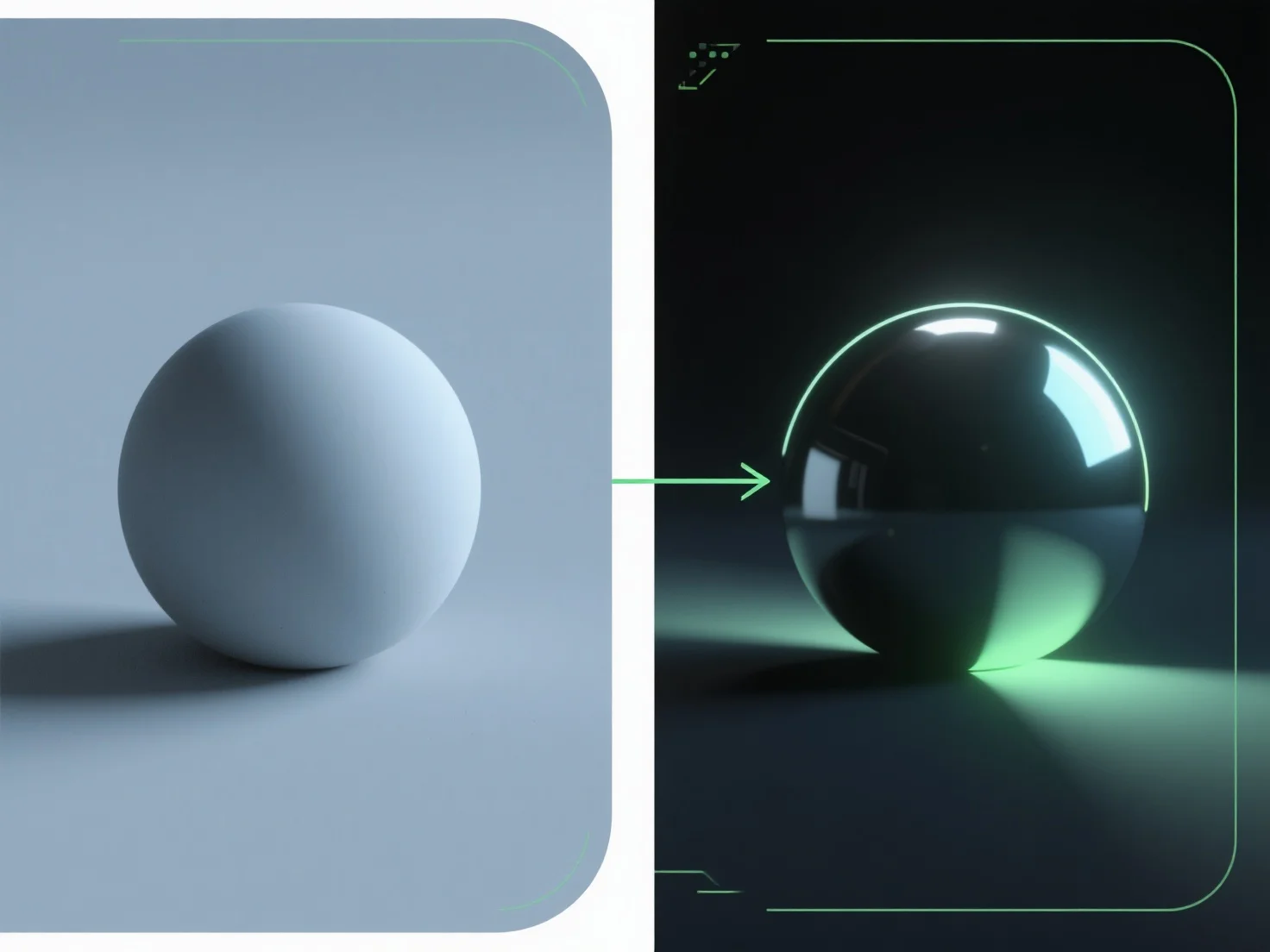
A renderização é o processo geral de criar imagens 2D a partir de modelos 3D, enquanto o traçado de raios é uma técnica de renderização especializada que simula os caminhos da luz para gerar visuais realistas.
A renderização abrange todos os métodos para converter dados 3D em imagens visíveis, incluindo abordagens comuns como a rasterização. O traçado de raios, como um subconjunto da renderização, funciona rastreando os raios de luz da câmara até as fontes de luz, imitando com precisão os efeitos de iluminação do mundo real, tais como sombras, reflexos e refrações.
Na aplicação, as técnicas de renderização variam de acordo com a necessidade: a rasterização prioriza a velocidade para utilizações em tempo real, como jogos, enquanto o traçado de raios é escolhido para imagens realistas e de alta qualidade em filmes ou imagens estáticas.