


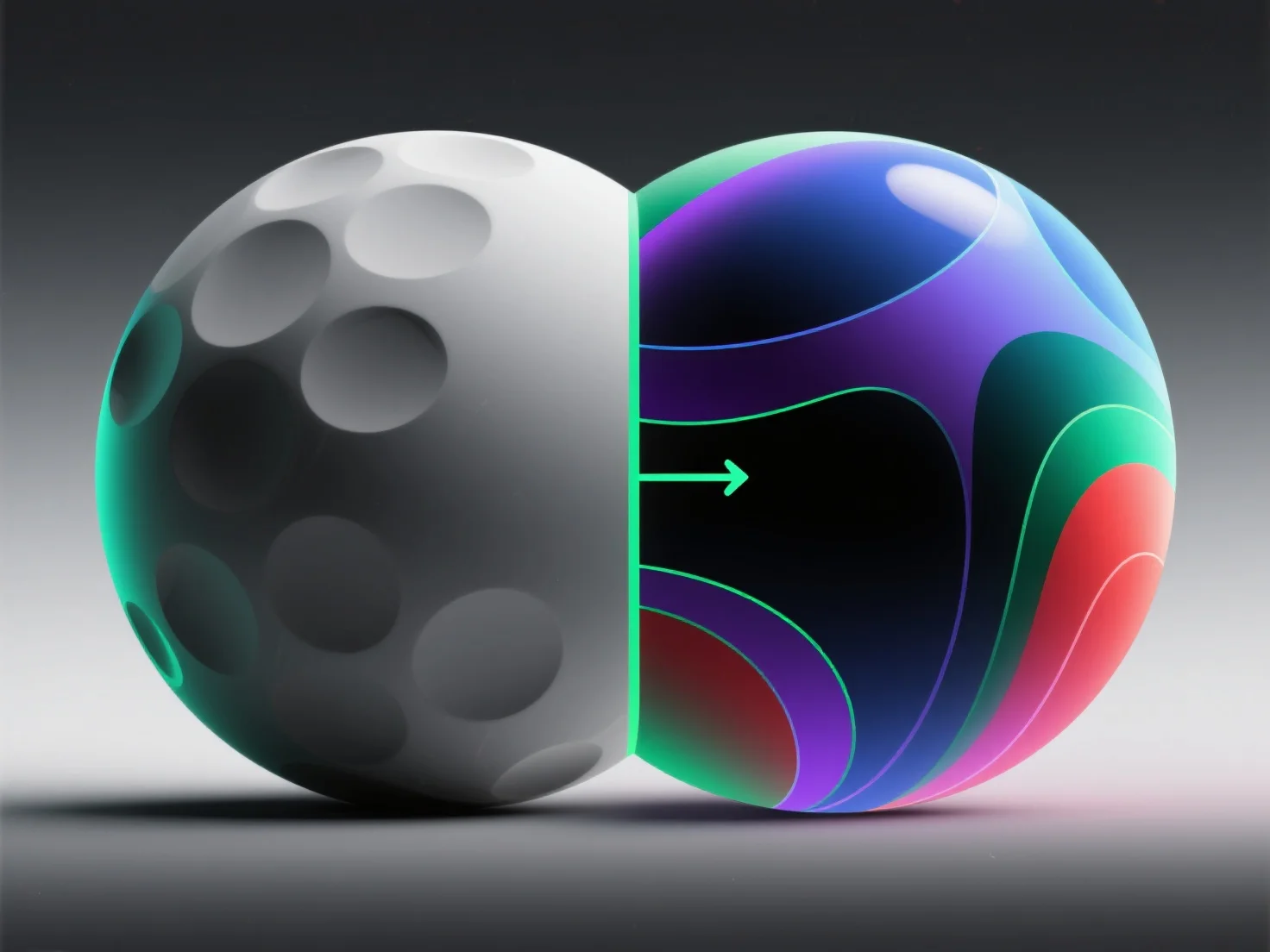
Na texturização 3D, a principal diferença entre mapas de relevo e mapas normais reside na forma como simulam os detalhes da superfície: os mapas de relevo utilizam valores de escala de cinzento para representar variações de altura, enquanto os mapas normais utilizam canais de cor RGB para codificar as direções normais da superfície.
Os mapas de relevo criam a ilusão de profundidade ajustando as áreas claras/escuras com base na intensidade da escala de cinzento. Os valores mais claros aparecem elevados, os mais escuros, recuados, tornando-os ideais para detalhes simples baseados na altura, como a rugosidade da superfície ou indentações subtis.
No entanto, os mapas normais armazenam dados precisos de orientação da superfície em canais RGB (cada canal correspondente aos eixos X, Y, Z). Isto permite-lhes calcular de forma mais precisa como a luz interage com a superfície, permitindo uma reflexão realista da luz e um melhor suporte para detalhes complexos e angulares, tais como vincos, pequenas saliências ou superfícies curvas.