


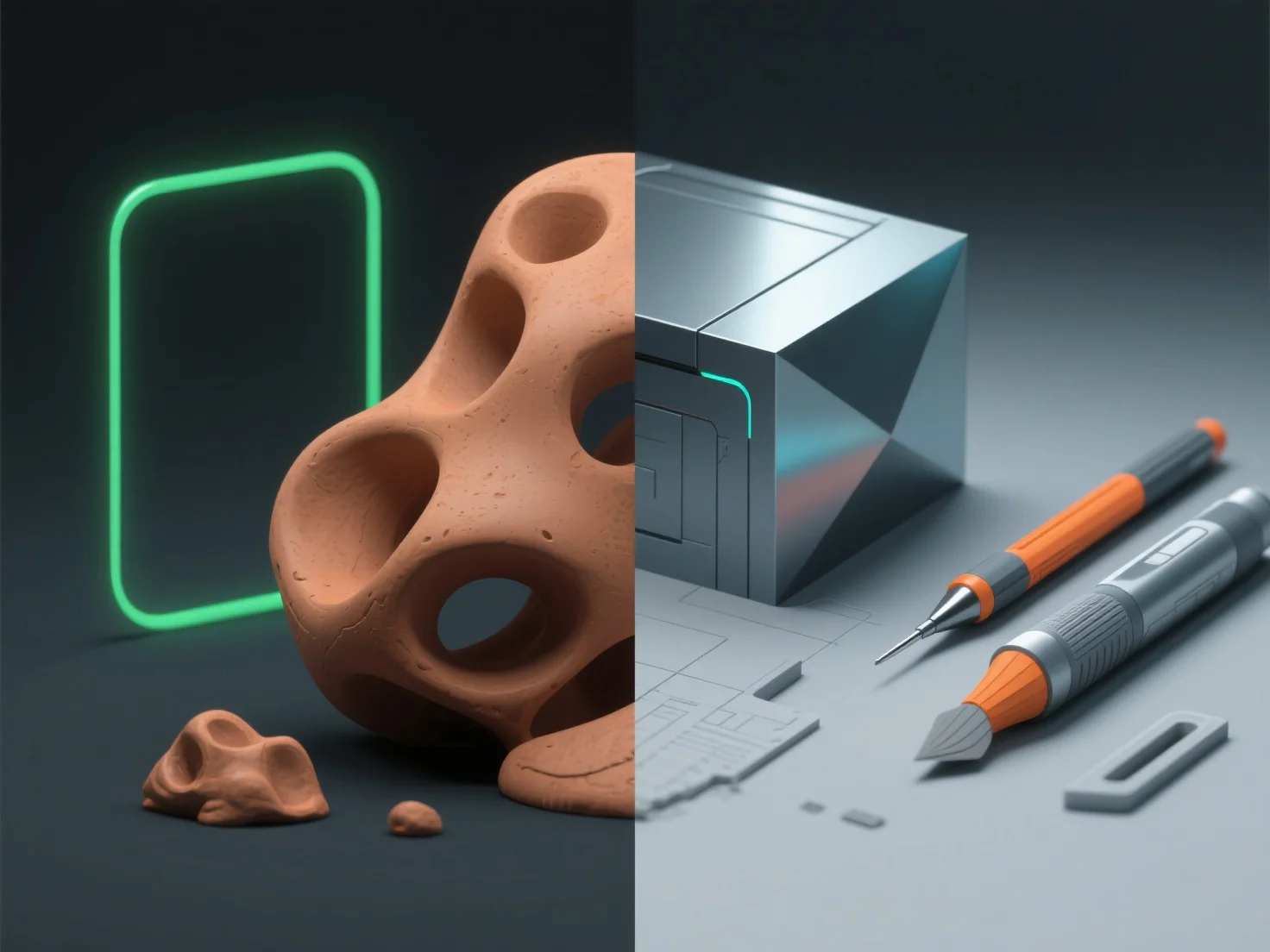
Ao combinar ferramentas de escultura e de modelagem de superfícies duras, as principais considerações incluem a integração do fluxo de trabalho, a compatibilidade da geometria e a consistência da topologia, garantindo uma fusão suave dos detalhes orgânicos.
- **Integração de fluxo de trabalho**: Planeie as transições de ferramentas com antecedência. Utilize ferramentas de escultura (por exemplo, ZBrush) para detalhes orgânicos e ferramentas de superfícies duras (por exemplo, Boolean do Blender) para arestas afiadas, de forma a evitar processos desconexos. - **Compatibilidade de geometria**: Equilibre a resolução da malha: polígonos elevados para detalhes esculpidos, de forma a capturar texturas finas, e polígonos otimizados para superfícies duras, de forma a evitar atrasos de desempenho. - **Consistência topológica**: Alinhe o fluxo de arestas entre as áreas esculpidas e as superfícies duras; uma topologia inconsistente pode causar problemas de deformação na animação ou na impressão 3D.
Re-topologizar malhas esculpidas primeiro, muitas vezes, melhora o alinhamento com componentes de superfície dura, aumentando a integridade geral do modelo.