


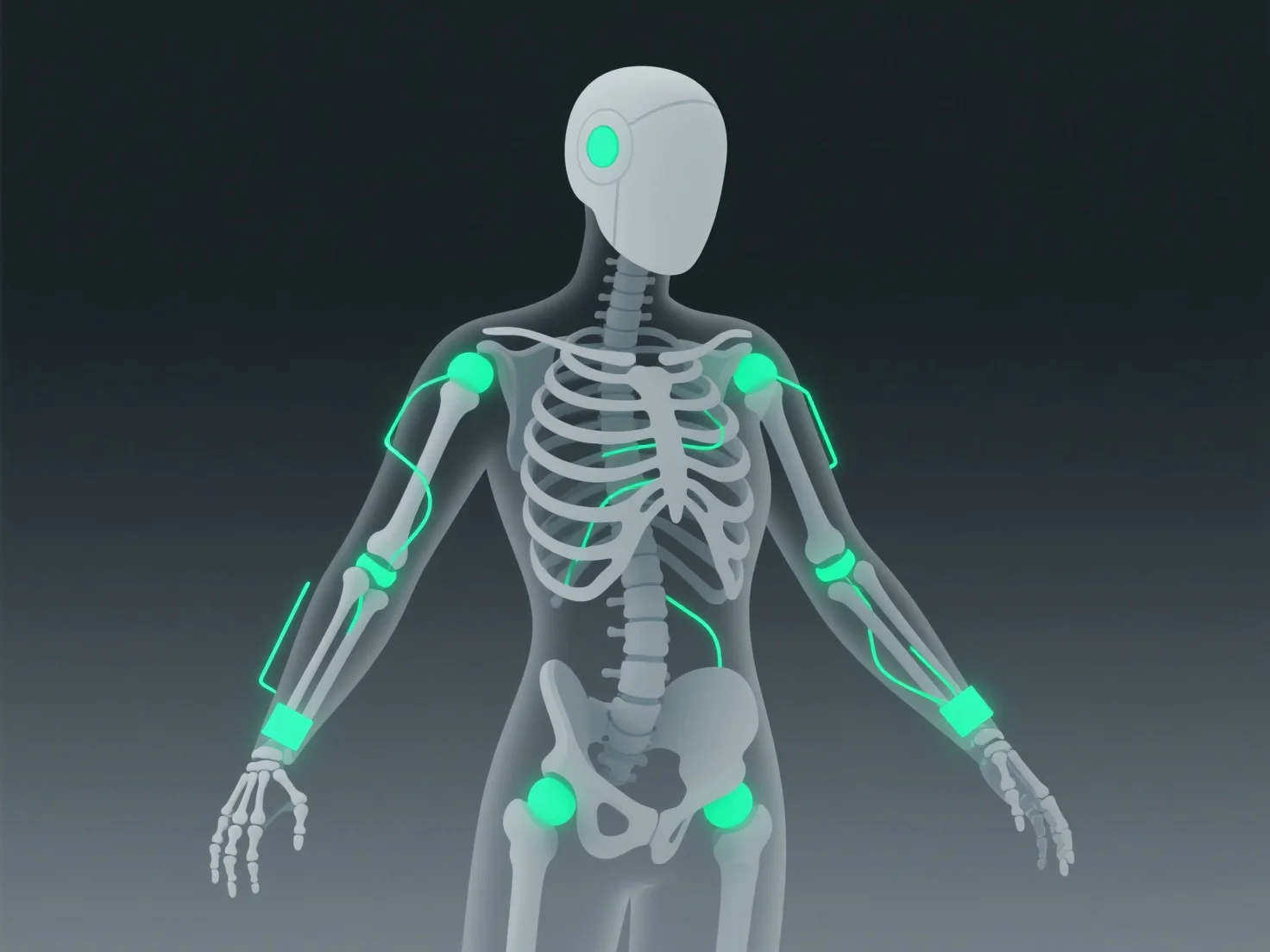
Os principais componentes de uma rig de personagem 3D incluem o esqueleto, o rig de controlo, o skinning e as restrições, que, em conjunto, permitem um movimento de personagem suave e amigável para o animador.
- **Esqueleto**: A estrutura óssea subjacente que define o alcance de movimento do personagem, imitando as articulações anatómicas para suportar a rotação e o movimento dos membros. - **Control Rig**: Interfaces focadas no animador (por exemplo, deslizadores, alças) que simplificam a manipulação de poses, reduzindo a complexidade em comparação com o ajuste direto dos ossos. - **Skinning**: O processo que liga a malha 3D ao esqueleto, garantindo que a malha se deforme naturalmente à medida que os ossos se movem (por exemplo, a flexão do braço esticando a pele). - **Restrições**: Regras que regulam as interações, como limitar a rotação das articulações para evitar poses não naturais ou ligar os controlos para um movimento sincronizado.
Estes componentes trabalham em conjunto para criar rigs para jogos, filmes e simulações, equilibrando a flexibilidade com a facilidade de animação.