


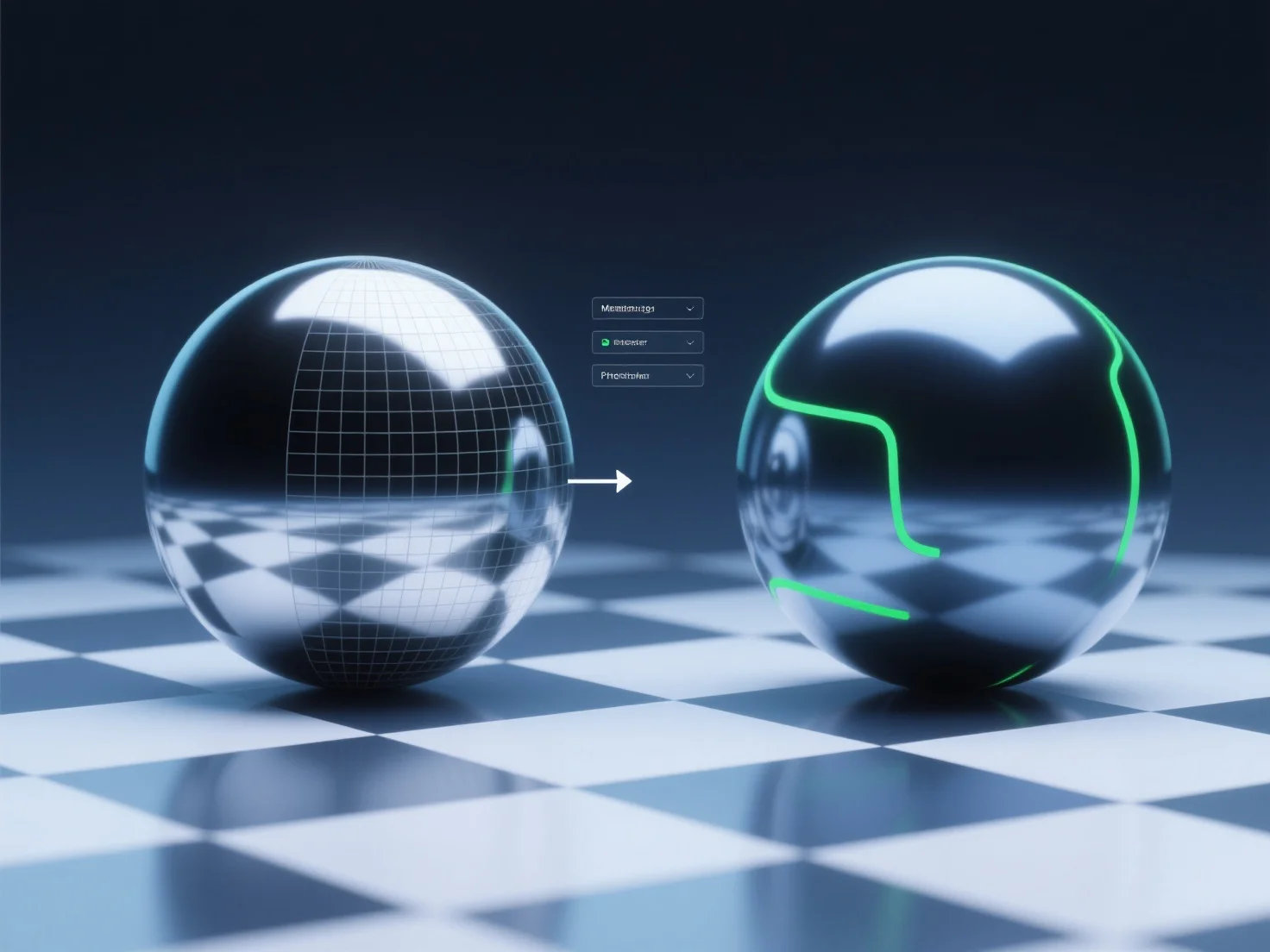
Os mapas de reflexão são imagens 2D que simulam a reflexão da luz em superfícies de materiais 3D, aumentando o realismo ao imitar a forma como os materiais refletem o seu ambiente.
- **Função Principal**: Eles replicam reflexos do mundo real (por exemplo, uma sala em metal ou objetos próximos em vidro) sem configurações de iluminação complexas, economizando tempo de renderização. - **Método de Aplicação**: A imagem 2D é mapeada para as propriedades de reflexão do material (por exemplo, brilho, metalicidade), ditando o comportamento do rebote de luz na superfície. - **Casos de Uso Principais**: Ideal para materiais como tinta de carro, pedra polida ou vidro, adicionando detalhes realistas para fazer as superfícies 3D parecerem mais autênticas.