


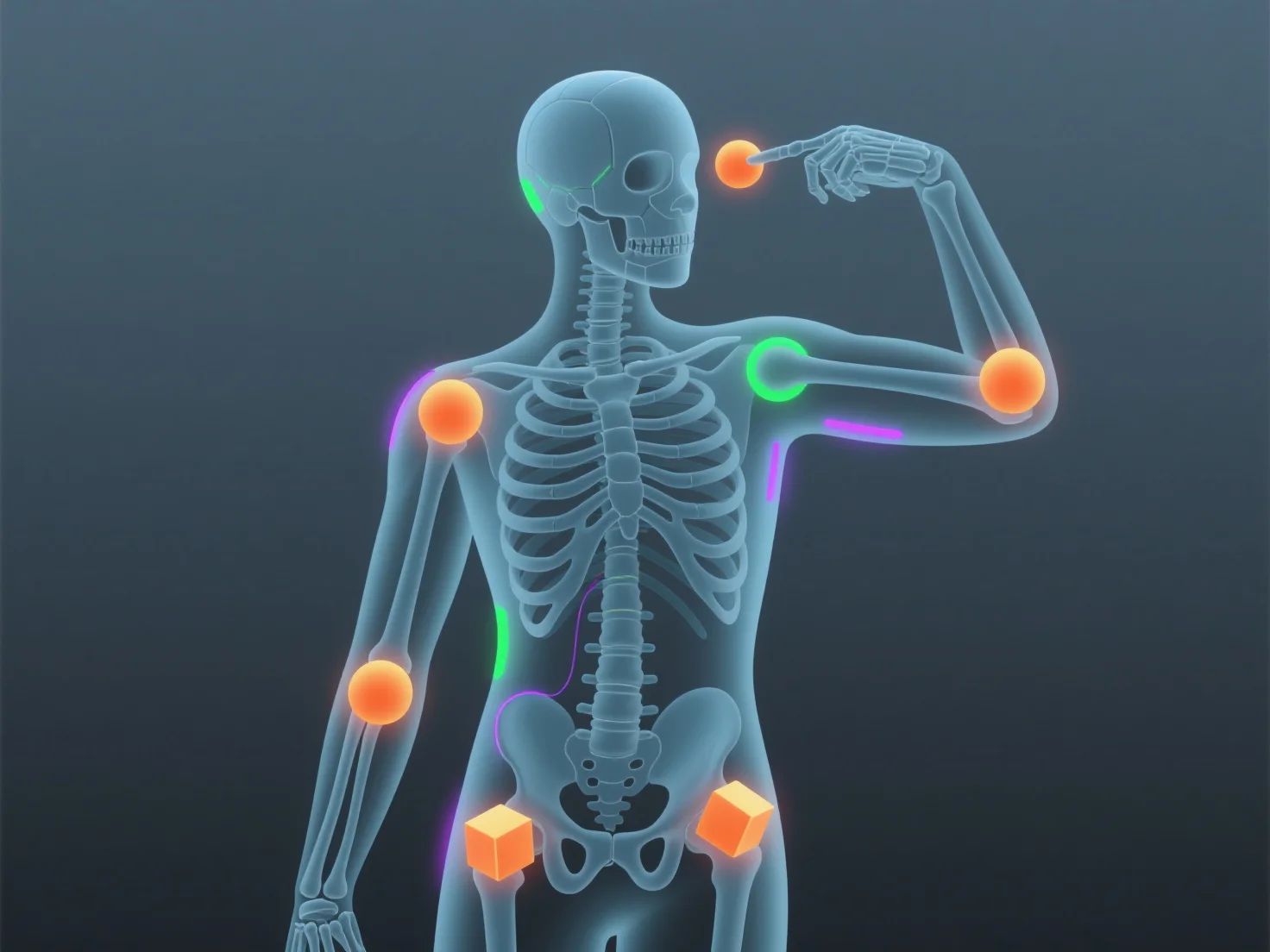
A animação de rigging anima modelos 3D construindo um esqueleto digital (armadura) com ossos e articulações, que controlam os movimentos do modelo quando mapeados para a sua malha.
- **Design do Esqueleto**: Os animadores criam ossos (por exemplo, coluna, membros) e articulações para imitar a anatomia real, formando a estrutura central do rig. - **Ligação da Malha**: O esqueleto é ligado à malha do modelo 3D, de modo que a movimentação dos ossos (por exemplo, dobrar um braço) deforma a malha naturalmente. - **Controlo da Animação**: Ajustar as posições dos ossos (quadros-chave) permite aos animadores criar movimentos como andar ou expressões faciais, pois o rig garante um movimento suave e realista.
Isso une a modelagem 3D e a animação, tornando os modelos responsivos e fáceis de animar, mesmo para iniciantes que utilizam rigs simples.