


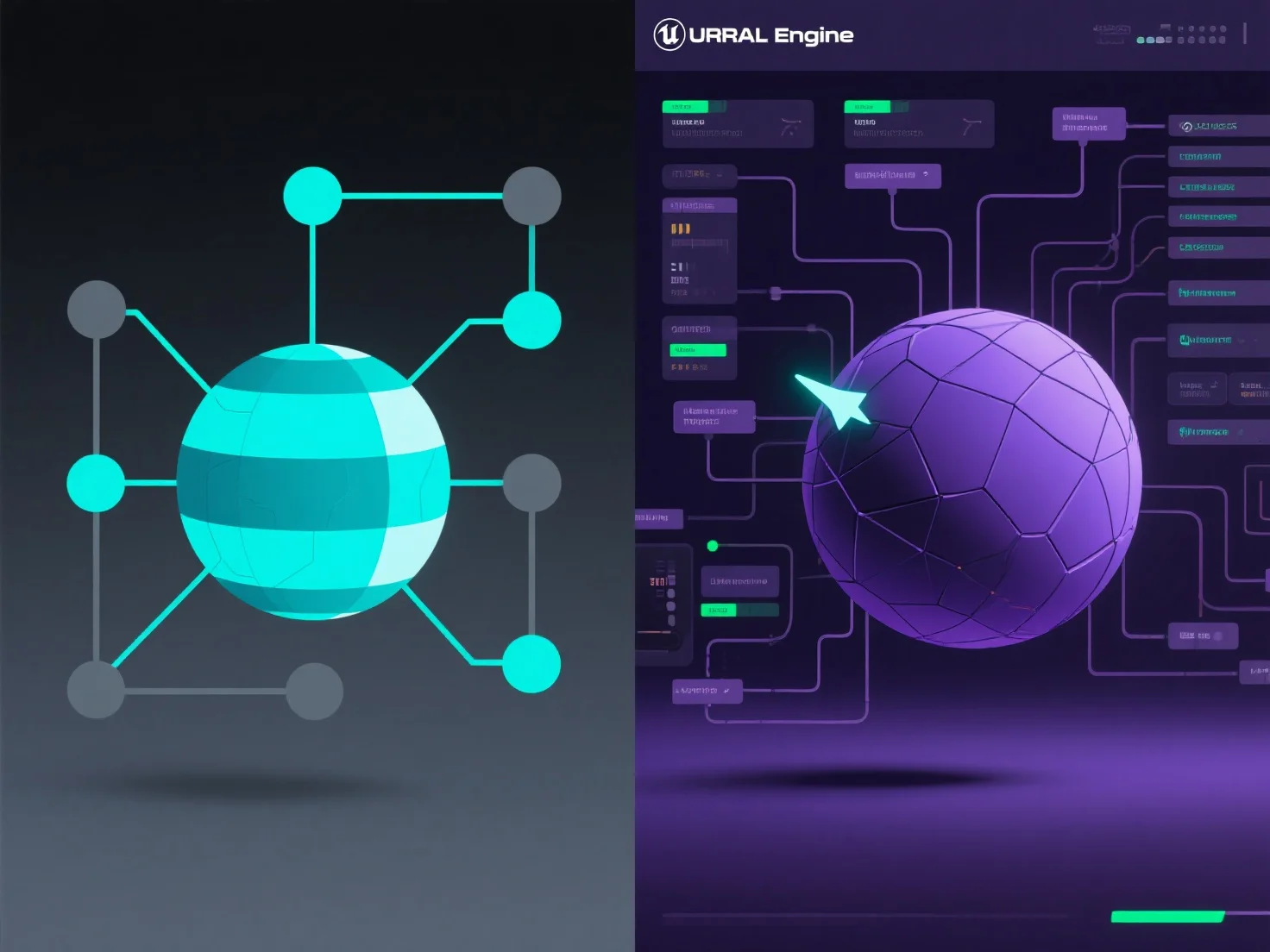
Ao texturizar, o sistema de materiais da Unity normalmente utiliza gráficos de shader para ajustes em tempo real e de fácil utilização, enquanto o Unreal Engine emprega um editor de materiais complexo baseado em nós, com parâmetros PBR avançados integrados.
A Unity prioriza a acessibilidade, permitindo uma iteração rápida. É ideal para projetos independentes ou iniciantes. Os seus gráficos de shader simplificam a configuração de texturas com controlos intuitivos, reduzindo as barreiras técnicas.
No entanto, o Unreal oferece uma personalização mais profunda para visuais de alta fidelidade, integrando funções avançadas de materiais diretamente no seu editor. Isto atende às necessidades de texturização detalhada e de nível profissional, como interação precisa com a luz ou efeitos complexos na superfície.
Em resumo, o Unity é adequado para fluxos de trabalho de texturização acessíveis e rápidos, enquanto o Unreal se destaca no controlo de materiais complexos e de alta qualidade.