


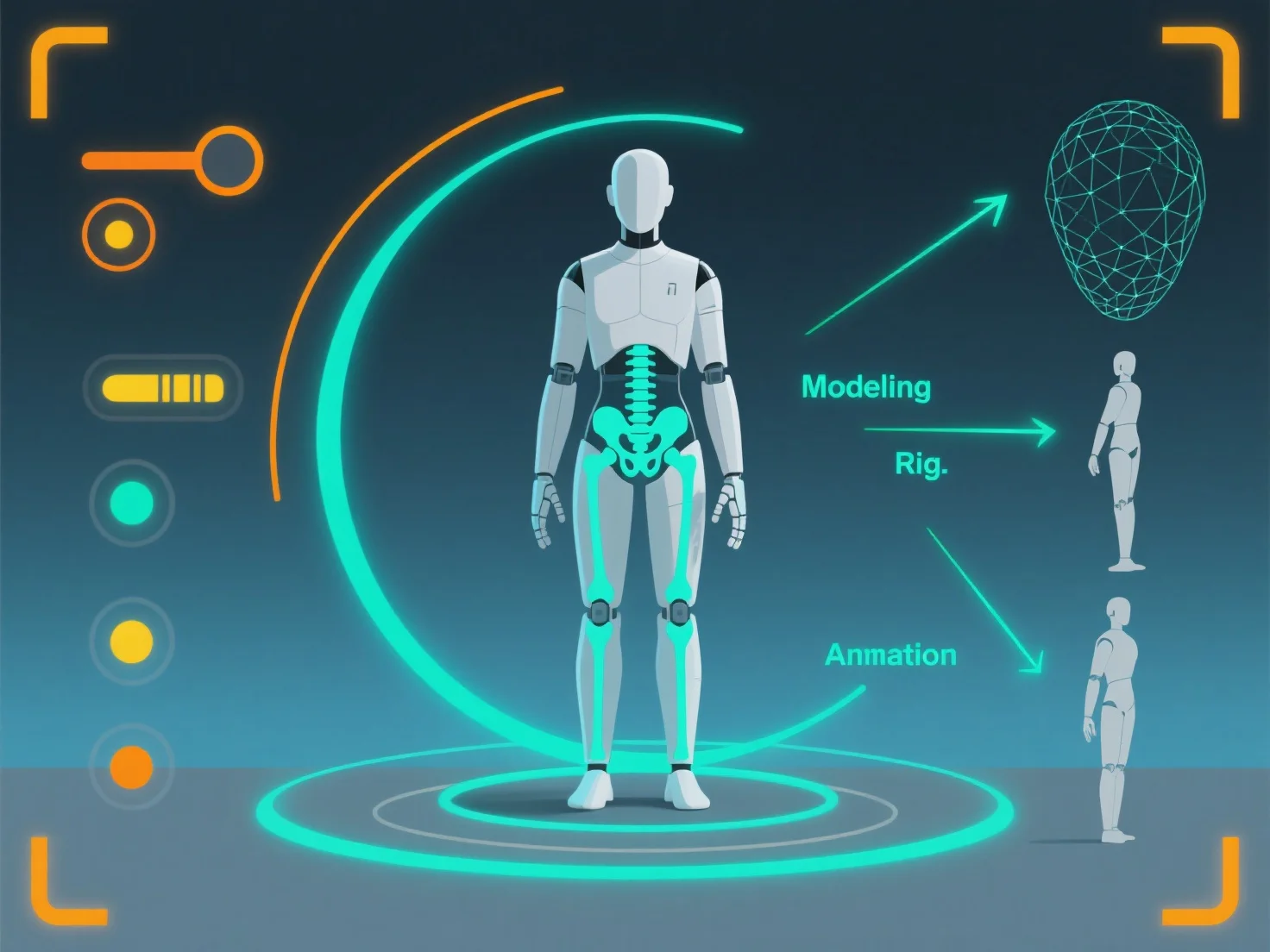
O rigging é uma fase intermédia fundamental no pipeline de animação 3D, posicionada após a modelação 3D e antes da animação. Transforma modelos 3D estáticos em recursos móveis, criando esqueletos digitais e sistemas de controlo, permitindo aos animadores gerar movimentos realistas.
- **Colocação do pipeline**: Ocorre após a modelagem (depois de os modelos 3D estarem finalizados) e antes da animação, garantindo que os animadores tenham rigs funcionais para animar com. - **Tarefas principais**: Envolve a construção de armaduras (esqueletos digitais com articulações) e rigs de controlo (interfaces fáceis de usar) para manipular movimentos, expressões ou deformações. - **Papel fundamental**: Liga modelos estáticos a animação dinâmica, tornando os modelos responsivos à entrada do animador para um movimento natural e realista.
Em suma, o rigging é a ligação crítica entre a modelagem e a animação, equipando os modelos 3D com a estrutura necessária para o movimento.