


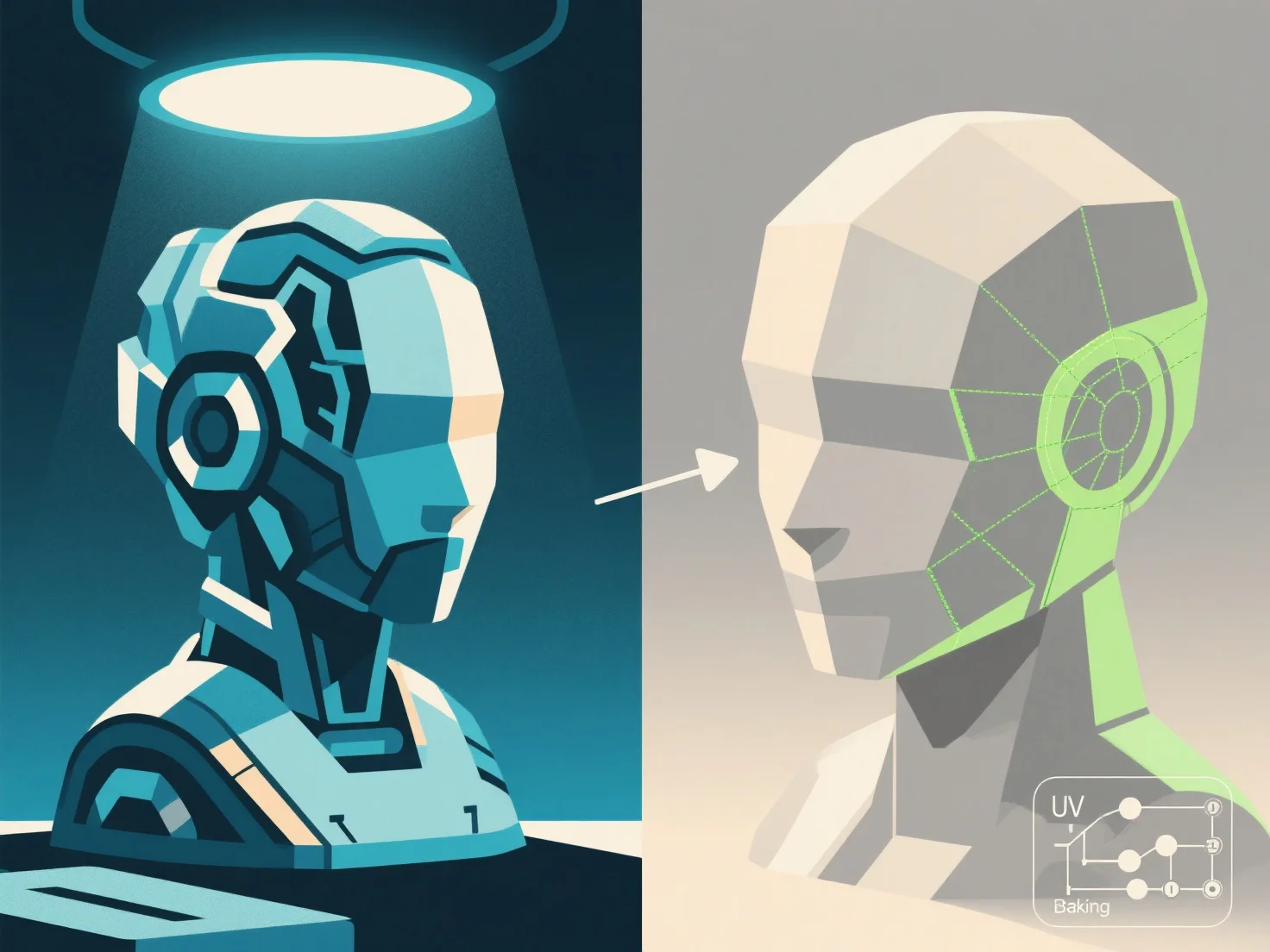
As texturas de cozimento simplificam o fluxo de trabalho 3D, consolidando detalhes de alta poligonalidade em mapas de baixa poligonalidade, equilibrando a qualidade visual e a eficiência.
- **Transferência de Detalhes**: Transfere detalhes de superfície (por exemplo, saliências, sombras) de modelos complexos de alta poligonalidade para modelos mais simples de baixa poligonalidade através de mapas como normal ou oclusão ambiente (AO), preservando o realismo sem uma geometria pesada. - **Aumento de Desempenho**: Reduz o tamanho do ficheiro e a carga de renderização, fundamental para aplicações em tempo real (jogos, AR/VR) e visualização 3D eficiente. - **Simplificação do Fluxo de Trabalho**: Facilita o manuseamento do modelo, acelerando o pós-processamento (texturização, renderização); os iniciantes beneficiam ao começar com o baking normal/AO para otimizar os detalhes e a eficiência.
No geral, as texturas de cozimento otimizam o pipeline 3D, tornando modelos de alta qualidade viáveis para diversos projetos, mantendo ao mesmo tempo fluxos de trabalho suaves.