


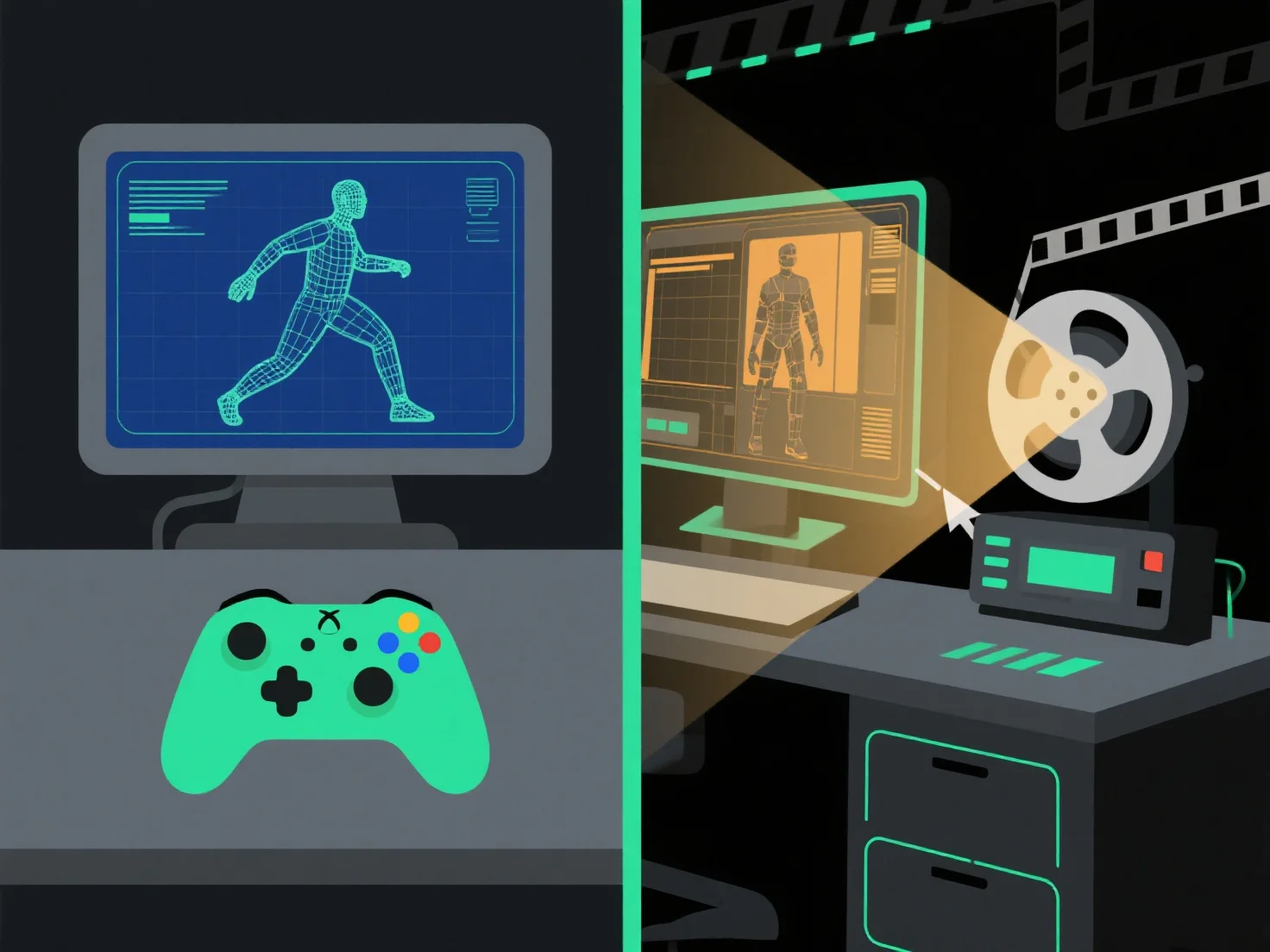
As aplicações 3D em tempo real utilizam técnicas de animação simplificadas, como ciclos pré-cozidos ou rigs de baixa poligonalidade, para priorizar a velocidade, enquanto as aplicações 3D offline tiram partido de métodos complexos, como animação chave de alta detalhe ou simulações de física, uma vez que não estão limitadas pelas exigências de renderização em tempo real.
As principais diferenças decorrem das necessidades de desempenho: - As aplicações em tempo real (por exemplo, jogos, AR/VR) requerem renderização instantânea, pelo que as animações são otimizadas para um processamento rápido. Muitas vezes, utilizam movimentos pré-computados ou estruturas ósseas simplificadas para evitar atrasos. - As aplicações offline