


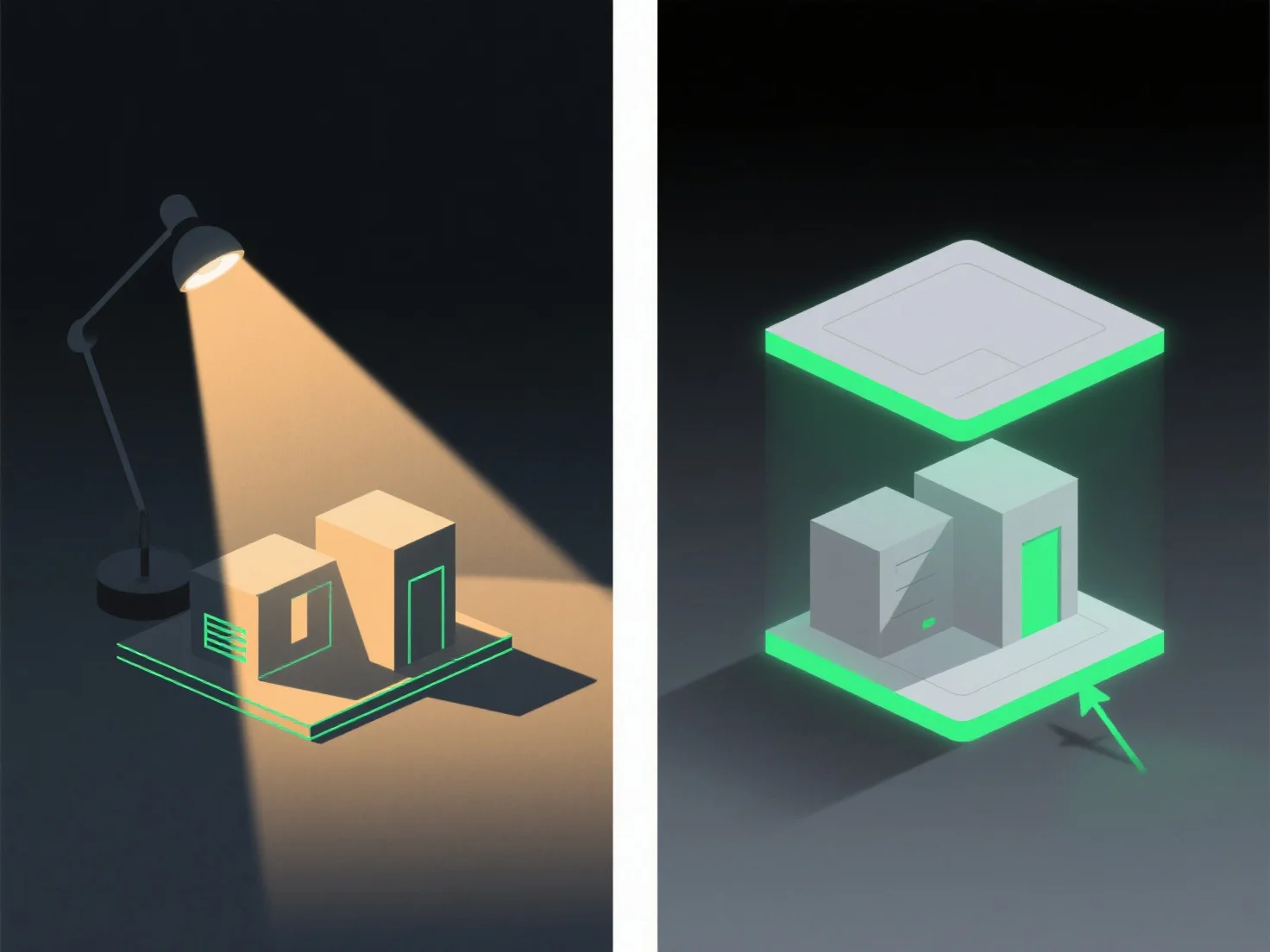
Apresentações 3D com iluminação em tempo real ajustam dinamicamente os efeitos de iluminação com base nas alterações da cena, enquanto a iluminação pré-calculada pré-computa e armazena os dados de iluminação para elementos estáticos, diferindo em termos de flexibilidade, desempenho e casos de uso ideais.
A iluminação em tempo real é adequada para cenas interativas ou em mudança.
A iluminação assada funciona melhor para cenas estáticas. Ela utiliza dados de iluminação pré-renderizados para reduzir a carga de desempenho, aumentando a eficiência, mas limitando a adaptabilidade aos ajustes de iluminação.
Resumindo, a iluminação em tempo real prioriza a interatividade e a flexibilidade, enquanto a iluminação pré-processada enfatiza o desempenho e a eficiência para ambientes estáticos.