


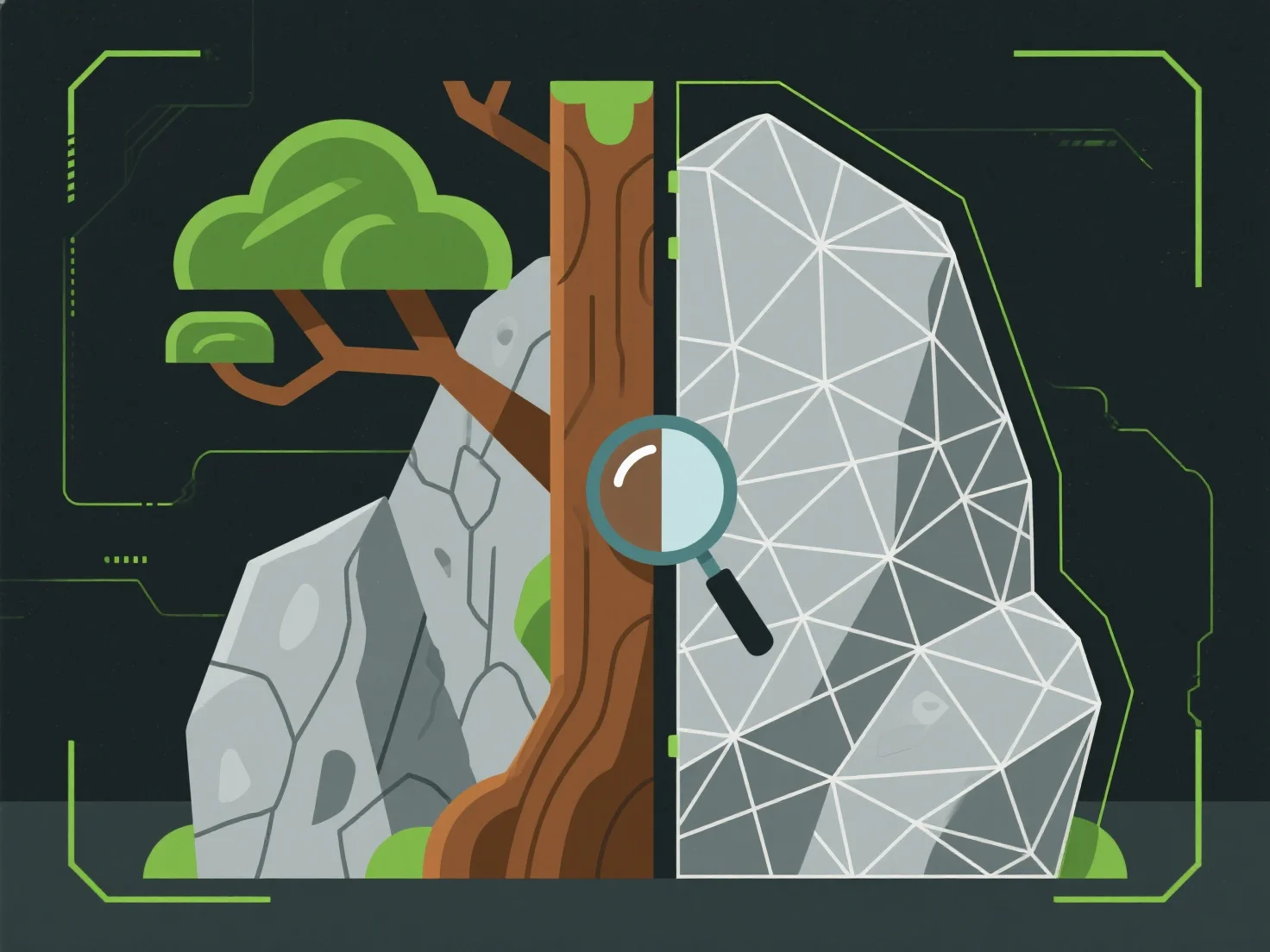
Na modelagem 3D, recursos ambientais como árvores e rochas são compostos pela combinação de fundamentos geométricos básicos com textura, detalhe e técnicas especializadas para alcançar o realismo.
Eles começam com uma malha base simplificada (freqüentemente low-poly) para definir a forma central. Por exemplo, um cilindro para o tronco de uma árvore ou um polígono irregular para uma rocha.
Em seguida, são aplicadas texturas de alta resolução: padrões de casca para árvores, grão de pedra para rochas, utilizando ferramentas como PBR (Physically Based Rendering) para imitar materiais do mundo real.
Para árvores, aglomerados de folhas ou ramos podem ser adicionados através de sistemas de partículas ou geometria instanciada; as rochas usam frequentemente mapas de deslocamento para simular rachas ou saliências.
Esta abordagem em camadas equilibra a eficiência e o realismo, tornando-a acessível para iniciantes que podem começar com formas básicas e bibliotecas de texturas gratuitas.