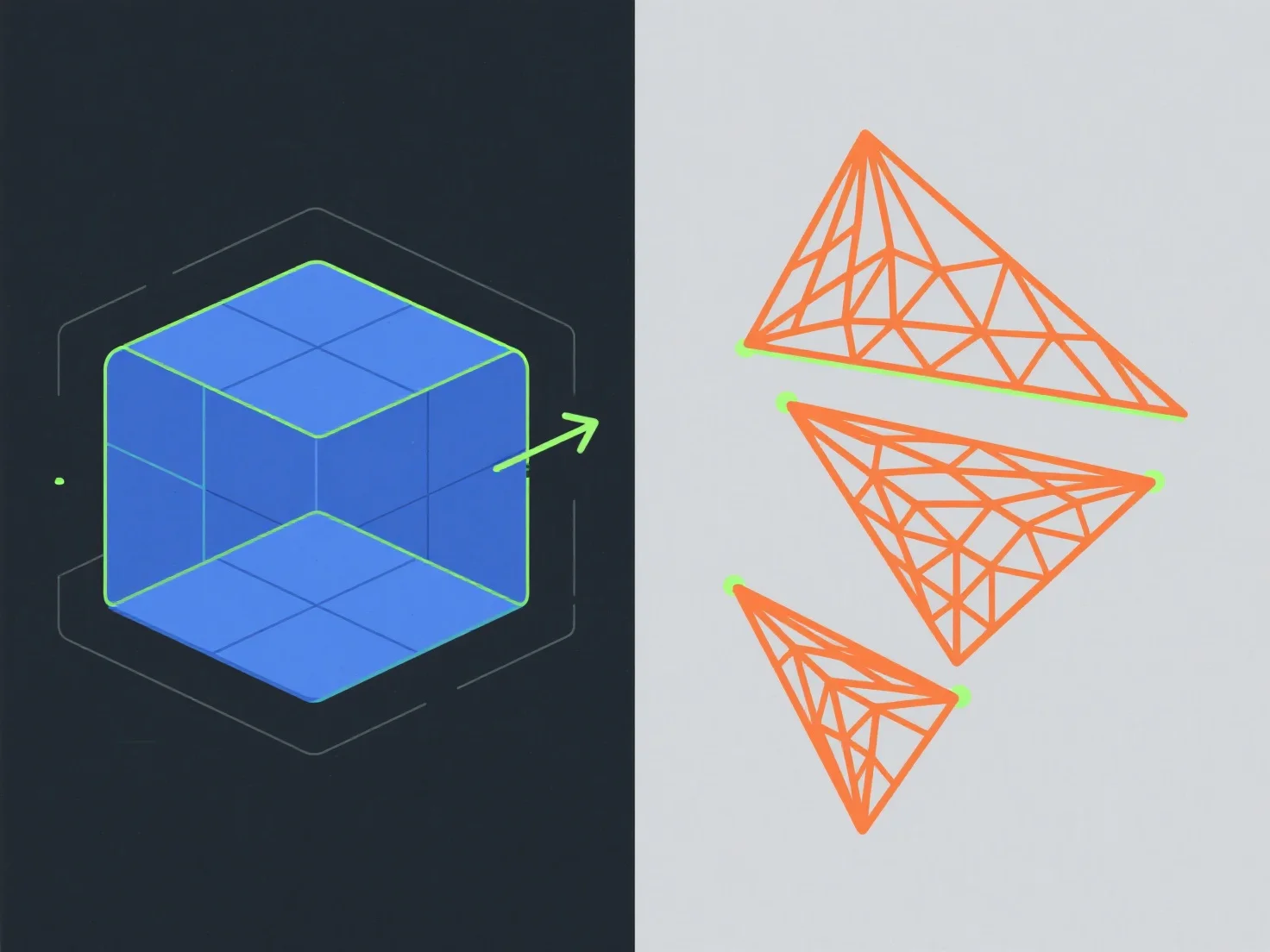
3Dモデリングでは、クワッド(4辺の多角形)とトライアングル(3辺の多角形)の主な違いは、構造、エッジフロー、実用的な用途にあります。 クワッドはエッジフローがスムーズであり、細分化、調整、変形が容易です。これは、有機的なモデリング(キャラクターなど)やメッシュの柔軟性が重要なアニメーションに最適です。 トライアングルは最も単純な多角形であり、より硬直ですが、計算効率が高いため、リアルタイムレンダリング(ゲームなど)に最適です。 頻繁な調整やアニメーションが必要なモデルの場合、クワッドから始めることでトポロジーを維持しやすくなり、パフォーマンス重視のリアルタイムプロジェクトではトライアングルが好まれています。


3Dモデリングにおけるクワッドとトライアングルの違いは何ですか?
3Dモデリングにおける四角形と三角形は、構造、エッジフロー、用途が異なります。四角形はオーガニック/アニメーションに使用され、三角形はリアルタイムレンダリングに使用されます。